

Maddy summaryThis bill creates a $750 annual income tax credit for retired police officers in the state who retired due to disability. It applies to resident taxpayers whose disability retirement occurred while serving as a police officer. The credit reduces taxable income starting in 2026, with any excess credit treated as a refundable overpayment (no interest paid). The provision directly benefits eligible retired disabled officers by lowering their state tax burden.
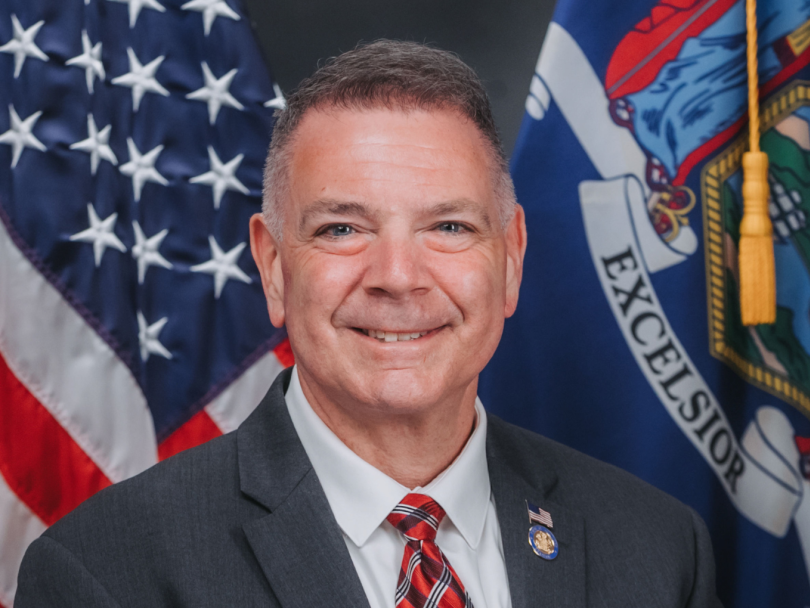
Sen. Steve Rhoads
Sponsored bills
Maddy summaryThis bill requires hospitals and other health care facilities to report any allegations of sexual offenses committed by health care practitioners against patients to both the state Department of Health and the Department of Education within 30 days. It directly affects health care facilities and licensed practitioners (such as doctors, nurses, and therapists) covered under Education Law Title 8. The law mandates that reports include specific details like the practitioner’s license information, the nature of the incident, any criminal convictions, and the facility’s actions taken. These reports aim to improve oversight of professional misconduct while ensuring both departments can take appropriate action.
Relates to using a portion of the public safety communications surcharge to support volunteer fire department initiatives; establishes the New York state volunteer fire department auxiliary fund.
Maddy summaryS 1308 requires a two-thirds vote in both the state legislature and local governing bodies to pass bills that create new taxes, increase existing taxes, or extend tax collection periods. This applies to all tax-related bills except those resulting from home rule requests under state constitution provisions. The bill directly affects state legislators and local government officials (like city councils or county boards) who must secure supermajority approval for tax changes. It does not alter current tax rates but changes the legislative process needed to enact or raise them. The law takes effect immediately upon passage.
Directs the commissioner of health to contract with an independent entity to conduct a comprehensive assessment of the existing methodology used to determine payment for early intervention screenings, evaluations, services and service coordination; directs recommendations on reimbursement methodology as well as needs under the program.
Provides a state income tax exemption for volunteer firefighters and volunteer ambulance workers who have qualifying service in the taxable year for which such exemption is sought.
Maddy summaryThis bill requires all visitors entering New York correctional facilities to undergo body scanning before entry, and mandates that incarcerated individuals be scanned upon intake and after visits. It specifies that facilities must offer alternative screening methods for medical reasons or if someone declines scanning, though visitation may be denied for non-medical refusal. Regulations will define when scanning is required, including accommodations for medical needs and prohibiting harassment for choosing alternatives. The law takes effect immediately, with related public health law changes set to be repealed alongside it.
Maddy summaryThis bill limits charitable bail organizations from providing bail for misdemeanor cases. It specifically restricts such bail to first-time offenders charged with a single misdemeanor offense and caps the amount at $2,000 or less. Charitable bail organizations are also prohibited from acting as surety for any defendant under this provision. The law directly affects charitable bail groups and misdemeanor defendants with no prior criminal charges.
Maddy summaryThis bill eliminates multiple taxes on health insurance in New York State, directly affecting consumers and health insurance companies. It phases out four specific taxes over time, including the $1.1 billion annual "covered lives assessment" on insured individuals, a 9.63% surcharge on hospital services, a $350 million flat tax on commercial insurance policies, and a $149 million tax on insurance companies. Key provisions gradually reduce these taxes: for instance, the insurance company tax drops from 1.75% to 0.37% by 2030 and is eliminated entirely after 2031. The legislation aims to lower health insurance costs by removing these taxes, which the bill states collectively cost consumers over $5 billion annually in 2018.
Requires the Empire State Development corporation's broadband program office to assist in the provision and expansion of broadband internet access service and to address inequities in the availability of such service.