

Designates unlawful fleeing a police officer in a motor vehicle in the third degree as a class E felony; designates unlawful fleeing a police officer in a motor vehicle in the second degree as a class D violent felony offense; designates unlawful fleeing a police officer in a motor vehicle in the first degree as a class B violent felony offense.
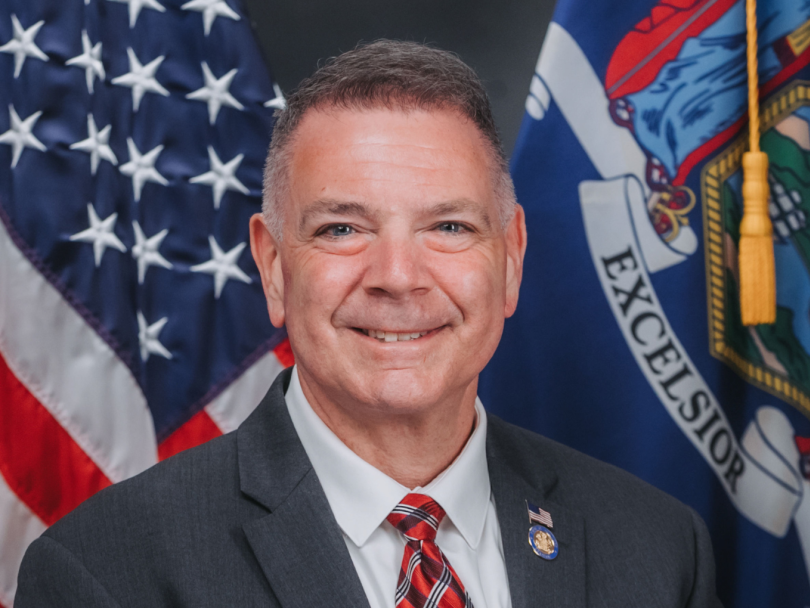
Sen. Steve Rhoads
Sponsored bills
Requires school boards to make the final decision on whether to keep, remove, or restrict access to an instructional material in a school library; establishes a review process for formal complaints concerning instructional materials that are the subject of complaints.
Maddy summaryThis bill (S 3300) repeals New York's Clean Slate Act, which previously allowed certain criminal records to be sealed or expunged. It directly affects individuals with past arrests or convictions that were dismissed, ended in a favorable termination, or resulted in sealed records under the Clean Slate Act. The repeal removes legal protections that prevented employers, landlords, and others from asking about or considering these sealed records during job applications, housing searches, or credit decisions. As a result, individuals who qualified under the Clean Slate Act would no longer have those records shielded from such inquiries.
Maddy summaryBill S 3474 enhances New York's Assisted Outpatient Treatment (AOT) program, commonly known as Kendra's Law, by strengthening oversight and eliminating its scheduled expiration to ensure the program continues without interruption. The bill adds specific requirements for program coordinators to monitor treatment compliance, coordinate services with community providers, and review clinical needs before court orders expire, while mandating community service directors to conduct timely investigations and document processes. It also requires the state to create an educational pamphlet explaining the AOT petition process in plain language for the public. This bill directly affects individuals under court-ordered AOT, mental health program staff, and the public seeking information about the program.
Maddy summaryS 6559 would allow local governments (counties, cities, towns, villages, or school districts) to provide a 100% property tax exemption for veterans who served in combat zones and are 100% permanently disabled due to military service, or their unmarried surviving spouses. This exemption would apply directly to the property tax bill for eligible veterans, bypassing any local limits on standard property tax exemptions. Localities would choose whether to implement this option, and the exemption would apply to properties assessed on or after January 1, 2025. The bill does not require localities to adopt this exemption but provides a new option for those that choose to do so.
Increases the reimbursement amount authorized to be paid to localities maintaining incarcerated individuals convicted of felonies to $300 per day per capita for the first 10 days, and $600 per day per capita for each day thereafter, or the actual per day per capita cost, whichever is more.
Relates to costs and expenses of the department of public service and the public service commission; directs the public service commission to develop a formula to determine the average cost, on a per ratepayer basis, to comply with the provisions set forth in article seventy-five of the environmental conservation law; provides for a ratepayer protection tax credit; repeals certain provisions of the public service law relating to the assessment of costs and expenses of the department of public service and the public service commission.
Maddy summaryNew York's S 3643, the "Fair Franchising Practices Act," establishes new rules to protect franchisees from unfair business practices by franchisors. It requires franchisors to act in good faith, prohibits unfair terms like liquidated damages clauses, and allows franchisees to source equipment/supplies independently if they meet quality standards. Franchisees gain a legal right to sue for violations, seek damages, or obtain injunctions without needing to post bond for preliminary relief. The law applies to all franchises operating in New York, directly affecting both franchisors (businesses granting franchises) and franchisees (businesses operating under franchise agreements).
Maddy summaryS 725 amends New York's criminal procedure law to include specific terrorism-related offenses as qualifying for strict bail considerations. The bill adds money laundering in support of terrorism (across all degrees) and felony crimes of terrorism (excluding one specific subsection) to the list of offenses where judges must consider bail restrictions. This means defendants charged with these designated terrorism crimes would face higher hurdles to securing pretrial release. The change directly affects individuals accused of these specific terrorism-related offenses in New York courts. The bill does not address "making a terroristic threat" as stated in the abstract, but rather targets defined terrorism financing and terrorism crimes.
Relates to safe staffing levels at nursing homes; requires the department of health to give significant weight to labor supply shortages in particular regions during any declared statewide disaster emergency.