

Provides that in toxic tort cases the date of discovery of the injury by the plaintiff or claimant is presumed to be the date of diagnosis and where the specific toxic etiological cause of injury is not known for up to ten years (instead of five years) after the injury itself is discovered a plaintiff shall have three years to file a claim from the time such specific cause is discovered.
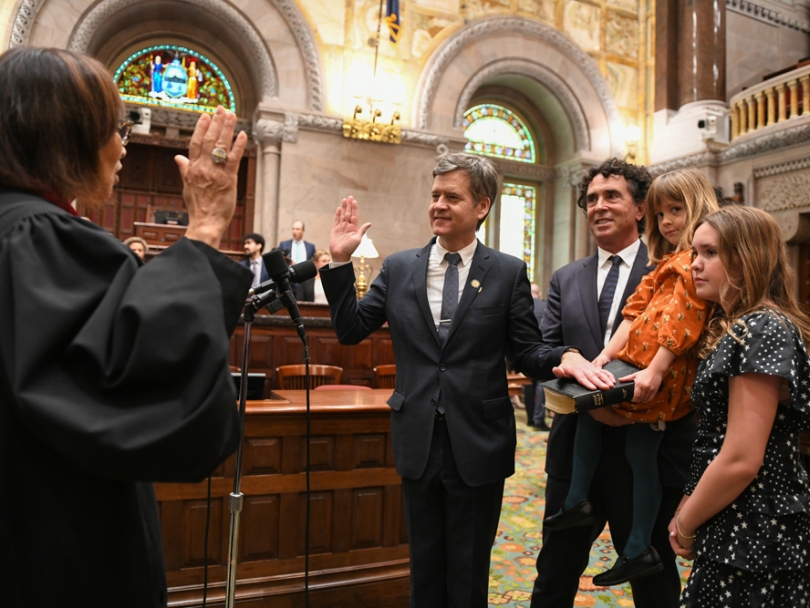
Sen. Brad Hoylman-Sigal
Sponsored bills
Relates to strategic lawsuits against public participation; makes technical corrections; relates to the applicability of chapter 250 of the laws of 2020 amending the civil rights law relating to actions involving public petition and participation.
Requires the department of health to develop and maternal health care providers to distribute written information about episiotomy to maternity patients.
Provides immunity from prosecution for certain individuals engaged in prostitution who are victims of or witnesses to a crime and who report such crime or assist in the investigation or prosecution.
Maddy summaryThis bill requires law enforcement agencies to fully disclose recordings from police body-worn cameras and vehicle-mounted cameras during legal proceedings. It mandates that prosecutors reveal all footage, including unused clips and outtakes, rather than only the segments they plan to use at trial. The law also sets specific rules for handling lengthy recordings, allowing prosecutors to summarize excess footage while still granting defendants the right to request access to the full files. Additionally, the bill clarifies how 911 call recordings must be shared with defendants and outlines procedures for protecting the identities of anonymous callers unless they are called as witnesses.
Prohibits residential landlords from charging tenants a fee for a dishonored rent check in excess of the actual costs or fees incurred by such landlord as a result thereof, provided such dishonored check fee was included in the initial lease.
Maddy summaryThis bill, known as the "Sunshine in Litigation Act," aims to increase transparency in legal cases by preventing courts from issuing orders that hide information about public safety hazards. It defines a public hazard as any condition that has caused injury or poses a future risk, while also clarifying that trade secrets unrelated to such hazards remain protected. The law declares unenforceable any contracts or agreements that attempt to conceal information about public hazards, and it grants individuals and news media the right to challenge court orders that block the release of safety-related data. Additionally, the bill requires that settlement agreements involving government entities which contain information about public hazards be treated as public records subject to disclosure.
Maddy summaryThis bill proposes to increase the maximum age for homeless youth to receive transitional independent living shelter services from twenty-one to twenty-four. Under the new provision, eligible young people who entered these programs before turning twenty-four could continue receiving support beyond the current authorized period, provided the municipality notifies the office of children and family services. The change applies immediately upon enactment and directly affects the eligibility criteria for youth accessing specific housing assistance programs.
Maddy summaryThis bill prohibits landlords from using facial recognition software on any residential property they manage. It defines facial recognition systems as computer tools that identify individuals or analyze their emotions and mental states, making it illegal for landlords to obtain, keep, access, or use such systems or the data they collect. If a landlord violates this rule, the state attorney general or an affected resident can sue to stop the practice, seek damages, and potentially receive a fine of up to $10,000. The law includes provisions for awarding legal fees to the winning party and will not take effect until 120 days after it is signed into law.
Maddy summaryThis bill requires local social services districts to set shelter allowances for recipients at up to 100% of the fair market rent for their specific unit size. It achieves this by mandating that the allowance match the actual rent obligation, using the current federal fair market rent figures as the maximum limit. The change applies to individuals receiving assistance and ensures their housing support covers the full cost of rent within their local area. The law would take effect 30 days after being signed into legislation.