Establishes the "tenant opportunity to purchase act"; prevents the displacement of middle and lower-income tenants in New York and preserves affordable housing by providing an opportunity for tenants to own or remain renters in the properties in which they reside.
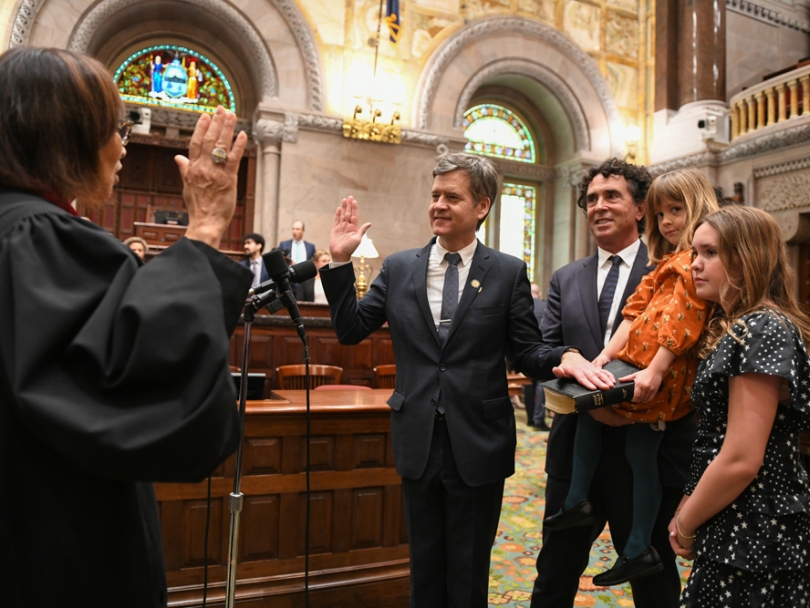
Sen. Brad Hoylman-Sigal
Sponsored bills
Provides the New York power authority with the right of first offer and refusal for acquiring any renewable generation facility, renewable energy generation project and any power or energy created by a renewable generation facility or renewable energy generation project.
Establishes a Black Leadership Institute within the state university of New York as an initiative for Black leaders in higher education with a mission to retain and grow from within SUNY a greater proportion of Black professionals at SUNY campuses; creates an eight member advisory council.
Requires certain watercraft, aircrafts, and trains to use clean energy, including ensuring such vehicles are zero-emissions; requires NYSERDA to study zero-emission commercial vehicles, the use of renewable energy in publicly funded airports, and the use of sustainable aviation fuel; requires NYSERDA to administer a grant program to flying schools and clubs that install charging infrastructure.
Maddy summaryThis bill establishes the New York State Fashion Workers Act to regulate model management companies and protect the rights of models working in the state. It requires these companies to register with the Department of Labor, providing detailed information about their business operations and ownership, and mandates that larger firms post a financial bond. The law also defines specific duties and prohibited actions for both model management companies and their clients, such as requiring clear written summaries of job terms known as deal memos. Additionally, the act creates a formal process for filing complaints and outlines penalties for violations, ensuring oversight of the fashion modeling industry.
Requires certain health insurance issuers to certify that at least a majority of prescription drug rebates are provided to patients at the point of sale.
Establishes the climate corporate data accountability act requiring certain business entities within the state to annually disclose scope 1, scope 2 and scope 3 emissions; establishes the climate accountability and emissions disclosure fund.
Maddy summaryThis bill, known as the Vehicular Violence Accountability Act, aims to strengthen driver education and create new legal penalties for causing harm while operating a vehicle. It requires all new driver license applicants to complete a mandatory training course that includes specific modules on road rage, work zone safety, and the dangers of vehicular violence, alongside existing requirements for alcohol awareness and other safety topics. Additionally, the legislation establishes a new article in the penal law that defines "vehicular violence" as negligent conduct causing injury or death while driving, separate from driving under the influence, and creates specific offenses for serious physical injury, aggravated injury, and death resulting from such acts. By integrating these educational components into the licensing process and clarifying criminal definitions, the bill seeks to promote safer driving habits and provide clearer legal consequences for accidents caused by negligence.

Relates to the purchase of zero-emission buses and the procurement of electric-powered buses, vehicles or other related equipment and infrastructure; requires public utilities to have infrastructure, capacity, facilities, and transmission and distribution systems needed to supply power for the charging of zero-emission buses; provides a tariff for charging of electric buses.
Provides for certain presumptions for reckless driving and the implementation of a reckless driving and vehicular violence awareness component of the pre-licensing course for driver's licenses.