

Bans unencapsulated expanded or extruded polystyrene foam in floating docks and floating platforms sold, offered for sale, or constructed in the state.
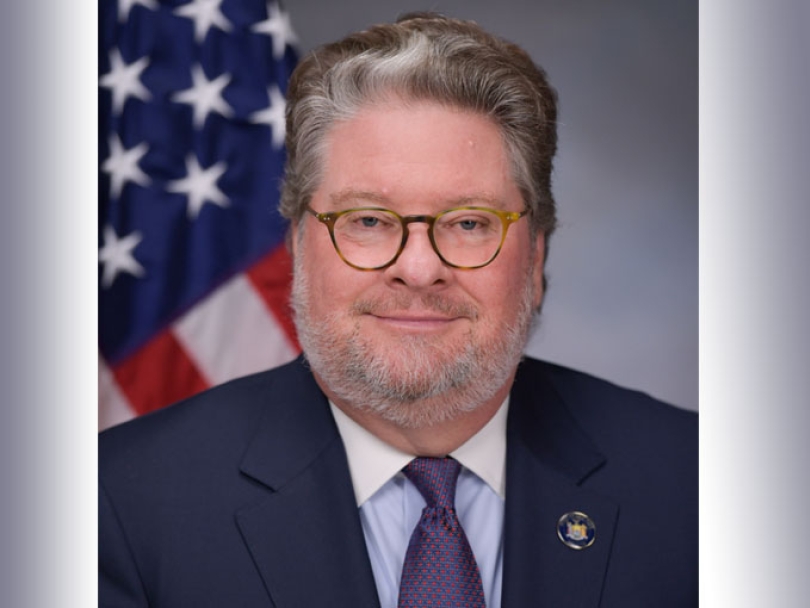
Sen. Pete Harckham
Sponsored bills
Prohibits health insurers, health care plans and HMOs from requiring prior authorization for anti-retroviral medication used to treat and prevent HIV infection.
Relates to the purchase of claims by corporations or collection agencies; relates to the inference of an assignee's intent and purpose in taking an assignment of a claim against an obligor that is not an eligible obligor.
Maddy summaryThis bill increases the monthly pension benefits for surviving spouses of retired New York public employees from fifty percent to one hundred percent of what the deceased partner would have received. The change applies to several retirement systems, including those for city employees, teachers, police, firefighters, and board of education staff, and takes effect on September 1, 2025. Under the new rules, a surviving spouse who chose a lifetime benefit option for their partner will receive the full amount of the pension starting either in September 2025 or the month after the partner's death, whichever occurs later.
Relates to bioheating fuel requirements; allows B100 or B99 biofuel and R100 or R99 renewable fuel to be used to blend with or replace fossil heating oil in order to create bioheating fuel.
Includes masking products including but not limited to synthetic urine, human urine, a substance used or designed to be added to human urine or a substance used or designed to be added to a chemical test, within the definition of drug-related paraphernalia.
Requires every food establishment to label all prepackaged food with a written notification on the package or on a label attached to the package identifying all ingredients and labeling for major food allergens in such form and manner as required pursuant to the federal Food Allergen Labeling and Consumer Protection Act of 2004, as amended.
Maddy summaryThis bill updates how the state calculates payment rates for federally qualified health centers to better match their actual operating costs. It requires the health department to analyze five years of cost data, including expenses for staffing, physical facilities, and technology, and to remove existing caps on these payments starting in April 2025. The law establishes a new method for adjusting these rates annually based on federal market basket figures and changes in the scope of services provided. This change directly affects federally qualified health centers by ensuring their reimbursement reflects the true cost of delivering care.
Maddy summaryThis bill allows dentists to give human papillomavirus (HPV) vaccines as part of their professional duties. It achieves this by updating the legal definition of dentistry to explicitly include administering HPV vaccinations alongside other dental services. The change applies to all licensed dentists and does not alter other aspects of dental practice. The law will not take effect immediately but will wait until 180 days after it is signed into law.
Maddy summaryThis bill expands New York's electronic waste recycling program by requiring manufacturers to provide more detailed information to consumers about how to return old electronics for recycling. It mandates that manufacturers ensure convenient collection options are available to at least 90% of residents within a 15-mile radius of their homes, using a mix of permanent drop-off sites and community collection events. The legislation also strengthens public education efforts by requiring manufacturers to maintain websites, toll-free numbers, and product manuals that explain the recycling process and data security procedures. All costs for collecting, transporting, and recycling these electronic items must be covered by manufacturers, ensuring that regular consumers and municipalities do not pay fees for these services.