

Maddy summaryThis bill creates a new enforcement mechanism allowing certain workers, whistleblowers, or labor organizations to file public lawsuits on behalf of New York's labor department to address violations of specific labor laws. It enables private parties to initiate enforcement actions for issues like unpaid wages or misclassification (covered under Articles 5, 6, 9, 19, 19-A, 19-B, and 25-A), with civil penalties collected going to the state treasury. The law aims to supplement limited public enforcement resources by empowering workers and organizations to act as "private attorneys general" while protecting whistleblowers from retaliation. It explicitly excludes government agencies as targets and applies only to violations covered by designated labor law sections.
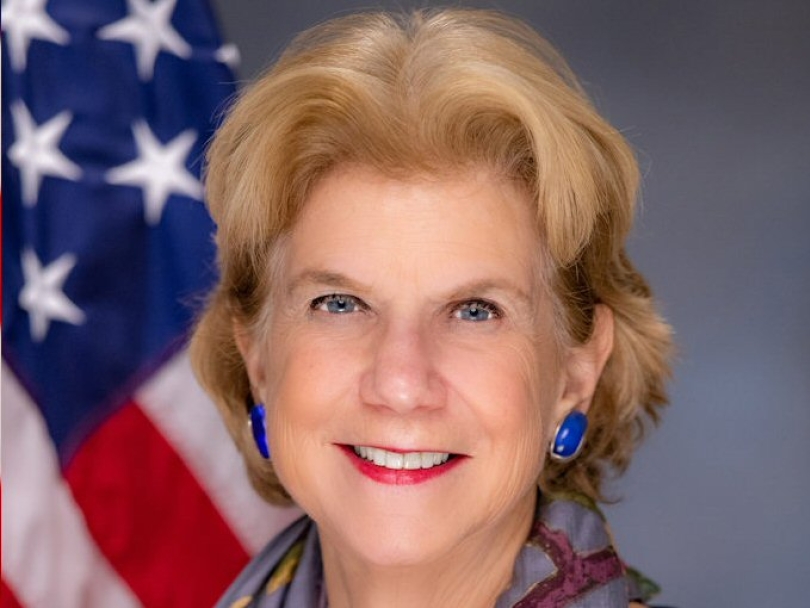
Sen. Shelley Mayer
Sponsored bills
Ensures that construction and fabrication done off of a public work site for specific use only in a public work project be compensated at the prevailing wage rate.
Enacts the "fostering affordability and integrity through reasonable (FAIR) business practices act", to expand the attorney general's ability to protect New Yorkers from unfair, deceptive and abusive business practices.
Directs the commissioner of education to conduct a survey of recess held in public and charter schools serving students in kindergarten through grade six and to provide any information collected to the governor and the legislature.
Clarifies the standard for when a practice has a discriminatory effect; provides that an unlawful discriminatory practice may be established by such practice's discriminatory effect, even if such practice was not motivated by a discriminatory intent.
Maddy summaryS 6997 requires utility companies and contractors to electronically submit detailed information about pole attachments (including equipment ownership, work dates, and contractors) to a central database. It creates a public complaint system for safety issues like unsafe attachments or violations of industry standards, with inspectors required to investigate within two weeks. Violations can result in fines up to $50,000 for repeat offenses, and the commission must publish semiannual lists of repeat violators. The bill also adds new disclosure requirements for contractors working in public rights-of-way when applying for permits.
Requires the superintendent of state police to develop, maintain and disseminate to all members of the division of state police a critical incident leave policy requiring critical incident paid leave for any members directly involved in a critical incident; prohibits such superintendent from taking any punitive administrative action against any member of the division of state police granted critical incident leave solely on the basis of the provision of such leave.
Maddy summaryS 1548 bans specific harmful chemicals from menstrual products sold in New York State. It prohibits manufacturers from intentionally adding substances like lead, mercury, formaldehyde, triclosan, and PFAS (a class of chemicals including Teflon-like compounds) to products such as tampons, pads, and menstrual cups. The bill takes immediate effect for all intentionally added restricted substances, with a 2029 deadline for setting science-based limits on any remaining traces of these chemicals. This directly affects all companies producing or selling menstrual products in New York, requiring them to reformulate products to remove these substances.
Directs counties, in coordination with their regional emergency medical services councils, to develop and maintain comprehensive county emergency medical system plans that provide for coordinated emergency medical systems within such counties.
Maddy summaryThe RAISE Act establishes safety requirements for developers of powerful artificial intelligence models, known as "frontier models." A frontier model is defined as one trained with over 10^26 computational operations (costing more than $100 million) or a distilled version costing over $5 million. Large developers must implement documented safety protocols to prevent "critical harm," defined as events causing death, serious injury to 100+ people, or $1 billion in damages from AI misuse. The bill also defines key terms like "safety incident" and outlines remedies for violations, focusing on risk mitigation rather than restricting AI development.