

Maddy summaryThis bill, the "Raise the Wage Act," increases New York's minimum wage to $21.25 per hour in New York City by 2028, $17.25 in the city's suburbs (Nassau, Suffolk, Westchester) by 2026, and gradually across the rest of the state. It repeals current static wage provisions and establishes automatic annual adjustments tied to inflation and productivity, mirroring the formula used for upstate wages since 2022. The bill directly affects all hourly workers covered under New York's labor law, particularly in low-wage sectors like home care and childcare. This indexing mechanism aims to prevent future erosion of purchasing power, ensuring wages keep pace with rising living costs.
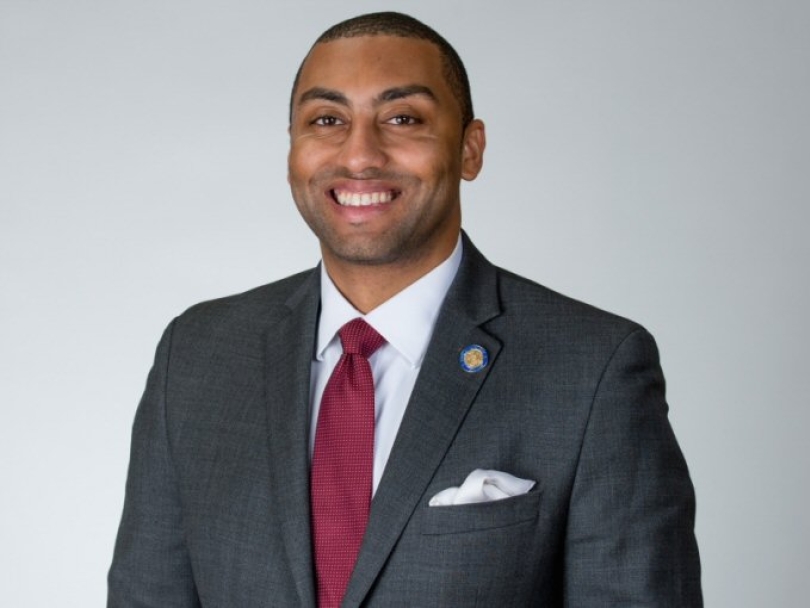
Sen. Jamaal Bailey
Sponsored bills
Establishes the "New York state lead-safe renovation, repair and painting act"; establishes standards for lead-safe renovation, repair and painting of residential properties; requires documentation of compliance with such standards.
Establishes a culturally responsive education curriculum and standards; requires all school districts, charter schools and private schools to integrate culturally responsive education throughout the education of all students at all grade levels; establishes a pilot program in culturally responsive education; appropriates $25,000,000 therefor.
Maddy summaryThis bill, S 2710, changes retirement rules for New York City police officers by reducing the required service time for full retirement benefits from 22 years to 20 years. It specifically applies to members of the New York City Police Pension Fund, allowing them to retire with full benefits after 20 years of service instead of the previous 22-year requirement. The bill amends three sections of the retirement law to update definitions, benefits, and eligibility, ensuring NYC police officers can access normal retirement benefits at the 20-year mark. This is a direct policy change affecting NYC police officers' retirement timelines, with no broader application to other public safety workers.
Maddy summaryThis bill establishes the Certificate of Insurance Reliability Act (CIRA) to standardize insurance certificates for activities in New York. It requires all such certificates to be issued by insurers and binding on them, while prohibiting entities (like businesses or government) from demanding non-standard forms as a condition for contracts, work commencement, or payments. Only certificates using insurer-promulgated forms or industry-standard forms approved by the insurance superintendent are acceptable. The law directly affects insurers, contractors, and government agencies involved in contract work within New York.
Maddy summaryThis bill amends New York State law to explicitly include "temporarily erected structures" (such as scaffolding) in the legal definition of a "substandard or insanitary area." It directly affects urban renewal programs by expanding the types of areas eligible for redevelopment under these programs. The key mechanism adds these temporary structures to the list of features that can qualify an area as "blighted" or having a "blighting influence," allowing redevelopment efforts to address such structures. This change enables cities to include temporary structures in broader urban renewal initiatives aimed at eliminating blighting conditions.
Provides for the confidentiality, sealing and expungement of juvenile delinquency records including providing notice to the respondent and attorney for the child when such acts of the court are ordered.
Maddy summaryThis bill requires all public schools in New York to close on Eid-al-Adha (the 10th day of Dhul Hijja in the Islamic calendar) and Eid-al-Fitr (the first day of Shawwai), establishing these as official school holidays. It directly affects public school districts across New York State, mandating closures for these two Islamic holidays. The bill also ensures that these holidays are counted as required instructional days for school calendar calculations, preventing any reduction in instructional time. This policy change applies to all public schools and takes effect 120 days after enactment.
Relates to a minority and women-owned business enterprise participation goal requirement in order to receive exemption of new multiple dwellings from local taxation.
Maddy summaryS 1661 creates a 10-member board to review deaths and near-deaths resulting from encounters with police officers in New York. The board, appointed by the governor with specific expertise (including former law enforcement, legal professionals, and medical experts), will examine investigations conducted by the state police's Bureau of Investigation. After review, the board must provide written recommendations to district attorneys, the governor, and other officials on whether further action - like a grand jury - is needed. The bill also requires the Bureau of Investigation to issue regular updates and public final reports on each case, with limited redactions for privacy.