

Provides treatment for sexually transmitted diseases to minors without a parent's or guardian's consent; provides definition for health care practitioner.
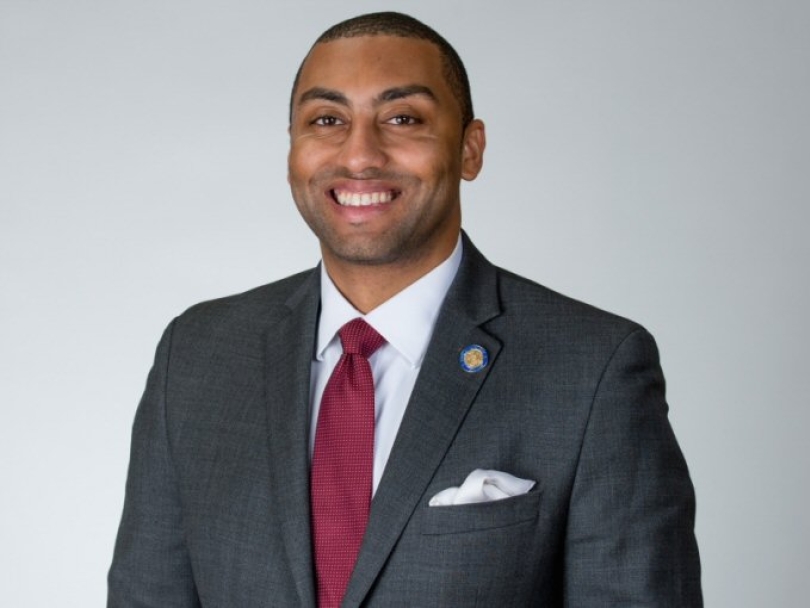
Sen. Jamaal Bailey
Sponsored bills
Maddy summaryThis bill, S 7282 ("No Slavery in New York Act"), prohibits involuntary servitude and forced labor for all incarcerated individuals in New York State correctional facilities, including those convicted of crimes. It amends the Civil Rights Law to explicitly ban slavery, involuntary servitude, and forced labor in the state, and adds a new provision to the Correction Law banning any labor compelled by force, adverse actions, or threats. The law takes effect immediately and directly affects all people incarcerated in state and local correctional facilities across New York.
Maddy summaryS 864 caps annual rent increases for major building improvements at 6% of the legal regulated rent for all tenants in regulated housing. Landlords can still raise rents for essential upgrades like roof repairs, energy efficiency work, or structural fixes, but yearly increases cannot exceed 6% of the current rent. This replaces a previous 2% annual limit for certain older improvement approvals (approved between 2012-2019). The bill directly affects landlords seeking rent hikes for building improvements and their tenants in regulated housing units.
Establishes the "New York public banking act"; authorizes municipal and other local governments to form and control public banks through the ownership of capital stock or other ownership interests, and to loan or grant public funds or lend public credit to such public banks for the public purposes of achieving cost savings, strengthening local economies, supporting community economic development, and addressing infrastructure and housing needs for localities.
Directs the superintendent of financial services to promulgate rules and regulations limiting the use of credit scores to determine automobile insurance premiums.
Maddy summaryBill S 2240 removes the lifetime ban that prevents individuals with felony convictions from serving on a jury. It amends existing judiciary law to eliminate the automatic disqualification for past felony convictions. However, the bill clarifies that anyone currently serving a term of incarceration for a felony would still be excused from jury service while incarcerated. This change allows eligible citizens who have completed their sentences to participate in jury duty.
Establishes patient safety and quality assurance measures regarding the distribution of patient-specific medication from an insurer-designated pharmacy; prohibits certain "brown bagging" and "white bagging" policies regarding pharmacy provided medications.
Maddy summaryThis bill creates a New York State 1332 innovation program under a federal waiver, providing health insurance coverage for New Yorkers under age 65 with household incomes between 133% and 250% of the federal poverty level who don't qualify for Medicaid or employer-sponsored insurance. It requires coverage for essential health services, including access to cancer centers (at Medicaid reimbursement rates), dental, vision, and support for chronic illnesses. Eligibility excludes those eligible for Medicaid, the Child Health Insurance Program, or affordable employer coverage. The program is subject to federal approval and aims to fill coverage gaps for this specific income group.
Maddy summaryBill S 8060 consolidates the separate licensing systems for insurance agents and brokers into a single "insurance producer" license, affecting individuals and entities who sell or negotiate insurance. It updates various sections of the insurance law, replacing references to "agent" with "producer" and revising licensing requirements for specific types of insurance products. The bill clarifies that while the licensing system is unified, the existing legal definitions and duties of "insurance agent" and "insurance broker" as distinct roles are not altered.
Provides that prior to a dispositional hearing the judge shall order a probation investigation and a diagnostic assessment of a juvenile delinquent whom the court reasonably finds, on the record, to have a demonstrable need for a remediation of a discernible handicapping condition; allows judges to refer custody through various state agencies for placement into programs under protocol and funding provisions currently in existence.