

Maddy summaryThis bill (S 1660) is a symbolic resolution formally acknowledging New York State's historical role in slavery. It declares that slavery and the slave trade were "appalling tragedies" and crimes against humanity, including a formal apology for the state's sanctioning of slavery and its lasting impacts. The resolution specifically references the exploitation of children and family separation under historical "slave codes," and honors Sojourner Truth's legacy. It does not create new laws or affect current policies; it is solely an official statement of acknowledgment and apology. The bill takes effect immediately upon enactment.
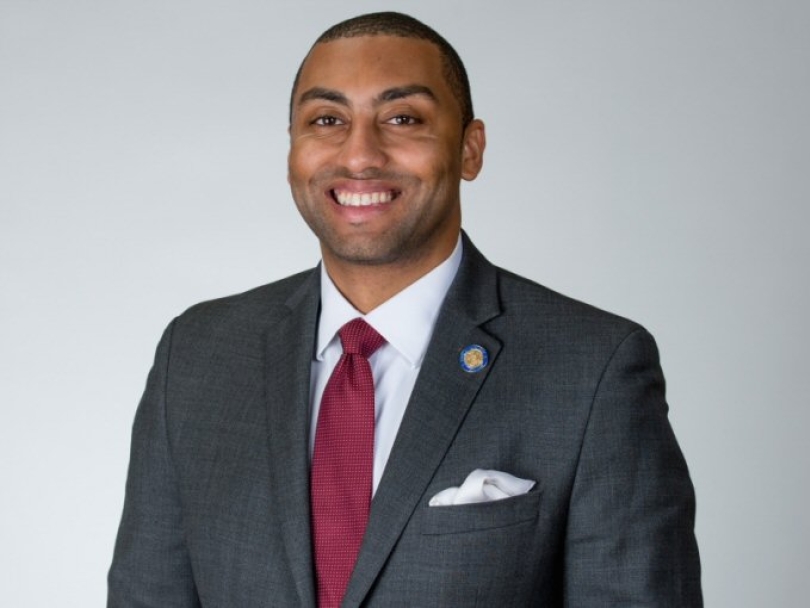
Sen. Jamaal Bailey
Sponsored bills
Maddy summaryThis bill automatically deletes certain arrest records for minors when their criminal case ends in their favor (e.g., dismissed or acquitted) and they have no prior arrests. It specifically requires the removal of photographs, fingerprints, palmprints, and arrest records from official files. The law applies only to minors defined as "juvenile offenders" under existing law, and only if they have no previous criminal history. This creates a clear, automatic process for clearing records to help young people avoid long-term consequences of a single minor offense.
Enacts the "cannabis adult-use transition act"; increases the number of members on the state cannabis advisory board from thirteen to seventeen voting appointed members; provides that an eligible registered organization shall be authorized as a registered organization adult-use cultivator processor distributor retail dispensary upon approval of an application to the office of cannabis management that must be available to such registered organizations no later than August first, two thousand twenty-five and remain available thereafter; provides that the office must approve or deny such application within thirty days of its submission or it shall be deemed approved; makes related provisions.
Establishes the community chemical dependency services expansion program; provides funding for local governmental units for the provision of new and expanded chemical dependency services.
Maddy summaryS 2296 would create a new role for court-appointed advocates in New York animal welfare cases. In any civil or criminal case involving an animal's well-being, courts could appoint a volunteer advocate from a list maintained by the court to monitor the case, access relevant records (like vet or animal control reports), and share information with lawyers and the court. The advocate would present recommendations about the animal's interests but cannot subpoena witnesses or obtain discovery. This directly affects animals involved in legal cases and the courts handling them, with advocates limited to lawyers or supervised law students. The bill requires courts to appoint such advocates upon request or initiative, focusing on the animal's welfare as a distinct interest.
Requires health insurers to provide full coverage for the prevention, early detection, diagnosis and treatment of autism spectrum disorder; establishes an advisory panel on health insurance coverage for autism spectrum disorder to annually compile a list of treatments and therapy options for which health insurers will be required to provide coverage; establishes a toll-free, 24 hour a day, autism and health insurance coverage hotline to receive and act upon complaints and questions from families with autistic children, relating to insurance coverage for autism spectrum disorder.
Maddy summaryS 876 amends New York's Correction Law to clarify enforcement procedures for certain provisions. It specifies that public agency actions must follow Article 78 of the Civil Practice Law, while private employer actions will be enforced by the Division of Human Rights under Article 15 of the Executive Law, with concurrent authority from the NYC Commission on Human Rights. The bill does not change substantive rights but streamlines enforcement pathways. It remains neutral, focusing only on the procedural shift in how complaints are handled. This procedural change affects how enforcement agencies process cases related to correction law provisions.
Relates to establishing an abatement and exemption from real property taxes for capital improvements to reduce carbon emissions; establishes an energy efficiency improvement board to approve the abatements and exemptions.
Permits the sealing of records of certain nonviolent misdemeanor or non-sexual misdemeanor criminal offenses; defines the term "eligible misdemeanor"; excludes certain misdemeanor offenses as eligible misdemeanors for the purposes of conditional sealing; lists certain eligibility requirements for sealing; provides an order granting sealing under this section shall restore the individual concerned, in the contemplation of the laws, to the status such individual occupied before the arrest or institution of criminal proceedings for the crime that was the subject of the sealing.
Maddy summaryThis bill (S 4105) would allow licensed commuter vans in New York City to pick up passengers from the street in specific neighborhoods: Manhattan Community District 2, Queens Community District 12, and several Brooklyn districts (5, 9, 16, 17, and 18). Currently, such vans can only accept prearranged rides, but this bill creates a limited program permitting street hails in those areas while banning pickups at airports. The city commission must report annually on the program's impact and effects by February 1, 2028, and thereafter. It directly affects licensed commuter van operators in those designated zones.