

Maddy summaryThis Senate Resolution honors Senator Michael N. Gianaris as he receives the President Pro Tempore and Senate Majority Leader's Legislative Legacy Award. The bill formally recognizes his decades of public service, highlighting his legislative achievements in areas such as tenant rights, criminal justice reform, and election access. It expresses the Senate's gratitude for his contributions and directs that a copy of the resolution be sent to him as a token of appreciation.
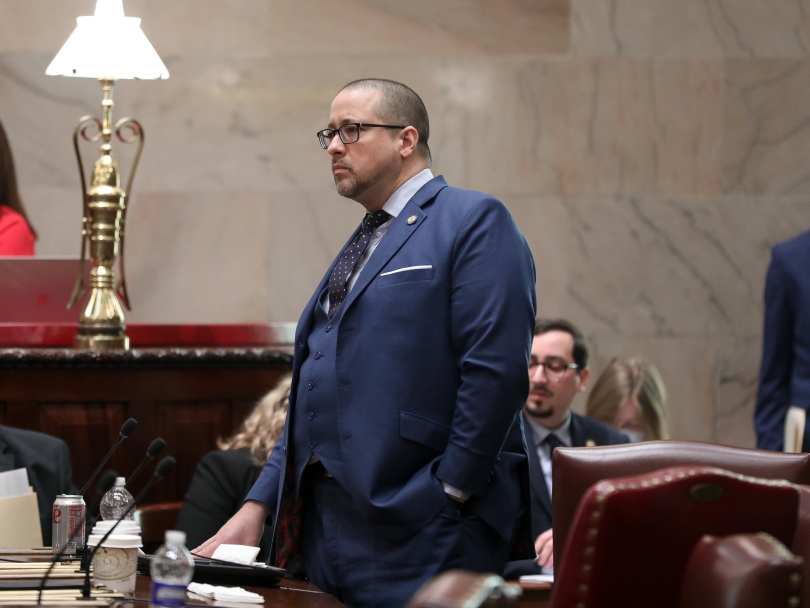
Sen. Gustavo Rivera
Sponsored bills
Requires the display of certain labels and warnings on gas stoves sold, displayed for sale, or offered for sale at retail to a consumer in this state; authorizes the department of state to adopt regulations regarding the placement and format of such labels; provides for penalties; authorizes the attorney general to enforce such provisions.
Relates to conducting investigations into the administration and enforcement of the New York state uniform fire prevention and building code and the New York state energy conservation construction code by counties.
Maddy summaryThis bill simplifies enrollment and recertification for New York Medicaid recipients needing long-term care. It automatically assigns people requiring community-based long-term care for over 120 days to a managed care plan (based on prior care workers, quality, and location), unless they choose otherwise. It also allows certain groups - like those in managed long-term care plans, receiving personal care services, or getting fixed Social Security income - to recertify automatically without resubmitting resource documentation, using "attestation" instead. These changes aim to reduce administrative burdens for both recipients and the state.
Requires the commissioner to establish Asian American, Native Hawaiian, and Pacific Islander history and civic impact curriculum or instructions for school districts.
Maddy summaryBill S 3815 amends New York's accidental death benefit rules for children of public safety employees. It allows children who were under age 25 when their parent (a police officer, firefighter, EMT, correction officer, or similar public safety worker) died accidentally to receive benefits until age 18 or 23 (whichever applies), instead of the previous cutoff of age 23. The key change extends the eligibility window for qualifying children by two years, ensuring those who turned 23 after their parent's death but were under 25 at the time of death can still receive benefits. This applies to children of members of specific public safety systems, including police departments, fire departments, and emergency medical services in New York City and surrounding areas.
Maddy summaryThis bill (S 4955) sets new standards for how New York's Medicaid Inspector General audits and reviews payments to healthcare providers. It requires the Inspector General to follow specific protocols when checking claims, cost reports, or payments, including providing providers access to applicable standards before audits begin. Key provisions include mandating detailed explanations in audit reports, considering factors like whether errors were minor clerical mistakes (e.g., transposed codes), and limiting recoupment for isolated errors. The bill directly affects Medicaid providers who receive state medical assistance payments, ensuring audits are transparent, fair, and based on clear, documented procedures.
Relates to the health, safety and human rights of incarcerated pregnant individuals, incarcerated birthing parents and their children; requires the commissioner of corrections and community supervision to establish rules and regulations relating to conditions in institutions and correctional facilities and the treatment and care of birthing parents in such institutions and facilities.
Requires cultural awareness and competence training for medical professionals, including two hours of course work or training encompassing minority healthcare issues; provides an exemption for certain individuals; requires hospitals and facilities to request documentation of the completion of training from employees and prospective employees.
Includes implants, replacement dental prosthetic appliances, crowns and root canals as medically necessary dental care and services for coverage under the Medicaid program if a qualified dentist authorizes the procedures.