

Maddy summaryThis bill amends New York's public health law to explicitly include digital health care platforms (e.g., app-based services connecting workers with facilities) in the legal definition of "temporary health care services agency." It directly affects digital health staffing platforms and health care facilities that use them, requiring these platforms to verify workers' licenses and training before assignments. Key provisions mandate submitting contracts with health facilities to the state within five business days and documenting staff qualifications. The law ensures digital platforms face the same regulatory standards as traditional staffing agencies.
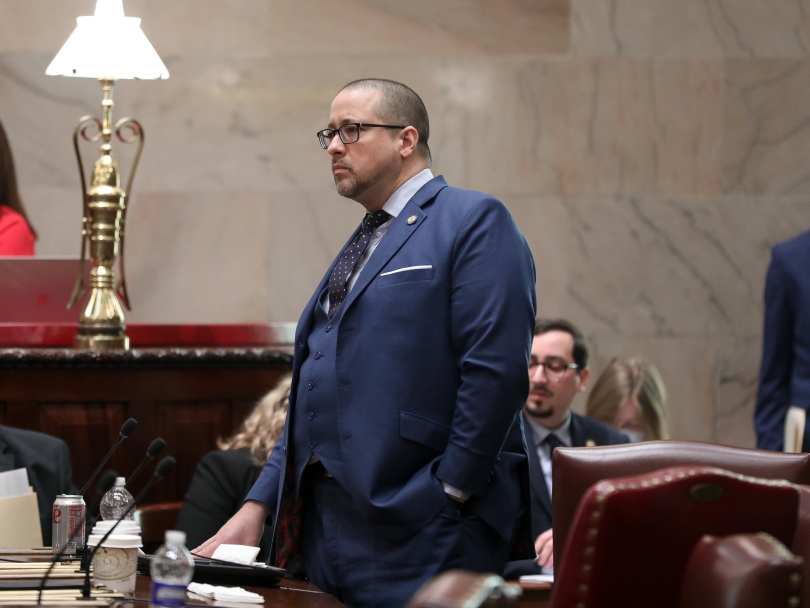
Sen. Gustavo Rivera
Sponsored bills
Requires public-facing websites operated by political committees to contain "paid for by" language; adds such public-facing websites to the list of political communications that qualify as independent expenditures.
Defines epinephrine device as a single-use device or nasal spray device used for the automatic injection or administration of a premeasured dose of epinephrine into the human body for the purpose of emergency treatment of a person appearing to experience anaphylactic symptoms.
Maddy summaryThis bill (S 1224) prevents school-based health center services from being delivered to medical assistance recipients (like Medicaid beneficiaries) through private managed care insurance plans. It amends state law to require these services to continue being provided directly outside of managed care programs. The key change ensures that students receiving medical assistance can access school health services through traditional public health channels, not through private insurance networks. The bill was passed by the legislature in June 2025 but was vetoed by the governor on October 16, 2025, so it did not become law.
Maddy summaryThis bill (S 4545) repeals Section 2307 of New York's Public Health Law, which previously addressed individuals knowingly infected with venereal disease. The repeal eliminates the legal provision that could have been used to prosecute such cases. The law takes effect immediately, preventing any future enforcement or legal action under the repealed section.
Prohibits the operation of NYC transit authority subways or trains without at least one conductor on board; requires a conductor on any subway or train operated by such authority whenever the subway or train has more than two cars attached to the engine.
Relates to utilization review program standards; requires use of evidence-based and peer reviewed clinical review criteria; relates to prescription drug formulary changes and pre-authorization for certain health care services.
Maddy summaryThis bill requires medical evaluations for assisted living facility admission to be completed within 30 days before a resident's move-in date. It directly affects assisted living facilities and prospective residents, mandating that evaluations must be signed by a physician, physician assistant, or nurse practitioner. The key provision updates eligibility rules to ensure assessments reflect current health needs. This change aims to improve safety and appropriateness of care placements by requiring timely evaluations. (4 sentences)
Maddy summaryS 7331 adds a new method for New York residents to register for the Donate Life Registry (which facilitates organ, eye, and tissue donations) by including a simple registration option during mandatory electronic personal income tax filings. The bill requires that tax forms used for electronic filings include a clear, standalone question asking: "Would you like to be added to the Donate Life Registry? Check box for 'yes' or 'skip this question'." This applies specifically to taxpayers required to file taxes electronically under New York law, making registration more accessible during an existing administrative process. The bill does not change existing registration methods but expands options to include tax filings, without mandating registration.
Provides parity to durable medical equipment providers by requiring Medicaid managed care organizations to reimburse such providers at no less than one hundred percent of the medical assistance durable medical equipment and complex rehabilitation technology fee schedule for the same service or item.