

Maddy summaryThis bill would impose a new tax on New York State residents with $1 billion or more in net assets (total wealth minus debts), calculated as if they sold all assets at market value on December 31, 2024. Taxpayers would pay the resulting tax over 10 years with an annual interest-like fee, or in full for the 2025 tax year. It includes credits for taxes paid to other states on assets accumulated before New York residency, and excludes certain assets like gifts made within five years. The tax applies only to New York residents meeting the $1 billion threshold, with the first payment due for the 2025 tax year. The bill is currently pending in the Budget and Revenue committee.
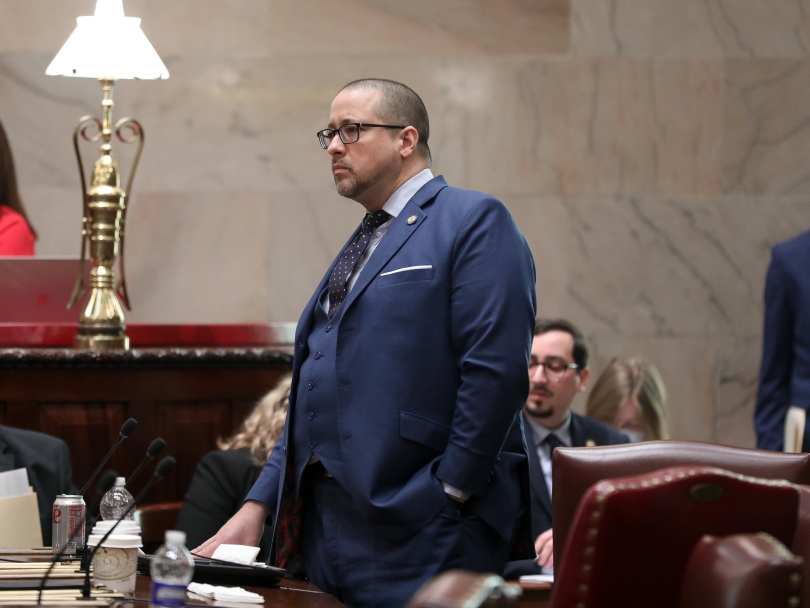
Sen. Gustavo Rivera
Sponsored bills
Creates statewide emergency and crisis response council to work in conjunction with the commissioners of mental health and addiction services to jointly approve emergency and crisis services plans submitted by local governments, and provide supports regarding the operation and financing of high-quality emergency and crisis services provided to persons experiencing a mental health, alcohol use, or substance use crisis.
Relates to the transfer, acceptance, or purchase of military weapons from the United States government; prohibits participation in the 1033 federal excess property program; provides exceptions.
Permits midwives and physician assistants to certify the cause of death on a fetal death certificate if they are in attendance at or after a fetal death.
Expands eligibility for tax abatement for rent-controlled and rent regulated property occupied by persons with disabilities to include individuals who do not meet the non-medical qualifications for SSDI and SSI but, by reason of the individual's disability, the individual is not able to engage in substantial gainful activity as that term is defined by the federal social security administration.
Maddy summaryS 2331 removes buprenorphine from the legal definitions of "controlled substance" and "narcotic preparation" under New York's penal law. This change means possessing buprenorphine (a medication used to treat opioid use disorder) will no longer be treated as a criminal offense under these specific provisions. The bill amends two sections of the penal law to exclude buprenorphine from lists that previously carried criminal penalties for possession. It will take effect on November 1, 2025.
Lowers the blood alcohol concentration required for driving while intoxicated from .08 of one per centum to .05, and for aggravated driving while intoxicated from .18 per centum to .12.
Provides for eligibility for medical assistance for personal care services for persons with traumatic brain injury, developmental disability, cognitive impairments, blindness or visual impairment.
Maddy summaryThis bill creates a new enforcement mechanism allowing certain workers, whistleblowers, or labor organizations to file public lawsuits on behalf of New York's labor department to address violations of specific labor laws. It enables private parties to initiate enforcement actions for issues like unpaid wages or misclassification (covered under Articles 5, 6, 9, 19, 19-A, 19-B, and 25-A), with civil penalties collected going to the state treasury. The law aims to supplement limited public enforcement resources by empowering workers and organizations to act as "private attorneys general" while protecting whistleblowers from retaliation. It explicitly excludes government agencies as targets and applies only to violations covered by designated labor law sections.
Authorizes increased equity withdrawals by certain non-public residential health care facilities; establishes the nursing home worker recruitment and safety fund.