

Requires the department of education to develop school health and mental health professionals to student ratios in public schools for students who do not receive services pursuant to the individuals with disabilities education act.
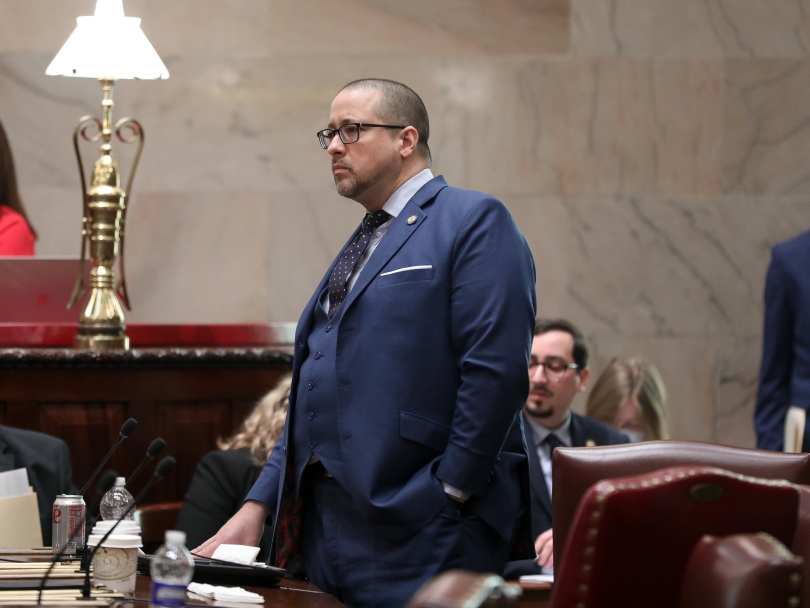
Sen. Gustavo Rivera
Sponsored bills
Relates to returnable bottles; adds noncarbonated soft drinks, certain noncarbonated fruit or vegetable juices, coffee and tea beverages, carbonated fruit beverages and cider to the definition of "beverage"; provides that beginning April 1, 2027, the handling fee will be six cents for each beverage container accepted by a deposit initiator from a dealer or operator of a redemption center; directs the multi-agency bottle bill fraud investigation team to submit a report on findings of pervasive bottle redemption fraud in New York state.
Enacts the "New York city small business rent stabilization act" instituting a commercial rent control system in the city of New York; creates the commercial rent guidelines board.
Relates to correctional facility visits by the correctional association; authorizes the correctional association to visit correctional facilities at any time and without advance notice; grants the correctional association access to certain records and information of correctional facilities.
Maddy summaryThis bill amends New York's penal law to adjust thresholds for criminal mischief charges. It raises the property damage amount required for third-degree criminal mischief (from $250 to $1,000) and adds a repeat-offender provision: damaging a locked vehicle with intent to steal becomes a felony if the person has three prior convictions for lower-level mischief offenses. For second-degree mischief, it increases the damage threshold from $1,000 to $3,500 to qualify as a felony. These changes directly affect individuals who damage property under these specific financial or repeat-offense conditions. The bill was referred to the Codes committee on February 18, 2025.
Provides additional compensation to certain city employees who possess or make substantial use of foreign languages in the performance of official duties; further creates the "language services program" and a language services director to implement the program.
Maddy summaryThis bill requires all New York schools - including public, charter, and non-public elementary and secondary schools - to maintain and properly test epinephrine auto-injectors for emergency use during severe allergic reactions. It designates school districts and schools as "public access epinephrine auto-injector device providers" under public health law, mandating they post clear signs showing device locations, notify regional health councils of device locations, and follow manufacturer and government maintenance standards. The law directly affects students, staff, and visitors at all covered schools by ensuring immediate access to life-saving treatment during allergic emergencies. The policy takes effect 90 days after enactment, with no cost or funding mechanisms specified in the bill text.
Maddy summaryThis bill creates a 50% tax credit for veterinary services on companion animals, up to $2,000 annually, for New York taxpayers. It covers costs like checkups, vaccinations, microchipping, and treatment of illness or injury, but excludes amounts reimbursed by others. Taxpayers must provide a receipt from a licensed veterinarian and can carry forward unused credit to future tax years. The credit applies to taxable years beginning January 1, 2025, and expires January 1, 2031.
Maddy summaryThis bill requires New York voter registration forms to include a clear notice in bold type about the state's closed primary system. The notice states that voters must enroll in a political party to vote in that party's primary election, unless the party's rules allow otherwise. This change directly affects voters during the registration process, ensuring they understand how party enrollment impacts primary voting eligibility. The notice will appear on all standard voter registration forms starting two years after the bill becomes law.
Establishes a civil cause of action for employees who are subjected to an abusive work environment; provides employers shall be vicariously liable for such work environment.