Requires certain public hearings held by the New York state urban development corporation to be recorded and such recordings be posted to the corporation's website within forty-eight hours.
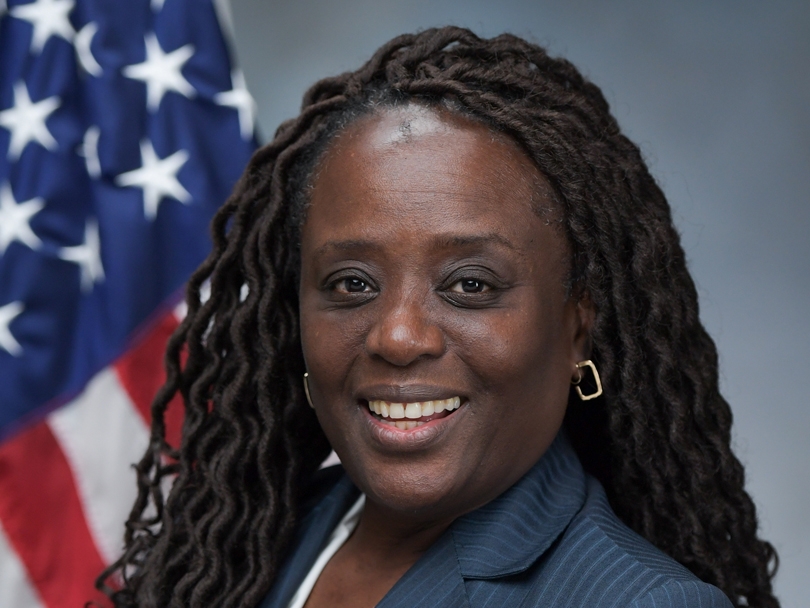
Sen. Cordell Cleare
Sponsored bills
Maddy summaryThis bill (S 160) proposes a constitutional amendment to grant voting rights to people incarcerated in state correctional facilities. It would amend the state constitution to explicitly include "any incarcerated person" among citizens entitled to vote in all elections, provided they are 18+ and meet standard residency requirements (30 days in the county, city, or village before an election). The amendment would directly affect incarcerated individuals by restoring their voting eligibility, aligning with existing constitutional provisions for other citizens. The bill requires a constitutional amendment process, including legislative approval and a public referendum after the next general election.
Requires the inclusion of cultural competency training in the basic training and pre-employment course curricula for state police officers and municipal police officers and sheriffs, members of fire departments and companies, corrections officers, first responders, emergency medical technicians and advanced emergency medical technicians.
Maddy summaryS 2512 proposes a constitutional amendment establishing a fundamental right for all people to access public information and attend government meetings. If passed, it would add Section 20 to the state constitution, guaranteeing the right to inspect or copy government records and receive notice of public meetings without unreasonable restrictions. This directly affects every resident by ensuring transparency in government operations and participation in public decision-making. The bill aims to strengthen democratic accountability through concrete constitutional protection, not procedural changes.
Maddy summaryThis bill requires all non-exempt emergency vehicles in New York City to use signal devices that produce an alternating high and low, two-toned sound (instead of single-tone sirens), while also limiting maximum sound levels to under 90 decibels at 50 feet. It directly affects police, fire, and ambulance vehicles not responding to medical emergencies, mandating they meet these sound standards. Vehicles must undergo annual testing and certification to confirm compliance, with exemptions for medical emergency responses and specific city departments. The law aims to reduce noise pollution while maintaining emergency vehicle safety and effectiveness.
Maddy summaryThis bill amends the state constitution to allow state legislatures to alter or repeal property tax exemptions specifically for private colleges and universities. Currently, exemptions for religious, educational, and charitable properties are protected, but this change removes that protection for private higher education institutions. It would enable lawmakers to modify or eliminate tax breaks on property owned by these schools, unlike other exempt properties. The change affects private institutions of higher education directly by making their tax exemptions subject to legislative action.
Provides that the Governor's annual budget proposal to the Legislature shall include statements of any new legislation, amendment to legislation, or limitation on the effect of any legislation contained in the budget; makes related provisions granting the legislature an equal role with the governor in the budget process.
Amends the constitution to delete the requirement that registration for purposes of voting be completed at least ten days before election day; provides that laws be made to adequately safeguard against deception in the exercise of the right of suffrage.
Maddy summaryThis bill prohibits evictions from residential properties in New York State during periods of "inclement winter weather," defined as temperatures at or below 32°F (including wind chill), typically occurring from November through April. It directly affects all residential tenants in New York, with the legislature noting evictions disproportionately impact Black and Latinx households. The law amends real property law to block eviction proceedings during these cold-weather periods, citing health risks like increased mortality and homelessness linked to winter displacement. The ban aims to protect public health and safety by preventing homelessness during conditions that exacerbate exposure-related health crises.
Eliminates certain court surcharges and fees and probation and parole surcharges and fees; eliminates the requirement that a parolee or releasee receiving a merit termination of sentence be financially able to comply with an order of restitution; eliminates the requirement that a person receiving a discharge of sentence be financially able to comply with an order of restitution and the payment of certain surcharges or fees (Part A); mandates that courts engage in an individualized assessment of a person's financial ability to pay a fine prior to imposing a fine (Part B); eliminates the availability of incarceration as a remedy for a failure to pay a fine, surcharge, or fee, lifts and vacates existing warrants issued solely on a person's failure to timely pay a fine, surcharge or fee and ends existing sentences of incarceration based on such failure (Part C); vacates existing unsatisfied civil judgments based on a person's failure to timely pay a surcharge, or fee (Part D); prohibits the collection of a fine, restitution or reparation from the funds of an incarcerated person; prohibits the payment of court fines, mandatory surcharges, certain fees, restitution, reparation or forfeitures from the earnings of prisoners (Part E); vacates existing unpaid surcharges, DNA databank fees, crime victim assistance fees, sexual offender registration fees, supplemental sex offender victim fees, or probation or parole supervision fees; repeals certain provisions of law relating to restrictions on remitting such fees (Part F).