

Maddy summaryThis bill prohibits candidates and elected officials from using campaign funds to pay attorney fees or legal costs when defending against civil or criminal cases alleging violations of state or federal law. It directly affects candidates, public officials, and their close family members or domestic partners who face legal actions. The law bans such campaign spending except for civil cases specifically covered under Article Sixteen of the election law. This creates a clear policy change by preventing campaign money from being used for personal legal defense in most cases.
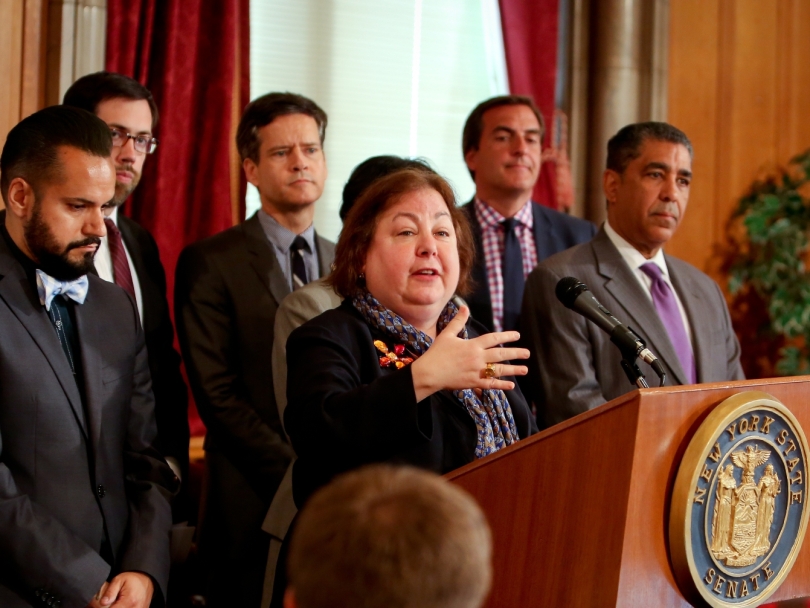
Sen. Liz Krueger
Sponsored bills
Maddy summaryThis bill (S 132) prevents town, city, or county industrial development agencies from waiving taxes that would otherwise go to school districts. It prohibits these agencies from entering into agreements that replace tax payments (like "payment in lieu of taxes") or waiving other taxes directly payable to school districts. The law ensures school districts retain all tax revenue that would have been collected from industrial development projects. This directly affects local industrial development agencies and school districts by requiring full tax payments instead of waivers.
Relates to parole eligibility for certain incarcerated persons age fifty-five or older if they have served at least fifteen years of their sentence or sentences.
Provides that any claimant who has received certain unemployment benefits to which they were not entitled shall not be held liable for the amounts overpaid provided certain conditions exist; directs the department of labor to provide claimants who have previously been denied waivers with applications for individual waivers; repeals certain provisions of law relating thereto.
Prohibits the use in an industrial plant of any product or substance that contains perfluoroalkyl and polyfluoroalkyl substances, including vats, conveyor belts, molds, ovens, pans, pots, chemicals used as mold releasers, lubricants, seals and coatings.
Maddy summaryThis bill requires businesses using bicycles with electric assist for commercial deliveries (like food or package delivery) to register each vehicle and display a distinctive number plate. It directly affects delivery companies, independent contractors, and third-party platforms (e.g., food delivery apps) that employ riders using e-bikes for paid commercial work. Employers become liable for fines if their riders violate the registration or display rules, facing penalties of $100-$250 per violation. The law also sets fees for registration plates and establishes civil penalties for repeated business noncompliance, separate from criminal penalties for individual violations.
Relates to the establishment of a single computerized state DNA identification index; requires municipalities to expunge any DNA record stored in a municipal DNA identification index.
Requires all agencies to submit to the committee on open government a log of all freedom of information law requests for each year in which they received or have pending a request for records; requires the committee on open government to publish, on one webpage, all freedom of information law request logs it receives.
Provides that no state or local agency, or any agent thereof, may use any funds, facilities, property, equipment or personnel of such agency to investigate, enforce or provide assistance in the investigation or enforcement of any federal program requiring registration of individuals, or maintaining a database of individuals, on the basis of race, color, creed, gender, sexual orientation, religion or national or ethnic origin.
Provides that cities having a population in excess of one million shall not supersede state provisions relating to the state law prohibition on individuals standing or parking a vehicle within twenty feet of a cross walk at an intersection.