

Maddy summaryThis bill (S 3286) allows New York prosecutors (District Attorneys) to file motions seeking reduced sentences for individuals who have served long prison terms - specifically 20+ years for serious felony convictions or 15+ years for other felonies. It directly affects inmates serving lengthy sentences who have been rehabilitated and no longer pose a public safety risk, including those with life or near-life sentences. The key provision gives prosecutors the authority to revisit past sentencing decisions when an incarcerated person has served a substantial portion of their sentence, based on evidence of rehabilitation. This aims to reduce unnecessary long-term incarceration without compromising public safety, aligning with research showing recidivism rates drop significantly after age 50.
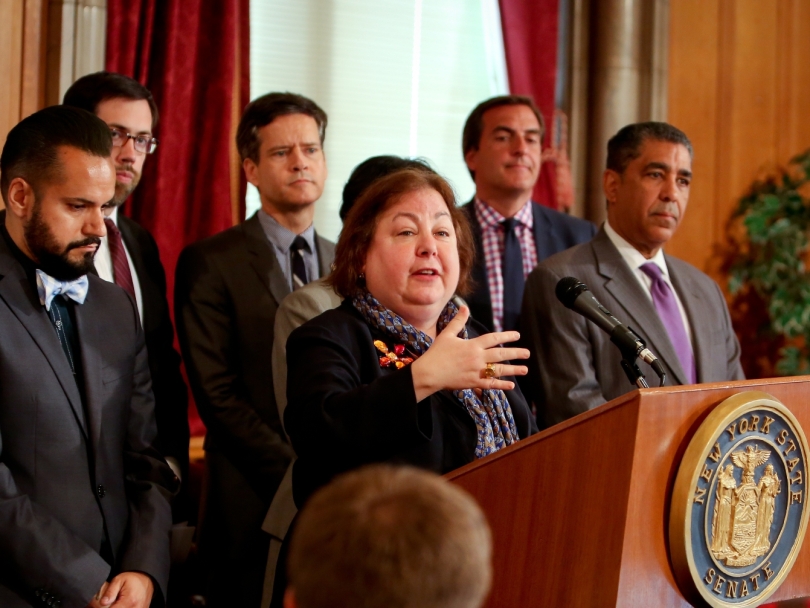
Sen. Liz Krueger
Sponsored bills
Establishes clean energy goals of reducing the annual total of vehicle miles traveled within the state by 20% by the year 2050; requires state and local highway projects to comply with reductions to vehicle miles traveled targets.
Enacts the "state taxpayer oversight and protection (STOP) act"; relates to the payment of attorneys' fees by the state; provides that no attorneys' fees or expenses shall be paid if incurred on behalf of an employee in any action brought by the employee against the state; provides that attorneys' fees shall be presumptively unreasonable where an individual hires or employs multiple law firms on the same matter unless such employee can demonstrate the need for additional attorneys with distinct subject matter expertise.
Provides notice of the death of an incarcerated individual occurring in the custody of the department of corrections and community supervision; requires the department to promptly notify the next kin and any other person designated as the representative of any incarcerated individual whose death takes place during custody.
Maddy summaryThis bill requires cable television companies to provide new written information to subscribers at the time of initial sign-up. Specifically, companies must describe the required equipment, explain where subscribers can buy that equipment retail, and list compatible retail options that work with their system. The requirement applies directly to cable subscribers who are signing up for service, ensuring they understand equipment choices before committing. The law defines "equipment" broadly to include devices like modems used for data transmission. This policy change aims to increase transparency about equipment options without restricting consumer choices.
Maddy summaryS 5777 requires drivers with suspended or revoked licenses (for traffic offenses) to surrender all vehicle registration plates and have their vehicle registrations suspended. This applies to all vehicles registered in their name, preventing new registrations during the license suspension period. Drivers must surrender plates within 14 days of receiving written notice, with failure punishable by fines ($150-$500) or jail time. A hardship exception allows joint vehicle use by family members (including domestic partners) if surrendering plates would cause extreme hardship, requiring proof like shared insurance.
Aligns utility regulation with state climate justice and emission reduction targets; provides for a statewide affordable gas transition plan and utility home energy affordable transition programs; repeals provisions relating to continuation of gas service; repeals provisions relating to the sale of indigenous natural gas for generation of electricity.
Creates a private right of action for improper debt collection procedures; allows plaintiffs to recover punitive damages and reasonable attorney's fees.
Creates the "Dignity for Immigrants in New York State Act", prohibiting detention of individuals based only on the violation of federal immigration laws.
Maddy summaryS 1360 establishes strict rules for state employees handling confidential information like health status, immigration details, or crime victim records. It requires written approval from designated agency "access officers" before any disclosure (except for legal requirements or criminal investigations), prohibits unnecessary collection of such data, and bans line workers from sharing confidential details without prior written authorization. The bill directly affects all state employees interacting with the public (e.g., in benefits or social services) and agencies providing state services. Key provisions include limiting disclosures to what's legally required, mandating written consent for individual disclosures, and imposing civil penalties of up to $1,000 for violations.