Maddy summaryThis is a procedural Senate resolution (not a bill), requesting Governor Hochul to declare July 1, 2026, as "Canada Day" in New York State. It memorializes the strong economic, cultural, and trade ties between New York and Canada, including $17 billion in annual exports and over 1,300 Canadian businesses operating in the state. The resolution has no binding effect; it simply asks the Governor to issue a ceremonial proclamation recognizing these connections. The legislature adopted it on February 3, 2026, and will send it to the Governor and Canada's New York Consul General.
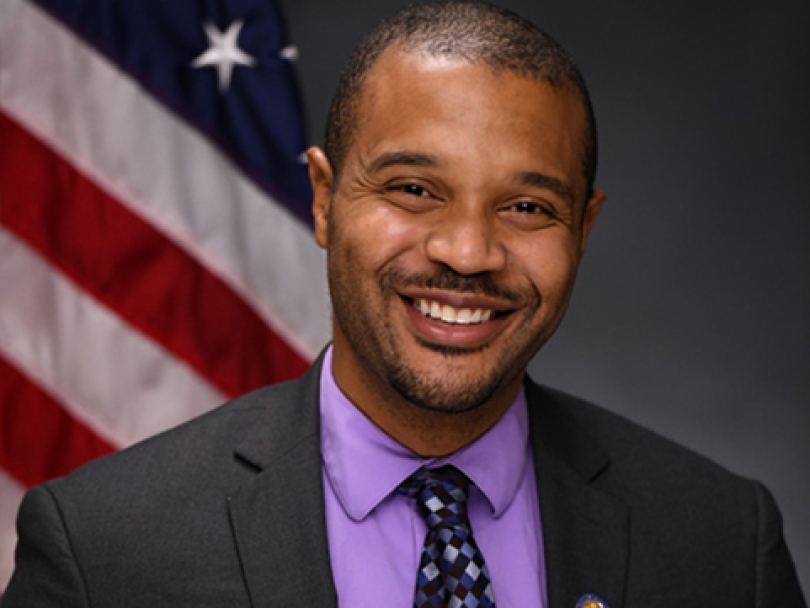
Sen. Jabari Brisport
Sponsored bills
Relates to the taxation of moneys, credits, securities and other intangible personal property in the state that is not employed in carrying on any business therein.
Maddy summaryThis bill (S 160) proposes a constitutional amendment to grant voting rights to people incarcerated in state correctional facilities. It would amend the state constitution to explicitly include "any incarcerated person" among citizens entitled to vote in all elections, provided they are 18+ and meet standard residency requirements (30 days in the county, city, or village before an election). The amendment would directly affect incarcerated individuals by restoring their voting eligibility, aligning with existing constitutional provisions for other citizens. The bill requires a constitutional amendment process, including legislative approval and a public referendum after the next general election.
Maddy summaryThis bill amends the state constitution to allow state legislatures to alter or repeal property tax exemptions specifically for private colleges and universities. Currently, exemptions for religious, educational, and charitable properties are protected, but this change removes that protection for private higher education institutions. It would enable lawmakers to modify or eliminate tax breaks on property owned by these schools, unlike other exempt properties. The change affects private institutions of higher education directly by making their tax exemptions subject to legislative action.
Provides that the Governor's annual budget proposal to the Legislature shall include statements of any new legislation, amendment to legislation, or limitation on the effect of any legislation contained in the budget; makes related provisions granting the legislature an equal role with the governor in the budget process.
Maddy summaryThis bill (S 1117) proposes a constitutional amendment requiring the state to provide free public education for all students from pre-kindergarten through undergraduate degree programs. It would amend the state constitution to mandate that the legislature fund and maintain a system of free quality education covering all public K-12 schools and post-secondary institutions offering bachelor's degrees or certifications. The amendment must be approved by voters in a future election after a 3-month public review period, as outlined in the bill's text. Currently, the bill is under review by the Judiciary Committee following an attorney general's opinion.
Maddy summaryThis bill prohibits evictions from residential properties in New York State during periods of "inclement winter weather," defined as temperatures at or below 32°F (including wind chill), typically occurring from November through April. It directly affects all residential tenants in New York, with the legislature noting evictions disproportionately impact Black and Latinx households. The law amends real property law to block eviction proceedings during these cold-weather periods, citing health risks like increased mortality and homelessness linked to winter displacement. The ban aims to protect public health and safety by preventing homelessness during conditions that exacerbate exposure-related health crises.
Eliminates certain court surcharges and fees and probation and parole surcharges and fees; eliminates the requirement that a parolee or releasee receiving a merit termination of sentence be financially able to comply with an order of restitution; eliminates the requirement that a person receiving a discharge of sentence be financially able to comply with an order of restitution and the payment of certain surcharges or fees (Part A); mandates that courts engage in an individualized assessment of a person's financial ability to pay a fine prior to imposing a fine (Part B); eliminates the availability of incarceration as a remedy for a failure to pay a fine, surcharge, or fee, lifts and vacates existing warrants issued solely on a person's failure to timely pay a fine, surcharge or fee and ends existing sentences of incarceration based on such failure (Part C); vacates existing unsatisfied civil judgments based on a person's failure to timely pay a surcharge, or fee (Part D); prohibits the collection of a fine, restitution or reparation from the funds of an incarcerated person; prohibits the payment of court fines, mandatory surcharges, certain fees, restitution, reparation or forfeitures from the earnings of prisoners (Part E); vacates existing unpaid surcharges, DNA databank fees, crime victim assistance fees, sexual offender registration fees, supplemental sex offender victim fees, or probation or parole supervision fees; repeals certain provisions of law relating to restrictions on remitting such fees (Part F).

Relates to granting certain individuals youthful offender status; adds a new category of individuals eligible for young adult offender status; provides for process and sentencing requirements related to such statuses.
Maddy summaryS 1351 creates a pilot program to control prescription drug costs by setting maximum prices ("referenced rates") based on the lowest prices for the same drugs in four Canadian provinces (Ontario, Quebec, British Columbia, and Alberta). It applies to state health programs and pharmacies purchasing drugs for state-funded health plans, requiring them to pay no more than the referenced rate for the five most expensive drugs identified by the state. Any savings generated from this pricing cap must be directly passed to consumers through reduced costs. The pilot runs for one year, with a report due to state leaders assessing its feasibility for broader expansion.