

Maddy summaryThis bill creates a new legal cause of action allowing individuals to sue for damages if their partner intentionally removes, tampers with, or misrepresents the use of a sexually protective device during consensual sexual activity. It specifically covers situations where a condom, spermicide, or similar barrier is taken away or altered without permission, used while known to be broken, or falsely claimed to be present when it is not. The law clarifies that agreeing to sex without protection one time does not mean a person agrees to unprotected sex later, and it permits courts to award money for emotional distress and the risks of pregnancy or infection. This provision adds to existing civil rights laws and does not prevent people from seeking other legal remedies, such as child support, if a pregnancy occurs as a result.
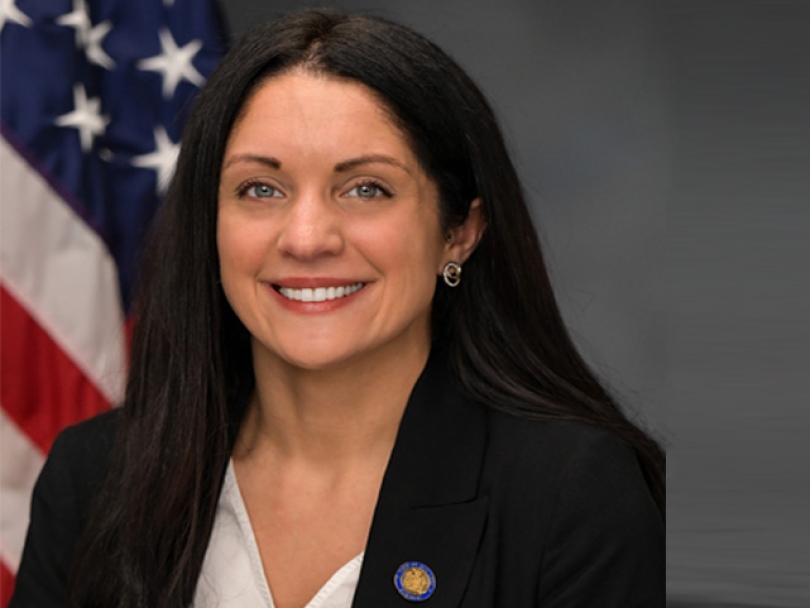
Sen. Jessica Scarcella-Spanton
Sponsored bills
Adds fifteen additional judges to the civil court of the city of New York; adds additional family court judges to Cayuga, Chenango, Cortland, Erie, Jefferson, Nassau, Rensselaer, Rockland, Suffolk and Westchester counties.
Maddy summaryThis bill restricts the use of specific chemicals in menstrual products sold or distributed within the state. It defines "restricted substances" to include unsafe items like lead, mercury, and various phthalates, and prohibits their inclusion as intentionally added ingredients immediately upon the law's effective date. Additionally, the bill requires the Department of Health to set lower safety thresholds for these chemicals within two years, with a mandate to review and potentially lower those limits every five years. The legislation applies to all menstrual products, including tampons, pads, and cups, and takes effect twelve months after becoming law.
Relates to first responders, including correction officers, coming into contact with saliva by spitting, throwing, tossing, or expelling from or by an individual.
Requires an agency responding to a request for public employee disciplinary records to develop a policy to notify the public employee whose personal information is subject to the request.
Provides an option for beneficiaries of NYC transit authority members to receive a lump sum equal to the pension reserve where a member who is eligible for a service retirement dies prior to filing for retirement.
Requires the department of motor vehicles compile a list of veterans who apply for a veteran driver's license and provide such list to the department of veterans' services to aid in outreach efforts by the department of veterans' services.
Maddy summaryThis bill updates the rules for how much money adoptive parents can pay to cover a birth mother's pregnancy and birth-related expenses in New York. It allows adoptive parents to reimburse costs such as housing, clothing, and travel up to 180 days before the baby is born and for up to 45 days after birth or parental consent, whichever comes later. The law also permits payments for medical fees, nursing care, and legal services while maintaining strict limits to prevent illegal payments to birth parents. Additionally, the bill reinforces rules against attorneys representing both the birth parent and adoptive parent in the same case to ensure ethical conduct. These changes apply to all adoptions involving children born in New York or residents seeking to adopt within the state.
Directs that moneys in the veterans' home services fund shall be payable on vouchers certified by the commissioner of veterans' services; directs a report to be submitted by such commissioner; directs that moneys in the military family relief fund shall be payable on vouchers certified by the commissioner of veterans' services.
Maddy summaryThis bill makes it illegal for non-police individuals to install or use radio equipment in their vehicles that can receive police communications without first obtaining a permit from local authorities. The law specifically targets people who interfere with police radio transmissions and sets penalties of up to a $1,000 fine, six months in jail, or both for violations. However, the rule does not apply to licensed amateur radio operators using their own equipment or to state emergency service employees performing official duties. The legislation takes effect immediately upon passage.