Provides benefits to Metro-North employees involved in or who witness a serious injury or fatality of another person in the course of an assigned duty.
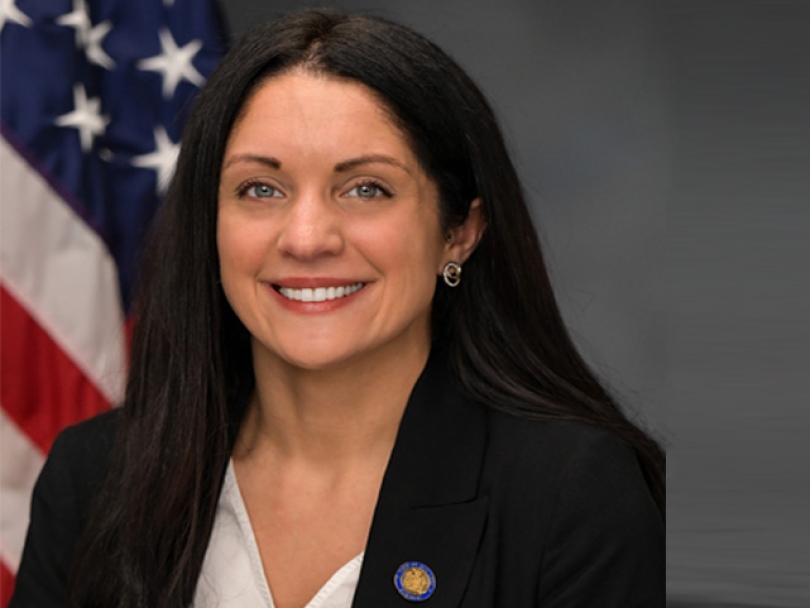
Sen. Jessica Scarcella-Spanton
Sponsored bills
Maddy summaryThis bill requires all covered water systems (serving specific residential populations) to replace every lead service line in their systems by November 1, 2037. It mandates that water systems cover all replacement costs at no direct charge to property owners, including planning, construction, and restoration. Property owners must allow access for replacement or opt-out by replacing their portion within 45 days at their own expense. The law applies to all lead pipes connecting water mains to buildings, including those owned by customers, and defines "lead service lines" to include certain galvanized pipes and lead connectors.
Maddy summaryBill S 7969 limits the fines public authorities can impose for late payment or evasion of tolls. It directly affects drivers who use toll roads and the authorities that manage them. The bill caps any fine, fee, or administrative charge for a late toll payment at twenty-five percent of the original toll amount owed. For toll evasion violations, it establishes a maximum penalty of twenty-five percent of the evaded toll, replacing previous escalating penalties. Additionally, it outlines requirements for toll bills sent via the "tolls by mail" program and maintains existing prohibitions on periodic administrative charges for electronic payment methods like E-ZPass.
Relates to defining veteran; includes national guard members who have served for at least twenty years, part of which was during any war or period of hostilities.
Maddy summaryThis bill increases the income threshold for a temporary public assistance benefit. It changes the rule so that individuals who recently started working can disregard all their earned income for up to six months (after job entry) if their total income is under 400% of the federal poverty level - up from the current 200% limit. This directly affects low-income working individuals receiving public assistance who are transitioning from unemployment to employment. The policy change aims to provide a longer financial buffer during early employment while maintaining eligibility for benefits.
Establishes the "jobs and housing act"; directs the private housing finance agency to develop and administer a jobs and housing pilot program to construct and preserve housing, including workforce housing, that is affordable to low and moderate income persons, and creates jobs for those who build and work in such housing.
Enacts the "synthetic kratom kills act" to prohibit harmful synthetic and adulterated kratom products; provides that no person, manufacturer, retailer, or other entity shall manufacture, distribute, sell, or offer for sale: synthesized kratom material; any adulterated kratom product; a kratom product that is combustible or intended to be used for vaporization, aerosolization, or injection; a kratom product that is incorporated into, or marketed or labeled as, a conventional food or beverage product; a kratom product that contains flavoring agents or additives specifically designed or marketed to appeal to individuals under twenty-one years of age; a kratom product not contained in child-resistant packaging; a kratom product that mimics a candy product or is manufactured, packaged, or advertised in a way that can be reasonably considered to appeal to individuals under twenty-one years of age; any kratom product to an individual under twenty-one years of age; and any kratom product in which the concentration of 7-hydroxymitragynine exceeds two percent of the concentration of total alkaloids; requires testing and clear labeling.

Provides for mandatory health insurance coverage for coronary artery calcium diagnostic testing upon the recommendation of a health care provider; makes related provisions.
Maddy summaryThis bill allows licensed veteran organizations, fraternal societies, and volunteer fire companies in New York to operate electronic bell jar vending machines as a way to raise money for charity. The legislation defines these specific groups and sets strict rules to ensure the machines are used only by their members and function differently from slot machines or video lottery terminals. Key provisions limit each organization to a maximum of three machines, prohibit their use near tribal gaming lands, and restrict the number of machines in cities with large populations based on distance from existing casinos. By updating state laws, the bill aims to modernize fundraising tools for these nonprofits while maintaining existing safeguards against unregulated gambling.
Enacts the "wireless security enforcement act" to prohibit the sale of wireless signal jammer devices; defines terms; provides that a person is guilty of prohibited use of a wireless signal jammer device if they engage in the possession, manufacture, importation, marketing, or sale of wireless signal jammer devices; requires restitution.