Maddy summaryThis is a procedural Senate resolution (not a bill), requesting Governor Hochul to declare July 1, 2026, as "Canada Day" in New York State. It memorializes the strong economic, cultural, and trade ties between New York and Canada, including $17 billion in annual exports and over 1,300 Canadian businesses operating in the state. The resolution has no binding effect; it simply asks the Governor to issue a ceremonial proclamation recognizing these connections. The legislature adopted it on February 3, 2026, and will send it to the Governor and Canada's New York Consul General.
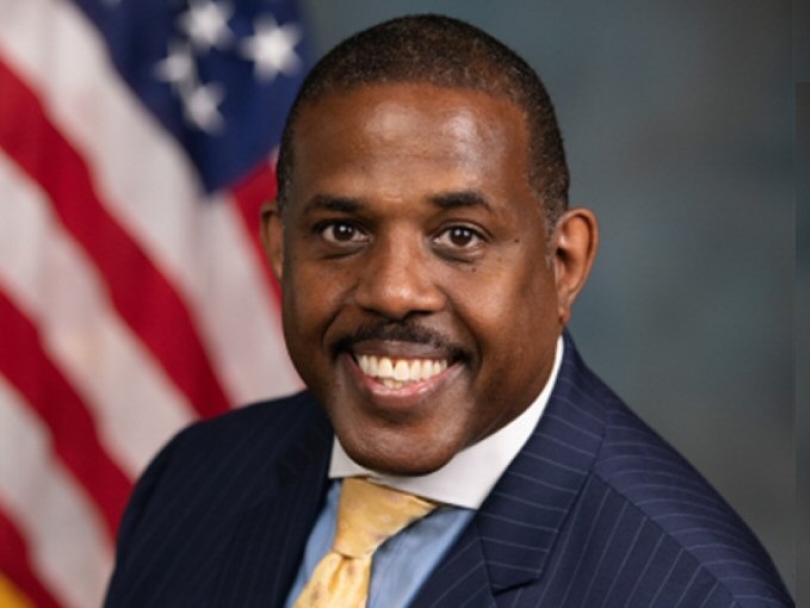
Sen. Kevin Parker
Sponsored bills
Requires certain watercraft, aircrafts, and trains to use clean energy, including ensuring such vehicles are zero-emissions; requires NYSERDA to study zero-emission commercial vehicles, the use of renewable energy in publicly funded airports, and the use of sustainable aviation fuel; requires NYSERDA to administer a grant program to flying schools and clubs that install charging infrastructure.
Maddy summaryThis bill (S 160) proposes a constitutional amendment to grant voting rights to people incarcerated in state correctional facilities. It would amend the state constitution to explicitly include "any incarcerated person" among citizens entitled to vote in all elections, provided they are 18+ and meet standard residency requirements (30 days in the county, city, or village before an election). The amendment would directly affect incarcerated individuals by restoring their voting eligibility, aligning with existing constitutional provisions for other citizens. The bill requires a constitutional amendment process, including legislative approval and a public referendum after the next general election.
Maddy summaryS 3920 proposes adding a constitutional amendment to guarantee that "the inherent right of each person to personal privacy shall not be infringed." This would directly affect all natural persons (individuals) in the state by enshrining privacy as a fundamental constitutional right. The bill does not specify new laws or enforcement mechanisms but would require future legislation to implement protections. As a procedural constitutional amendment, it currently awaits review by the Judiciary committee and the Attorney General's opinion.
Maddy summaryThis bill proposes a constitutional amendment to strengthen voting rights by banning specific voter restrictions. It directly affects all voters in New York, prohibiting requirements like literacy tests, educational proof, poll taxes, photo ID mandates, citizenship verification for registration, and "good moral character" checks. The amendment also protects third-party voter registration efforts from state interference. If passed, it would eliminate seven common barriers that disproportionately impact marginalized communities. The bill is currently under review by the Judiciary Committee.
Provides that the Governor's annual budget proposal to the Legislature shall include statements of any new legislation, amendment to legislation, or limitation on the effect of any legislation contained in the budget; makes related provisions granting the legislature an equal role with the governor in the budget process.
Amends the constitution to delete the requirement that registration for purposes of voting be completed at least ten days before election day; provides that laws be made to adequately safeguard against deception in the exercise of the right of suffrage.
Maddy summaryThis bill prohibits evictions from residential properties in New York State during periods of "inclement winter weather," defined as temperatures at or below 32°F (including wind chill), typically occurring from November through April. It directly affects all residential tenants in New York, with the legislature noting evictions disproportionately impact Black and Latinx households. The law amends real property law to block eviction proceedings during these cold-weather periods, citing health risks like increased mortality and homelessness linked to winter displacement. The ban aims to protect public health and safety by preventing homelessness during conditions that exacerbate exposure-related health crises.
Eliminates certain court surcharges and fees and probation and parole surcharges and fees; eliminates the requirement that a parolee or releasee receiving a merit termination of sentence be financially able to comply with an order of restitution; eliminates the requirement that a person receiving a discharge of sentence be financially able to comply with an order of restitution and the payment of certain surcharges or fees (Part A); mandates that courts engage in an individualized assessment of a person's financial ability to pay a fine prior to imposing a fine (Part B); eliminates the availability of incarceration as a remedy for a failure to pay a fine, surcharge, or fee, lifts and vacates existing warrants issued solely on a person's failure to timely pay a fine, surcharge or fee and ends existing sentences of incarceration based on such failure (Part C); vacates existing unsatisfied civil judgments based on a person's failure to timely pay a surcharge, or fee (Part D); prohibits the collection of a fine, restitution or reparation from the funds of an incarcerated person; prohibits the payment of court fines, mandatory surcharges, certain fees, restitution, reparation or forfeitures from the earnings of prisoners (Part E); vacates existing unpaid surcharges, DNA databank fees, crime victim assistance fees, sexual offender registration fees, supplemental sex offender victim fees, or probation or parole supervision fees; repeals certain provisions of law relating to restrictions on remitting such fees (Part F).

Relates to granting certain individuals youthful offender status; adds a new category of individuals eligible for young adult offender status; provides for process and sentencing requirements related to such statuses.