

Relates to commissaries and canteens at correctional institutions; provides that items for sale at a commissary or canteen shall be sold for market value; provides that money placed into an incarcerated individual's commissary or canteen account or fund shall only be used for purchasing items or goods.
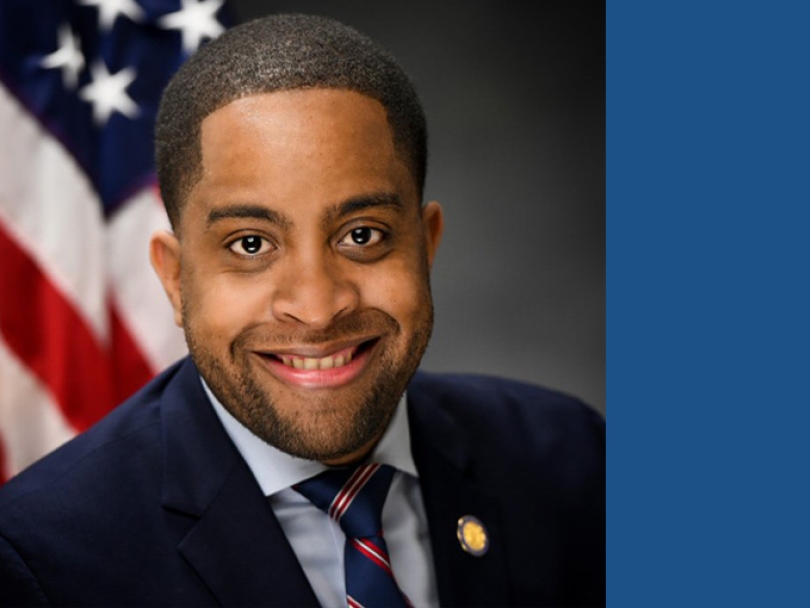
Sen. Zellnor Myrie
Sponsored bills
Requires public agencies to establish preliminary license application procedures to determine whether an applicant for a license would be ineligible for such license based on criminal history; establishes time frames for public agencies to respond to such applications; requires public agencies to report information regarding granting licenses annually.
Maddy summaryThis bill expands the State Commission of Correction by increasing the number of members from three to nine. The new commission will include representatives appointed by the governor, the speaker of the assembly, the temporary president of the senate, and the correctional association, with specific requirements that at least one member be a formerly incarcerated person, a public health professional, a behavioral healthcare professional, or an attorney specializing in prisoner rights. All members must serve full-time without holding other salaried public positions, and they will serve staggered five-year terms to ensure continuity. The legislation also clarifies that the appointing authority for each member can remove them for cause after a hearing.
Maddy summaryThis bill updates insurance requirements for specific types of vehicles, including commuter vans, pre-arranged for-hire vehicles, and accessible vehicles, to allow them to be covered by risk retention groups. It permits these groups, which are not chartered in New York but are registered under federal law, to provide insurance for eligible non-profit organizations and certain other vehicles, provided they are not used solely for personal purposes by high-level officials or their families. The legislation also defines key terms such as "commuter van" and "accessible vehicle," ensuring that vehicles designed for people with disabilities meet specific equipment and accessibility standards. By amending the vehicle and traffic law, the bill expands the options for insurance coverage while maintaining restrictions on how these vehicles can be operated.
Provides that no incarcerated individual in any state or local prison, penitentiary, jail or reformatory shall be compelled or induced to provide labor against their will.
Maddy summaryThis bill restricts the use of specific chemicals in menstrual products sold or distributed within the state. It defines "restricted substances" to include unsafe items like lead, mercury, and various phthalates, and prohibits their inclusion as intentionally added ingredients immediately upon the law's effective date. Additionally, the bill requires the Department of Health to set lower safety thresholds for these chemicals within two years, with a mandate to review and potentially lower those limits every five years. The legislation applies to all menstrual products, including tampons, pads, and cups, and takes effect twelve months after becoming law.
Maddy summaryThis bill establishes comprehensive health and safety standards for pregnant and postpartum individuals in correctional facilities and their young children. It mandates access to full prenatal, obstetric, and postpartum medical care, including pain management during delivery and treatment for substance use disorders, while ensuring privacy and freedom from discrimination. The legislation also allows children born to incarcerated parents to remain with their mothers in the facility until the child is eighteen months old, or until the parent is paroled if that occurs before the child turns twenty-four months, with strict limits on removing children from their parents.
Makes amendments to the John R. Lewis Voting Rights Act of New York regarding definition of certain terms and enforcement provisions; specifies certain deceptive and fraudulent acts; relates to notification of violations; relates to preclearance of policies by the civil rights bureau or by a designated court; requires notification to the civil rights bureau of actions involving voting rights.
Extends the statute of limitations of actions related to certain sex trafficking offenses, reviving such actions otherwise barred by the existing statute of limitations; grants trial preference to such actions; exempts such actions from certain provisions requiring notice of claims.
Establishes an indirect source review for heavy distribution warehouse operations; requires the department of environmental conservation to conduct a study regarding zero-emissions zones.