

Maddy summaryS 58 creates a new criminal offense for making threats of violence against police officers, classifying it as a class C felony. The bill defines the crime as threatening to commit violence against an officer with the intent to intimidate civilians, influence government policy, or disrupt government operations. It explicitly states that lacking the intent or ability to carry out the threat is not a valid defense. This law directly affects individuals who make such threats, imposing felony penalties rather than lesser offenses. The bill aims to strengthen legal consequences for threats targeting law enforcement personnel.
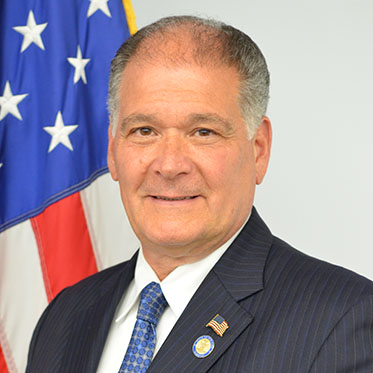
Sen. Mario Mattera
Sponsored bills
Maddy summaryThis bill (S 1943) expands New York's hate crime definition to include trespassing at religious buildings like churches, synagogues, mosques, or other houses of worship. It directly affects individuals who commit trespass at these locations while targeting someone based on their race, religion, gender identity, or other protected characteristics. The key change amends the penal law to add these locations to the list of places where a hate crime can be charged, raising the offense level if convicted. This creates a specific legal pathway for prosecuting bias-motivated trespass at religious sites.
Maddy summaryThis bill elevates assaulting a code enforcement official to a class D felony (second-degree assault), making it a more serious criminal charge. It directly affects code enforcement officials (who inspect buildings, zoning, and health codes) and individuals who assault them, by adding them to a list of protected personnel under New York's assault law. The key change is expanding the existing penal law to specifically include code enforcement officials among those whose assault carries felony penalties, rather than lesser offenses. This policy shift increases potential legal consequences for violence against these public safety workers.
Maddy summaryThis bill clarifies that defendants under electronic location monitoring are not legally considered "confined" or "in custody" for specific legal purposes. It amends the criminal procedure law to explicitly state that such defendants are not deemed "held in custody" for section 180.80 or "committed to the sheriff's custody" under section 170.70. The change directly affects defendants subject to electronic monitoring, altering how their status is defined in legal proceedings. This is a technical adjustment to existing law, ensuring electronic monitoring does not trigger certain custody-related legal requirements.
Maddy summaryThis bill creates a $1,000 supplemental payment for New York taxpayers who claim a newborn baby as a dependent on their federal tax return. It directly affects parents or guardians with newborns not previously claimed as dependents, providing the payment for each qualifying child starting in tax year 2026. The payment is issued automatically by the state tax commissioner and treated as an overpayment if it exceeds the taxpayer's state tax bill. The credit applies to newborns born in the current or prior tax year, with payments beginning April 1, 2026.
Provides that a mental health certificate shall be requested from each student at the same time health certificates are required; provides that an assessment and mental health history of any child may be requested by the local school authorities at any time in their discretion to promote the educational interests of such child; makes related provisions.
Repeals congestion pricing (Part A); directs the metropolitan transportation authority to contract with a certified public accounting firm for the provision of an independent, comprehensive, forensic audit of the authority (Part B).
Directs the New York state energy research and development authority to conduct a feasibility study and prepare a report on the benefits and implementation of geothermal energy.
Authorizes local governments to opt out of mandates and benchmarks arising under the climate leadership and community protection act and associated universal electrification requirements by filing a resolution with the department of environmental conservation.
Establishes the "first-time homebuyer tax credit act"; provides that a qualified taxpayer shall be allowed a credit against the taxes imposed by this article for taxes levied on the taxpayer's primary residence by or on behalf of any county, city, town, village, or school district in which such property is located.