

Maddy summaryThis bill increases residential solar tax credits by raising the credit rate to 26% of qualified solar equipment costs. It sets new annual credit limits: $3,750 for systems installed before 2026, $5,000 for 2026-2025, and $10,000 for systems installed on or after January 1, 2026. The credit applies to homeowners who install qualifying solar systems (including equipment for heating, cooling, hot water, or electricity) at their primary residence, covering equipment purchases, installation, and certain lease agreements. Low-income taxpayers and those in disadvantaged communities may receive refunds for excess credits starting in 2026, rather than carrying them forward. The policy directly affects residential property owners installing solar energy systems in the state.
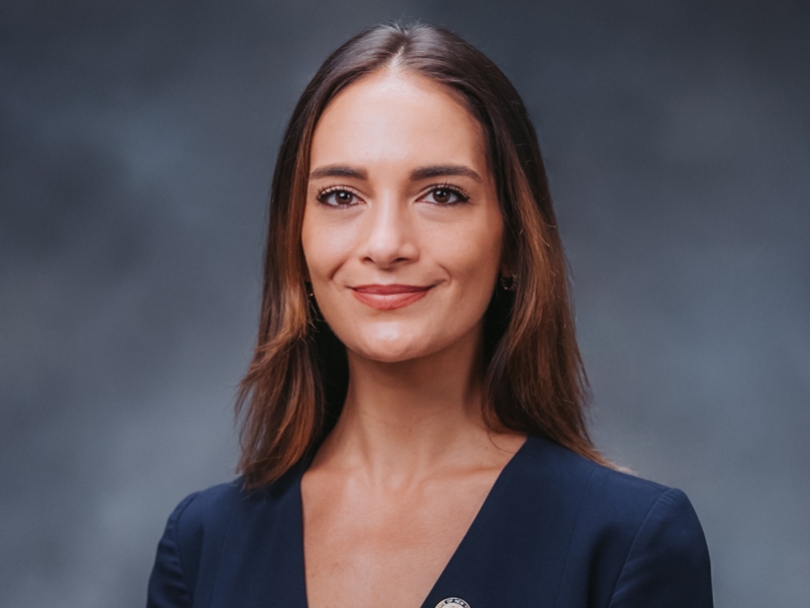
Sen. Julia Salazar
Sponsored bills
Establishes the Hudson Valley power authority to own and operate electricity service and to create or acquire one or more wholly owned subsidiaries or membership interests in subsidiaries; establishes energy observatory corporations for studying and enabling effective community governance of power authorities; makes related provisions.
Relates to establishing an early intervention loan repayment program; provides funding is to be awarded regionally with 50% percent awarded to providers with a principal residence within NYC and the remaining fifty percent awarded to providers outside of NYC; provides that awards shall be given to providers who work in underserved areas for 3 consecutive years; provides loans shall be paid over a 3 year period; provides that a working group shall be established within 90 days to develop plans for the streamlined loan repayment program application process.
Maddy summaryThis bill (S 860) blocks the approval of charter school applications when converting an existing public school, if the school has a documented pattern of serious violations of civil service laws protecting employee rights. Specifically, it prevents approval if the school interfered with or discriminated against employees under state labor rules, as determined by the Public Employment Relations Board. The law requires that such violations must be resolved before a new application can be submitted in the future. It directly affects public schools seeking to convert to charter status by adding a new eligibility condition based on past labor practices.
Creates a temporary state commission relating to local correctional facilities in upstate New York; provides commission study shall place emphasis on medical and mental health care, overcrowding, incarcerated individual deaths, use of force, restraints, and all segregation and confinement practices and solitary confinement.
Maddy summaryBill S 7617, known as the "Safer Consumption Services Act," allows the Department of Health to approve entities to establish overdose prevention center programs. These programs provide hygienic spaces for individuals to consume preobtained drugs, staffed by healthcare professionals or trained personnel. They offer sterile supplies, overdose prevention education, administer first aid, and provide referrals to substance use disorder treatment and other services. The bill grants immunity from criminal, civil, or administrative penalties to participants, program staff, and property owners solely for their good faith involvement in an approved program.
Directs the New York state energy research and development authority to establish a ride clean rebate program for electric assist bicycles and electric scooters; defines terms; provides a fifty percent rebate for eligible purchases.
Eliminates criminal and civil penalties for possession of controlled substances; establishes the drug decriminalization task force to develop recommendations for reforming state laws, regulations and practices so that they align with the stated goal of treating substance use disorder as a disease, rather than a criminal behavior.
Maddy summaryThis bill amends New York's penal law to change how "second felony drug offenders" are defined. It removes an exclusion that previously prevented violent felony convictions from counting toward second-offense status (now including violent felonies defined in penal law section 70.02). It also repeals an outdated subdivision (section 70.70, subdivision 4) related to these offenses. The changes directly affect individuals convicted of a drug felony who have prior felony convictions, including violent felonies, potentially leading to enhanced penalties. The bill takes effect immediately for cases sentenced on or after the effective date.
Increases Medicaid reimbursement rates for certain behavioral health services provided to individuals under the age of twenty-one; directs that funds in the healthcare stability fund can be used for the funding of children's behavioral health outpatient rate increases.