

Maddy summaryThis bill would require gas and electric companies to give their customers at least sixty days' written notice before any increase in service rates or charges takes effect. The law mandates that this notice specifically informs customers about the upcoming price hike for the services they receive. Although the legislation passed the legislature, it was vetoed by the Governor and did not become law.
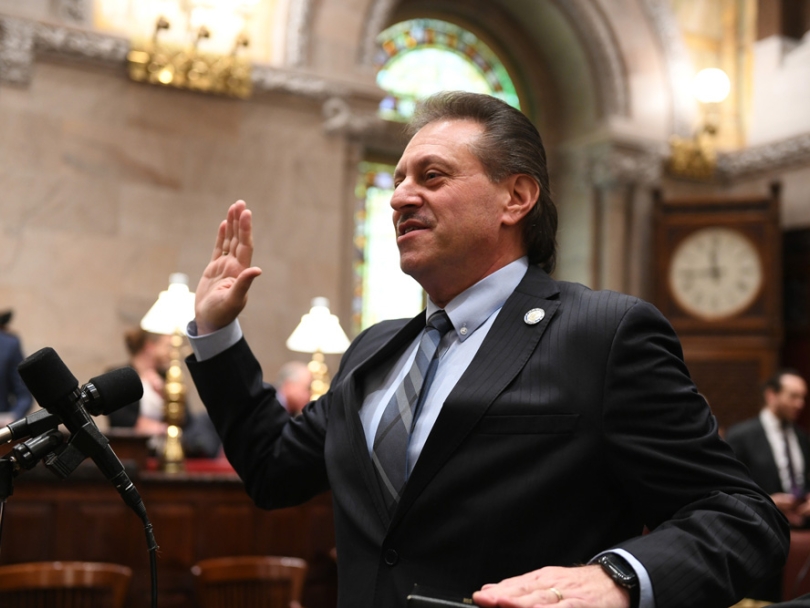
Sen. Joe Addabbo
Sponsored bills
Directs the commissioner of health, in consultation with the office of mental health and other relevant stakeholders, to develop guidance and standards for routine maternal depression screenings, referrals, diagnosis and treatment, and to provide training and materials on issues related to maternal depression.
Establishes the warehouse worker injury reduction program; requires employers to establish an injury reduction program designed to identify and minimize the risks of musculoskeletal injuries and disorders among workers involved in performing manual materials handling tasks.
Maddy summaryThis law requires hospitals and other maternal healthcare facilities in New York to allow doulas to be in the operating room during a cesarean section if the birthing parent does not have another support person present. The bill mandates that facilities clearly inform patients about this right through posted signs and informational pamphlets available in English and the six most common non-English languages spoken by residents with limited English proficiency. By adding a new section to the state public health law, the measure ensures that doula presence is guaranteed for the duration of the surgery when no other family member or friend is available to provide support.
Maddy summaryThis bill requires gas and electric companies in New York to maintain call centers within the state to handle customer inquiries about billing, service applications, and emergency assistance. It prohibits these companies from closing their call centers or moving customer service operations outside New York without first obtaining approval from the state commission through a public hearing process. The legislation also establishes financial penalties, including fines of up to $50,000 per inquiry sent out of state or $100,000 per day for each closed facility, to enforce compliance. Additionally, the bill allows for work-from-home policies for call center staff only if they are mutually agreed upon with the relevant labor organization.
Maddy summaryThis bill extends a requirement for horse racing organizations to pay a portion of race winnings to the Horsemen's Organization through the year 2025. Under the law, the main racing corporation must withhold two percent of purses during the 2024 and 2025 seasons, while other racing entities must withhold one percent. These funds are designated for the organization to support a state college program that tests horses for steroids and to provide financial aid for backstretch employees. The legislation updates the expiration date of these payment rules without changing the underlying obligations or the eligible recipient group.
Establishes a maximum temperature in school buildings and indoor facilities; provides a definition of extreme heat condition days and the standard to measure room temperature.
Expands the food donation and food scraps recycling program by scaling down the annual average tonnage requirement every two years until 2028; removes exceptions regarding recycler capacity.
Maddy summaryThis law requires hospitals and birthing centers to allow expecting and new mothers to have their doulas present during delivery and post-delivery care. The bill defines a doula as a designated support person and prohibits facilities from denying access to them once admitted. This change ensures that individuals receiving perinatal services can maintain their chosen support system without interference from the healthcare facility.
Maddy summaryThis bill expands the legal definition of aggravated harassment to include the intentional removal or threat of removal of religious clothing or headwear. It applies to anyone who performs this act with the intent to annoy, threaten, or alarm another person based on their race, religion, gender identity, or other protected characteristics. The law treats this specific behavior as a criminal offense regardless of whether the perpetrator's belief about the victim's identity is accurate. Once signed into law, the provision takes effect immediately to provide clearer protections against religious discrimination in public spaces.