

Maddy summaryThis bill (S 5725) would permanently adopt daylight saving time as New York's standard time if Congress amends federal law to allow states to do so. It amends New York's time law to remove the seasonal switch between standard and daylight saving time, making daylight saving time the year-round standard for the entire state and all its political subdivisions. The bill also repeals a specific section of New York City's administrative code related to timekeeping. However, the bill's implementation depends entirely on future federal action - Congress must change 15 U.S.C. § 260a to permit permanent daylight saving time in the eastern time zone.
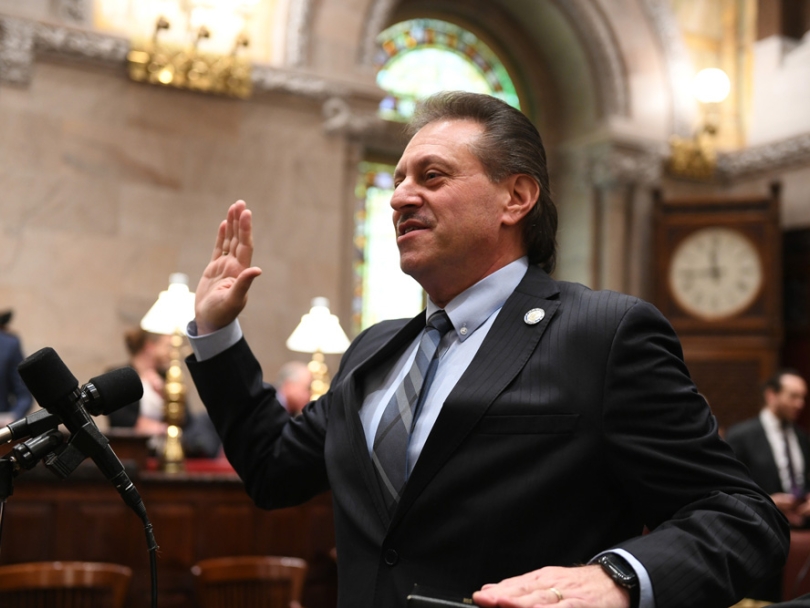
Sen. Joe Addabbo
Sponsored bills
Establishes the New York Health program, a comprehensive system of access to health insurance for New York state residents; provides for administrative structure of the plan; provides for powers and duties of the board of trustees, the scope of benefits, payment methodologies and care coordination; establishes the New York Health Trust Fund which would hold monies from a variety of sources to be used solely to finance the plan; enacts provisions relating to financing of New York Health, including a payroll assessment, similar to the Medicare tax; establishes a temporary commission on implementation of the plan; provides for collective negotiations by health care providers with New York Health.
Maddy summaryThis bill prohibits health insurance carriers and vision care plans from restricting optometrists' choice of suppliers for covered materials like eyeglasses, contact lenses, and frames. It directly affects optometrists (licensed eye care professionals) and vision plans by banning contract terms that force them to use specific labs or vendors for patient supplies. The key provision requires that optometrists can select their own sources for materials and labs without insurance plan interference, covering items such as lenses, frames, and medical eye devices. This creates a clear policy change in how vision care reimbursement arrangements operate.
Relates to increasing fines for individuals who fail to comply with a stop work order; increases fines from $6,000 to $10,000 for initial violation and $12,000 to $20,000 for subsequent violations.
Requires state agencies and courts to take into consideration the International Holocaust Remembrance Alliance's definition and contemporary examples of antisemitism when reviewing, investigating, or deciding whether there has been a violation of any non-criminal or criminal law, rule, or policy prohibiting discriminatory acts.
Maddy summaryThis bill requires annual inspections by New York's Department of Health to check for Legionnaires' disease in specific locations like apartment complexes, senior centers, spas, restaurants, and grocery stores. The commissioner of health will determine which locations are susceptible and must undergo inspection. Building owners and operators in these venues would need to schedule annual inspections. This directly affects multi-unit housing and public facilities where the disease could spread.
Requires businesses that allow automatic renewals, continuous service offers, and automatic subscription renewals to provide notice regarding cancelling such renewals, services, or subscriptions.
Maddy summaryThis bill (S 987) requires health insurance plans to cover at least one abuse-deterrent opioid pain medication per active ingredient, ensuring patients can access FDA-approved options designed to reduce misuse. It prohibits higher copays or deductibles for these medications compared to standard opioids and bans prior authorization rules that force patients to try non-abuse-deterrent opioids first. The law applies to all insurance plans covering opioid pain medications, directly affecting patients, insurers, and healthcare providers. Key provisions mandate equal cost-sharing for abuse-deterrent and non-abuse-deterrent versions and prevent insurers from adding financial barriers to access these medications. The bill takes effect 120 days after enactment for new or renewed insurance policies.
Requires the triborough bridge authority to establish a cashless tolling amnesty program; requires the metropolitan transportation authority to post their fee waiver policy on their website.
Maddy summaryThis bill (S 6161) requires pharmacy benefit managers (PBMs) to charge health insurers and health plans only for actual drug costs, pharmacy dispensing fees, and a fair administrative fee - passing through all rebates, discounts, and other financial benefits directly to the health plan. It bans "spread pricing" (where PBMs keep the difference between what they pay pharmacies and charge plans) and mandates full disclosure of all income sources to the state department. PBMs must provide quarterly refunds for any excess amounts kept under the old pricing model. The bill directly affects health insurers, health plans, and PBMs operating in New York, aiming to reduce prescription drug costs for consumers through transparency and cost accountability.