

Maddy summaryThis bill modifies New York's correction law to expand temporary release eligibility for incarcerated individuals who complete judicially-ordered substance abuse treatment in state facilities. It allows these individuals to qualify for temporary release programs (like work release or community service) without requiring parole eligibility, provided they meet specific criteria. However, it explicitly excludes individuals convicted of sex offenses, violent crimes involving deadly weapons, or serious physical injury, and requires commissioner approval for certain cases. The policy change directly affects incarcerated people in New York state correctional facilities participating in substance abuse treatment programs.
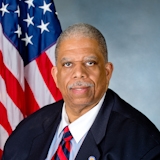
Sen. Leroy Comrie
Sponsored bills
Enacts the climate and community investment act; prioritizes the allocation of public investments in disadvantaged communities; addresses climate change challenges through the expansion and growth of clean and renewable energy sources; adopts best value requirements for the solicitation, evaluation and award of renewable energy projects; establishes a community just transition program; establishes a climate pollution fee and a household and small business energy rebate; creates the climate and community investment authority.
Maddy summaryThis bill allows individuals with autism spectrum disorder to voluntarily indicate their condition when applying for or renewing a driver's license or identification card. If an applicant chooses to declare having autism spectrum disorder, their issued license or ID will include a distinctive mark. The bill also revises the general driver's license application process, expanding acceptable forms of identity for non-federal standard licenses and clarifying organ donor registration options.
Maddy summaryThis bill modifies New York's tax credit for renovating historic barns, allowing taxpayers a 25% credit on eligible renovation costs for barns used for agriculture. It restricts the credit for barns previously used for residential purposes, those converted to residential use, or those with altered historic appearance. If the credit exceeds tax liability and income is under $60,000, the excess is refunded without interest; otherwise, it carries forward to future tax years. The policy directly affects New York property owners renovating qualifying agricultural barns.
Exempts from the tax on retail sales the portion of a receipt from the purchase of a motor vehicle which is reduced due to a customer rebate or customer discount provided by a manufacturer to the purchaser, that is applied against the amount due under the sales agreement.
Relates to capital program plans; provides that the MTA shall submit to the MTA capital program review board two capital program plans on or before January 31, 2030 and every fifth year thereafter; provides that all future capital program plans be submitted January 31 of the required years.
Prohibits the diminution of health insurance benefits of public employee retirees and their dependents or reducing the employer's contributions for such insurance; defines employers to include the state, municipalities, school districts, and public authorities and commissions.
Maddy summaryS 6593 requires New York's Division of Criminal Justice Services to report all police use-of-force incidents to the FBI's national database. It mandates reporting specific force types (like firearms, chokeholds, chemical agents, or impact weapons) and includes detailed demographic data (age, race, gender, etc.) for all involved parties. Police departments, sheriff's offices, and state police that fail to submit these reports face a 10% reduction in state funding until compliance is achieved. The bill directly affects law enforcement agencies by creating a new data collection obligation under state law, aligning with federal reporting standards.
Enacts the "Stop Addictive Feeds Exploitation (SAFE) for all act"; requires a setting which allows a social media user to turn off algorithmic recommendations and other notifications; prohibits the use of dark patterns to subvert choice or inhibit users from accessing certain mechanisms.
Requires any school district in the state shall provide, to pupils in grades nine through twelve, one full unit of instruction designed to promote consumer awareness and financial education.