

Removes the exclusion of part-time employees from certain definitions relating to employment and expanding the definition of employer; removes certain exclusions for employer notice requirements for the closing of a facility; removes the discretionary reduction of penalties for employers for certain acts or omissions concerning notice requirements for mass layoffs, relocations or employment loss; removes the maximum time period for determining back pay and other liabilities for certain employees who experience employment loss; allows the attorney general to take certain action to assist certain employees in receiving back pay and other liabilities; requires employers to pay severance to employees when there is a plant closing, relocation, or mass layoff.
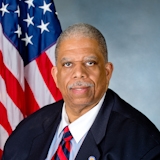
Sen. Leroy Comrie
Sponsored bills
Provides that in judicial proceedings to review real property assessments in cities of one million or more inhabitants, the assessing method, capitalization rate, and other data or formula used to determine valuation must be disclosed to the petitioner.
Maddy summaryS 1023 lowers the value threshold for local authorities to seize abandoned vehicles without license plates. It changes the rule so that vehicles worth $3,000 or less (down from $3,250) automatically transfer ownership to the local authority upon abandonment, unless the vehicle is immediately sold for scrap or destroyed. This directly affects vehicle owners who leave low-value cars abandoned and local governments handling abandoned vehicle removal. The key change is the reduced dollar amount triggering automatic seizure, streamlining the process for authorities. The bill takes effect 180 days after enactment.
Maddy summaryThis bill (S 4398) requires New York's Department of Corrections to submit an annual report by March 31st starting in 2026. The report must detail every death of an incarcerated person in state facilities, including cause of death, demographics (age, race, gender), facility details, and circumstances like disciplinary confinement or specialized care. For deaths resulting from suicide or specific categories, a preliminary report must be provided within seven days, followed by a final report after the investigation concludes. The data must include trend analysis compared to historical statistics to improve transparency around prison mortality. The bill directly affects the state correction department and its reporting obligations to legislative leaders and committees.
Requires any contract or retainer agreement between a property owner and an attorney for legal services related to the filing and appearance before a board of assessment review regarding complaints in relation to assessments shall include a written disclosure that such complaints in relation to assessments can be completed without the assistance of an attorney.
Modifies the definition of disorderly conduct for family offense proceedings to not require an intent to cause public inconvenience, annoyance or alarm, or recklessly creating a risk thereof, but merely an intent to cause annoyance or alarm, or recklessly creating a risk thereof.
Enacts the "cannabis adult-use transition act"; increases the number of members on the state cannabis advisory board from thirteen to seventeen voting appointed members; provides that an eligible registered organization shall be authorized as a registered organization adult-use cultivator processor distributor retail dispensary upon approval of an application to the office of cannabis management that must be available to such registered organizations no later than August first, two thousand twenty-five and remain available thereafter; provides that the office must approve or deny such application within thirty days of its submission or it shall be deemed approved; makes related provisions.
Provides for the regulation of indoor and outdoor worksites with temperature protection standards and education, training and reporting requirements to ensure that employers provide safe conditions for their employees.
Maddy summaryS 876 amends New York's Correction Law to clarify enforcement procedures for certain provisions. It specifies that public agency actions must follow Article 78 of the Civil Practice Law, while private employer actions will be enforced by the Division of Human Rights under Article 15 of the Executive Law, with concurrent authority from the NYC Commission on Human Rights. The bill does not change substantive rights but streamlines enforcement pathways. It remains neutral, focusing only on the procedural shift in how complaints are handled. This procedural change affects how enforcement agencies process cases related to correction law provisions.
Extends the period given to certain applicants for public assistance benefits to request a fair hearing on a determination of their ability to participate in work activities from ten days to sixty days or within sixty days of receipt of a work activity assignment.