Relates to the creation of a court appointed advocate for animals.
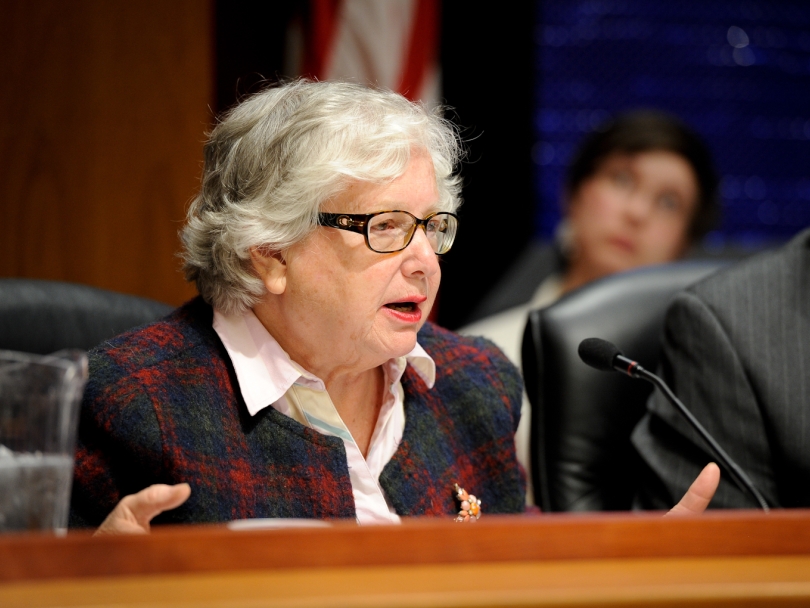
Sen. Toby Stavisky
Sponsored bills
Establishes the New York city public housing preservation trust for properties owned or operated by the New York city housing authority and provides for the issuance of certain bonds, notes or other obligations of the New York city housing development corporation.
Relates to parole eligibility for certain incarcerated persons age fifty-five or older.
Requires comprehensive sexuality instruction for students in grades K-12 which includes a model curricula for comprehensive sexuality education and at a minimum conforms to the content and scope of national sexuality education standards.
Excludes from state income tax up to $10,200 of unemployment compensation benefits earned by a resident of the state.
Prohibits the search, with or without a warrant, of geolocation and keyword data of a group of people who are under no individual suspicion of having committed a crime, but rather are defined by having been at a given location at a given time or searched particular words, phrases, character strings, or websites.
Relates to the dangers to the safety and health of the public caused by the sale, manufacturing, importing and marketing of firearms and whether such activity constitutes a public nuisance.
Establishes a service corps education grant to be used for tuition costs or loan repayment; provides for funding for the service corps education grant.
Enacts the climate and community investment act; prioritizes the allocation of public investments in disadvantaged communities; addresses climate change challenges through the expansion and growth of clean and renewable energy sources; adopts best value requirements for the solicitation, evaluation and award of renewable energy projects; establishes a community just transition program; establishes a climate pollution fee and a household and small business energy rebate; creates the climate and community investment authority.
Eliminates court surcharges and fees and probation and parole surcharges and fees; eliminates the requirement that a parolee or releasee receiving a merit termination of sentence be financially able to comply with an order of restitution; eliminates the requirement that a person receiving a discharge of sentence be financially able to comply with an order of restitution and the payment of certain surcharges or fees (Part A); prohibits mandatory minimum fines for penal law and vehicle and traffic offenses (Part B); mandates that courts engage in an individualized assessment of a person's financial ability to pay a fine prior to imposing a fine (Part C); eliminates the availability of incarceration as a remedy for a failure to pay a fine, surcharge, or fee, lifts and vacates existing warrants issued solely on a person's failure to timely pay a fine, surcharge or fee and ends existing sentences of incarceration based on such failure (Part D); vacates existing unsatisfied civil judgments based on a person's failure to timely pay a surcharge, or fee (Part E); prohibits the collection of a fine, restitution or reparation from the funds of an incarcerated person; prohibits the payment of court fines, mandatory surcharges, certain fees, restitution, reparation or forfeitures from the earnings of prisoners (Part F); vacates existing unpaid surcharges, DNA databank fees, crime victim assistance fees, sexual offender registration fees, supplemental sex offender victim fees, or probation or parole supervision fees; repeals certain provisions of law relating to restrictions on remitting such fees (Part G).