

Maddy summaryThis bill (A 4786) establishes a legal presumption that shared parenting is in the best interests of minor children in family court custody cases. It directly affects parents, courts, and children involved in divorce, separation, or custody disputes by shifting the burden of proof: a parent seeking sole custody must now prove shared parenting would be harmful, rather than the other way around. Key provisions include requiring courts to presume shared parenting unless proven detrimental, mandating parenting plans, and explicitly protecting parents who act in good faith to protect children from abuse or domestic violence. The bill modifies New York's domestic relations law to prioritize frequent contact with both parents while maintaining exceptions for safety concerns.
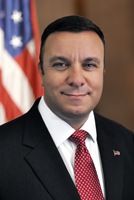
Asm. Karl Brabenec
Sponsored bills
Relates to establishing the lump sum allocation advisory committee (Part A); relates to requiring transparency, identification and disclosure of certain appropriations (Part B); relates to withholding the salaries of the governor, agency commissioners and deputy commissioners for failing to meet certain reporting deadlines (Part C); relates to creating a tax rate reduction board to look at personal income tax and corporate franchise tax rates (Part D); relates to conducting an audit of all state economic development programs (Part E); relates to prohibiting certain political contributions by individuals appointed to entities that oversee lump sum appropriations (Part F); relates to prohibiting certain third party contracts (Part G).
Maddy summaryThis bill creates a $350 tax credit for New York residents who adopt their first dog or cat from a qualifying shelter, rescue group, or humane society in the state. The credit applies to taxable years starting after the bill's effective date and is limited to one adoption per taxpayer. Individuals convicted of certain animal cruelty violations under New York law are ineligible for the credit. The credit directly affects New York taxpayers adopting from approved animal welfare organizations.
Relates to mandatory reporting of suspected child abuse or maltreatment at summer day camps; includes college coaches, athletic directors, professors, graduate assistants and college presidents among those required to report such suspected abuse or maltreatment.
Maddy summaryThis bill prohibits the public disclosure or publication of the home address or unpublished home telephone number of any active or retired judge or prosecutor, including their spouse or child. It creates two new criminal offenses: a misdemeanor for reckless disclosure (Section 250.61) and a felony for intentional disclosure (Section 250.62). Violators face civil penalties of at least $1,000 per violation, plus damages, attorney fees, and possible punitive damages under the new Civil Rights Law Section 50-h. The law applies to individuals, businesses, and associations sharing this information online or otherwise under circumstances likely to cause harassment or harm.
Maddy summaryThis bill allows the New York State Thruway Authority to offer a 50% toll discount to eligible farmers transporting agricultural products. It directly affects farmers who qualify for a tax exemption under New York’s tax law (Section 606, Subparagraph A), as defined by agriculture and markets law. To receive the discount, farmers must provide their tax exemption certificate to the Thruway Authority, which will then issue E-ZPass tags for automatic application. The discount applies only to regular tolls (not surcharges or non-commercial vehicle travel) and takes effect January 1, 2027.
Maddy summaryThis bill creates a new class A-1 felony offense for unlawfully selling or transporting an opiate controlled substance (as defined by public health law) that causes another person's death. It directly affects individuals who sell or transport opiates (like heroin or fentanyl) when such actions result in fatalities. The law includes a limited defense if the defendant jointly used the substance with the deceased for mutual consumption. The offense carries the highest felony penalty under New York law, with the bill named "Laree's Law" in recognition of opioid-related deaths.
Directs the commissioner of the office of mental health and the director of the state office for the aging shall establish a mental home health services program for the aging to facilitate access to mental home health services to respond to identified mental health needs, including those needs that may have resulted from the COVID-19 pandemic, and for the aging or families that may not have access to mental health professionals in-person; makes related provisions.
Enacts the "New York State Digital Government Modernization Act"; establishes the digital government modernization initiative and the digital government enhancements pilot program.
Maddy summaryThis bill requires the state to reimburse non-public and private schools for costs incurred when the state mandates COVID-19 testing for students, teachers, and staff in in-person school settings. It directly affects all non-public and private schools subject to such state-mandated testing requirements. The state must cover these costs through a process established by the Commissioner of Education, who will create rules and procedures for reimbursement. The law takes effect immediately upon passage.