

Maddy summaryThis bill requires health insurance plans to cover backup cochlear implant devices for patients who need them, including during device upgrades or replacements after the initial implant. It directly affects patients with cochlear implants who currently lose access to backup equipment after 3-5 years, as insurers only cover backups at the time of initial surgery. The law mandates that insurance must cover the backup device (external components like a processor) whenever prescribed by a qualified healthcare provider, as long as the patient is using the implant. Coverage will follow standard insurance terms like deductibles and copays but must remain available throughout the patient's need for the device, effective January 2027.
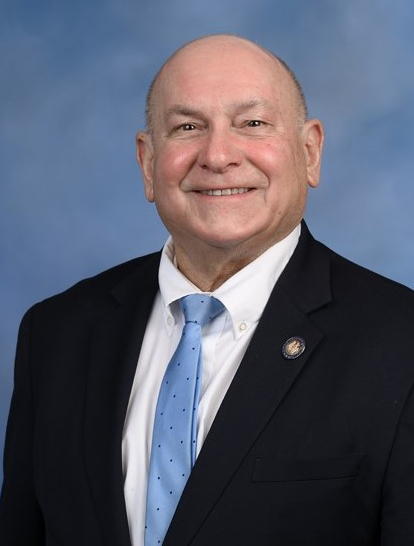
Asm. Chris Burdick
Sponsored bills
Maddy summaryThis bill prohibits operating, promoting, or supporting online sweepstakes games in New York that simulate casino-style gaming (like slot machines or poker) and allow players to exchange points for cash. It directly affects game operators, licensed gaming entities, financial institutions, payment processors, and media affiliates that facilitate these activities. Key provisions require the state gaming commission or attorney general to deny licenses or enforce penalties, including fines of $10,000-$100,000 per violation, with fines funding problem gambling education. Enforcement includes investigations, cease-and-desist orders, and hearings by state authorities.
Enacts the "freedom to read act"; requires the commissioner of education and school library systems to develop policies to ensure that school libraries and library staff are empowered to curate and develop collections that provide students with access to the widest array of developmentally appropriate materials available.
Provides for the inclusion of a faculty or staff member on the board of trustees of community colleges elected by and from among the faculty and staff of the college.
Relates to reporting unmet need, which is the number of eligible individuals seeking participation in a program or service who are not receiving such program or service due to insufficient resources or capacity.
Maddy summaryThis bill authorizes New York's commissioner of general services to transfer a specific parcel of unappropriated state land (located at 39 Sullivan Road, North Salem) to The Arc Westchester New York for $1. The land, described as abandoned by the Office for People with Developmental Disabilities, would be used to operate a group home for adults with disabilities. The transfer includes a reverter clause requiring title to return to the state if the property is no longer used for this purpose. The bill expires two years after enactment and requires The Arc to submit a resolution accepting these terms within one year.
Maddy summaryThis bill requires utility companies and contractors to provide detailed electronic records identifying pole attachments, including equipment owners, contractors, work dates, and safety compliance details. It creates an online public complaint system for reporting unsafe attachments, equipment hazards, or violations of safety standards like the National Electrical Safety Code. The commission must investigate complaints within two weeks and can issue fines up to $20,000 for first violations, $50,000 for second violations, or stop-work orders for third violations. The law directly affects utility providers, telecom companies, and contractors working on utility poles, aiming to improve public safety and accountability through standardized reporting and enforcement.
Directs counties, in coordination with their regional emergency medical services councils, to develop and maintain comprehensive county emergency medical system plans that provide for coordinated emergency medical systems within such counties.
Relates to rechargeable battery recycling; adds a battery used as the principal electric power source for an electric scooter or bicycle with electric assist to the definition of "rechargeable battery"; provides that a battery manufacturer may not sell, offer for sale, or distribute rechargeable batteries in the state unless the battery manufacturer is implementing or participating under an approved plan; allows a city with a population of one million or more to enforce through its own agencies.
Enacts the "public renewables transparency act"; relates to the New York power authority's conferral process; requires the conferral report be posted on the authority's website; provides that the authority shall provide an option for stakeholders to submit comments remotely as well, and incorporate feedback from such sessions and written comments into the final draft of the strategic plan; makes related provisions.