

Includes entities that provide employment or services to formerly incarcerated persons in the preferred source exemption for purposes of state purchasing.
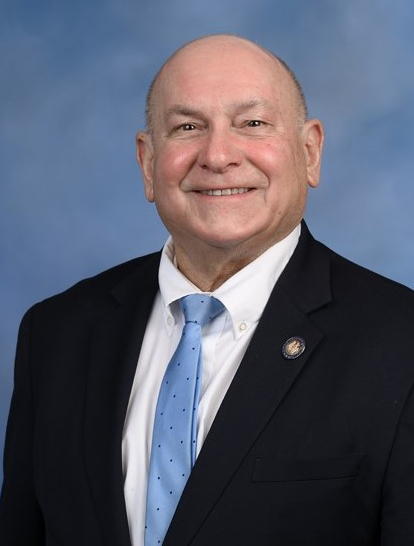
Asm. Chris Burdick
Sponsored bills
Relates to prevailing wage for those involved in hauling of concrete and asphalt in the counties of Nassau, Putnam, Suffolk, and Westchester, and in the city of New York.
Requires general hospitals to provide language assistance services; requires general hospitals to develop a language assistance program to ensure meaningful access to the general hospital's services and reasonable accommodation for all patients who require language assistance.
Establishes a reproductive health services training and education grant program to train licensed providers and interns or residents who are employed by a hospital or otherwise enrolled in an accredited graduate medical education program in the performance of abortion and related reproductive health services; establishes the reproductive health training and education fund.
Maddy summaryThis bill requires all City University of New York (CUNY) institutions to adopt a formal "Students' Bill of Rights" in their policies. It directly affects CUNY students by guaranteeing specific rights, including student representation on policy-making bodies, student participation in conduct hearings, designated free speech spaces, and protections for student journalists (no prior censorship except for illegal content like libel or threats). The bill mandates that institutions post these policies online and provide them to all students, with student leaders also gaining guaranteed communication channels to the student body. It does not apply to SUNY institutions, as the title incorrectly states, and takes effect July 1, 2025.
Prohibits the use of aversive conditioning which includes any procedure which causes obvious signs of physical pain, including but not limited to hitting, pinching and electric shock; prohibits the use of any procedure or punishment which denies a vulnerable person reasonable sleep, shelter, bedding, bathroom facilities and any other aspect expected of a humane existence; defines terms.
Maddy summaryThis bill authorizes cities with populations over one million (like New York City) to establish a minimum five-mile-per-hour speed limit on designated "open streets." Open streets are defined as segments with physical barriers, signage, or traffic calming measures that prioritize pedestrians, cyclists, and non-motorized users over vehicles. The bill amends traffic laws to ensure such speed limits comply with existing regulations but does not affect school zone speed limits or simple traffic control signs. It directly impacts urban transportation planning in large cities by mandating the lowest possible speed for these pedestrian-focused zones.
Maddy summaryThis bill requires all public elementary schools in the state to begin classes no earlier than 8:00 a.m. and public secondary schools no earlier than 8:30 a.m. It directly affects public K-12 schools by setting mandatory start times for all academic years starting after the law takes effect. The key mechanism ties school funding to compliance: schools must report verified start times in annual reports to receive state apportionments, with noncompliant schools losing funding eligibility. The law takes effect immediately for all academic years beginning on or after its effective date.
Maddy summaryBill A 2266 requires state agencies operating prisons and youth detention facilities to provide incarcerated individuals with free voice communication services (and optionally video or messaging), effective April 1, 2026. It prohibits facilities from charging inmates for these services or generating revenue from them, and mandates that communication services cannot replace in-person visit programs. The bill repeals the existing correction law section on this topic and adds new requirements for agencies managing correctional facilities. This directly affects all people confined in state correctional facilities by guaranteeing free communication access with external contacts.
Maddy summaryBill A 54 prohibits the use of adhesive-based rodent traps, including glue traps and glue boards, in all state-owned or state-leased buildings. This means that state entities and those occupying state properties would be unable to use these specific trapping methods for rodent control. The prohibition would become effective one year after the bill is enacted into law.