

Maddy summaryThis bill removes a lifetime ban preventing people convicted of felonies from serving on juries. It amends state law to no longer disqualify individuals based on past felony convictions, meaning former felons could be summoned for jury duty. However, it maintains that people currently incarcerated for felonies remain excused from service while in prison. The law would take effect 180 days after enactment.
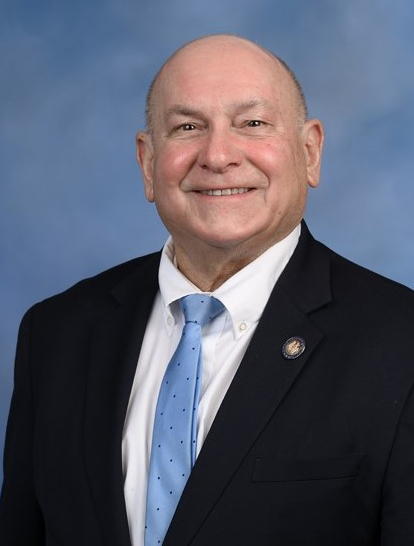
Asm. Chris Burdick
Sponsored bills
Maddy summaryThis bill creates a permit system for facilities that respectfully handle cremated remains and natural organic reduction (like composting). Operators must be New York not-for-profit corporations that file detailed plans with the cemetery board, including evidence of conservation easements, a pledge against building crematories, and consumer contracts. The permit requires compliance with existing zoning laws and cemetery board regulations governing land access and remains disposal. It directly affects facility operators and consumers using these specific memorial services, ensuring standardized management of such lands.
Maddy summaryThis bill updates environmental conservation law regarding amphibians and reptiles. It redefines "small game" to exclude most native frogs (except bullfrogs), native salamanders, native lizards, and native snakes (except common snapping turtles). These species are instead added to the definition of "protected wildlife," subjecting them to different conservation measures. The bill also clarifies that only bullfrogs and common snapping turtles remain under specific regulations for taking, with the department determining the methods for bullfrogs.
Allows a tax exemption for taxpayers in the amount of the purchase price of a fire extinguisher, fire alarm, heat alarm or carbon monoxide alarm purchased for residential use during the month of October.
Enacts the "New York State Phoenix Act"; extends the statute of limitations for felony family offenses to ten years and misdemeanor family offenses to five years.
Maddy summaryBill A 7308 establishes a tax credit for producers of sustainable aviation fuel (SAF) sold in the state for flights departing within the state. Starting January 1, 2025, producers can claim $1 per gallon, increasing by two cents for each additional one percent reduction in carbon dioxide emissions above 50%, up to a maximum of $2 per gallon. To be eligible, producers must obtain a certificate from the New York State Energy Research and Development Authority (NYSERDA). The bill defines SAF as liquid fuel derived from renewable or waste sources, excluding palm or petroleum, that achieves at least a 50% lifecycle greenhouse gas emission reduction. The total amount of tax credits issued annually is capped at $30 million, and any credit exceeding a taxpayer's liability will be refunded.
Directs the department of environmental conservation to establish a perfluoroalkyl and polyfluoroalkyl substances removal treatment installation grant program, providing a one-time grant to private well users for the installation of PFAS treatment or service connection to a public water system; directs the department of environmental conservation to establish a perfluoroalkyl and polyfluoroalkyl substances removal treatment maintenance rebate program, providing a rebate to private well users for the maintenance of PFAS treatment equipment.
Maddy summaryThis bill requires all public elementary, junior high, and high schools to implement a multicultural curriculum. Schools must adapt the curriculum to their specific student body's cultural composition, and the education commissioner will create rules for both the curriculum and teacher training programs. The law mandates that educators receive training to effectively teach students from diverse cultural and ethnic backgrounds. It takes effect on September 1 following its enactment.
Requires municipalities to determine whether it is in the public interest to create a comprehensive plan adapted to the special requirements of the municipality and to determine whether it is in the public interest to update such comprehensive plan at least once every ten years to ensure that such plan addresses housing needs.
Maddy summaryThis bill increases the real property tax relief credit for homeowners with qualifying income levels. It adjusts the calculation method, raising the credit percentage for lower-income taxpayers (up to $75,000 gross income) from 14% to 20% and modifying thresholds for middle-income households ($75,000-$150,000 and $150,000-$350,000). The credit now has a minimum value of $1,550 (up from $350) and applies to tax years beginning January 1, 2026. It directly affects homeowners whose real property taxes exceed 5% of their qualified gross income, providing greater relief for those with moderate incomes.