

Relates to arbitration organizations; requires private arbitration organizations involved in fifty or more consumer arbitrations per year to collect, publish at least quarterly, and make available to the public in a computer-searchable database certain information relating to such arbitrations; prohibits financial conflicts of interest.
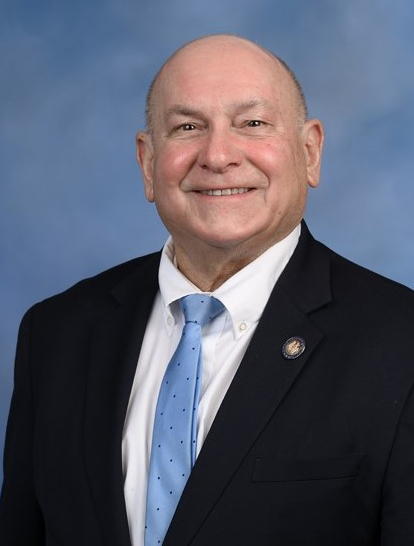
Asm. Chris Burdick
Sponsored bills
Prevents an agency, department, division, commission, bureau or any other entity under the authority of the executive department from contracting, subcontracting or hiring any third party during a hiring freeze.
Establishes the electric landscaping equipment rebate program to reduce greenhouse gas emissions, improve air quality, and reduce noise pollution by promoting the adoption of quieter, zero-emission landscaping equipment; provides for rebates at the point of sale for applicants purchasing or leasing certain equipment; provides for the repeal of such provisions upon expiration thereof.
Requires manufactured home park owners to provide a written justification for rent increases in excess of three percent of the current rent; provides that increases in costs to justify such rent increase for ordinary maintenance or repair to meet the warranty of habitability obligations must be shown to be necessary.
Maddy summaryThis bill establishes a compensation program for SNAP (supplemental nutrition assistance program) and cash assistance recipients who had their benefits stolen or defrauded. It creates a dedicated $1.5 million fund (funded by a one-time appropriation from the general fund) to pay eligible individuals after fraud is verified by state agencies. The program requires an application process available in English and the ten most common non-English languages spoken in New York State.
Maddy summaryThis bill sets new rules for New York's Medicaid inspector general when auditing healthcare providers' billing for medical assistance payments. It defines key terms like "overpayment" and "clerical error," requires auditors to follow specific standards, and limits how they can spread audit findings to all claims (extrapolation) for minor, isolated errors. Providers must receive detailed audit reports explaining findings and have the right to submit supporting documentation before final decisions. The bill also mandates annual reporting on audit activities to state officials, including how many audits used extrapolation and their financial impact.
Enacts the "bird safe buildings act" directing the commissioner of general services to incorporate practices and strategies to reduce bird fatality resulting from collisions with certain state-owned or state-leased buildings, and for other purposes; requires the commissioner to develop a design guide that includes features, methods and strategies, and best practices for reducing bird fatalities.
Maddy summaryThis bill creates a state-funded program to provide health insurance coverage to New Yorkers who lose eligibility for federal subsidies due to their immigration status. It establishes a new state premium assistance program that offers financial help equivalent to federal tax credits for lawfully present individuals who are currently ineligible for federal aid. Additionally, the legislation expands eligibility for existing state coverage to include more noncitizens and increases income limits for pregnant individuals and their newborns, with some provisions funded directly by state money regardless of federal approval.
Maddy summaryThis bill updates reporting requirements for lobbyists working with small nonprofits that lobby government. It raises the financial threshold for mandatory reporting from $5,000 to $10,000 annually for 501(c)(3) nonprofits (starting in 2026), while keeping it at $5,000 for other lobbyists. Nonprofits exceeding these thresholds must file bi-monthly reports detailing lobbying spending and pay a $200 registration fee, with reduced fees for those under the limit. The bill also requires clients (nonprofits) to submit semi-annual reports if they spend over $5,000 (or $10,000 for 501(c)(3)s) on lobbying. These changes aim to clarify and adjust transparency rules for smaller lobbying entities.
Enacts the restriction of anticoagulant pesticide transactions for online and retail stores act to prohibit any person from selling, offering for sale or use, or distributing within the state, any second-generation anticoagulant rodenticide; prohibits the use of either a first-generation anticoagulant rodenticide or a second-generation anticoagulant rodenticide within five hundred feet of a wildlife habitat area.