

Makes changes relating to an authorization of land conveyance by the city of New Rochelle relating to reversion of title to the Armory Building, the annex and the underlying land of such structures, and the reversion of dedicated space for veterans organization use, to the state of New York upon the breach of certain conditions.
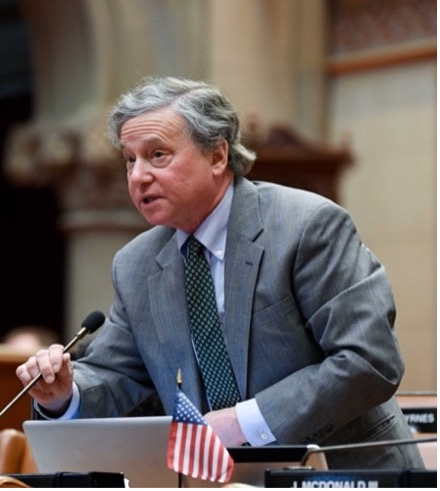
Asm. Steve Otis
Sponsored bills
Provides for the inclusion of a faculty or staff member on the board of trustees of community colleges elected by and from among the faculty and staff of the college.
Maddy summaryThis bill directs New York courts to interpret the state's labor law "liberally" in favor of workers to achieve its protective goals, such as securing fair wages, preventing retaliation, ensuring equal pay, and protecting unemployment benefits. It specifically requires courts to apply labor law provisions broadly and interpret any exemptions or exceptions narrowly to maximize deterrence of employer violations. The law affects all workers and employers covered by New York's labor regulations by changing how courts evaluate disputes under existing labor statutes. This is a procedural directive for judicial interpretation, not a new law creating additional worker protections.
Relates to reporting unmet need, which is the number of eligible individuals seeking participation in a program or service who are not receiving such program or service due to insufficient resources or capacity.
Maddy summaryThis bill requires utility companies and contractors to provide detailed electronic records identifying pole attachments, including equipment owners, contractors, work dates, and safety compliance details. It creates an online public complaint system for reporting unsafe attachments, equipment hazards, or violations of safety standards like the National Electrical Safety Code. The commission must investigate complaints within two weeks and can issue fines up to $20,000 for first violations, $50,000 for second violations, or stop-work orders for third violations. The law directly affects utility providers, telecom companies, and contractors working on utility poles, aiming to improve public safety and accountability through standardized reporting and enforcement.
Directs counties, in coordination with their regional emergency medical services councils, to develop and maintain comprehensive county emergency medical system plans that provide for coordinated emergency medical systems within such counties.
Establishes a fraud assessment commission; directs the chair of the workers' compensation board, in consultation with the workers' compensation fraud inspector general and the fraud assessment commission, to establish an assessment for workers' compensation fraud investigations to fund the investigation and prosecution of workers' compensation fraud, willful failure to secure payment of workers' compensation, and failure to keep true and accurate records; establishes the workers' compensation fraud investigation fund in the joint custody of the chair of the workers' compensation board, the commissioner of labor, and the comptroller, which shall consist of monies received from the imposition of the assessment for workers' compensation fraud investigations.
Relates to rechargeable battery recycling; adds a battery used as the principal electric power source for an electric scooter or bicycle with electric assist to the definition of "rechargeable battery"; provides that a battery manufacturer may not sell, offer for sale, or distribute rechargeable batteries in the state unless the battery manufacturer is implementing or participating under an approved plan; allows a city with a population of one million or more to enforce through its own agencies.
Protects veterans from fraud and unaccredited representatives; institutes a civil penalty of up to $10,000 for violation; establishes the class A misdemeanor crime of unaccredited representation of a veteran; establishes a veterans' services fund.
Authorizes practitioners in institutional dispensers to dispense controlled substances as emergency treatment for use off the premises of the institutional dispenser; authorizes practitioners to dispense controlled substances for use in maintenance or detoxification treatment to an addict or habitual user.