Relates to the employee status of an individual; establishes criteria for determining whether labor or services performed for remuneration qualify as employment.
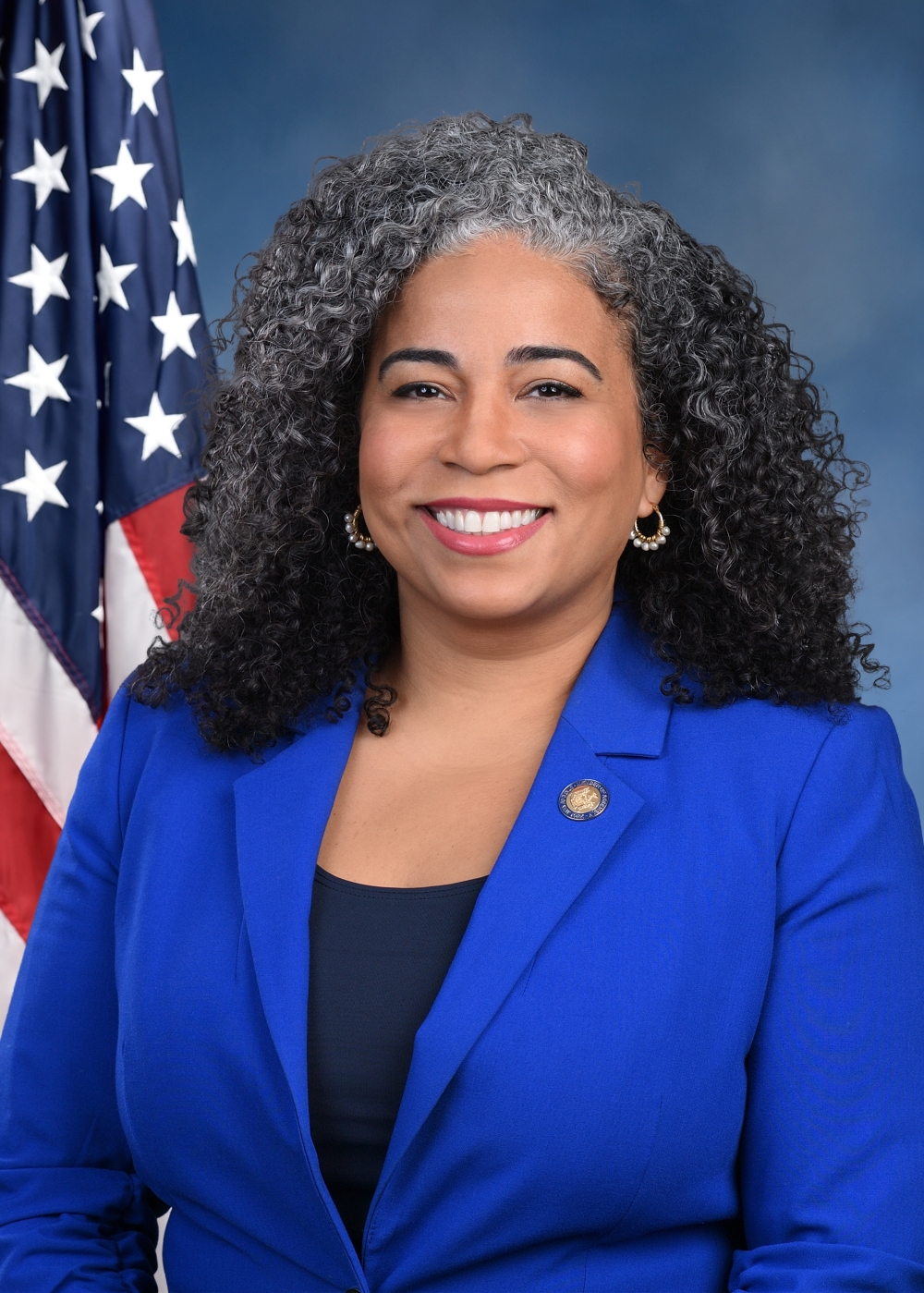
Asm. Karines Reyes
Sponsored bills
Requires certain entities to stock opioid antagonists and to store naloxone nasal sprays with or adjacent to automated external defibrillator cabinets.
Establishes reporting requirements for out of state entities provide reimbursement of health care costs and penalties for failing to comply with such reporting requirements.
Directs the metropolitan transportation authority, in conjunction with the New York city transit authority, to develop weekly and monthly tickets valid for optional, discounted transfers between such authorities.
Maddy summaryThis bill (A 4764) eliminates two existing provisions: the excise tax on medical cannabis sales and the medical cannabis trust fund (a dedicated funding program). It directly affects medical cannabis businesses and patients by removing the tax they pay and ending the dedicated funding stream. The bill repeals specific sections of the tax law (Section 490) and state finance law (Section 89-h), taking effect immediately upon passage.
Maddy summaryThis bill requires the Metropolitan Transportation Authority (MTA) to create and submit two detailed, long-term capital spending plans every decade, replacing its previous five-year planning cycle. Specifically, the MTA must submit its first ten-year plan by October 1, 2025, and subsequent plans every ten years thereafter (e.g., 2035, 2045). The plans cover all major infrastructure projects and funding needs for the decade starting the following year. This change aims to provide more strategic, long-range planning for the MTA’s capital investments, which directly affect New York City’s transportation infrastructure and funding decisions.
Expands eligibility for tax abatement for rent-controlled and rent regulated property occupied by persons with disabilities to include individuals who do not meet the non-medical qualifications for SSDI and SSI but, by reason of the individual's disability, the individual is not able to engage in substantial gainful activity as that term is defined by the federal social security administration.
Maddy summaryThis bill eliminates tax-exempt status for nonprofits (like charities, foundations, and community groups) that engage in political campaign activities. It directly affects organizations currently qualifying for tax exemptions under state law if they participate in efforts such as contributing to candidates, publishing ads supporting or opposing candidates, or using resources to influence elections. The law prohibits tax exemptions for these political activities but allows exceptions for non-partisan voter education, non-partisan research, and certain neutral events like hosting all candidates equally. Nonprofits must avoid even indirect political involvement to maintain their tax-exempt status under this bill.

Maddy summaryThis bill establishes 10 regional grant programs across New York State for arts, cultural, and parks capital projects. It creates regional councils in each of the 10 defined areas (like Long Island, NYC, and the Finger Lakes) to award competitive grants to local organizations. Grants must be distributed equally between large organizations (over $10M budget in NYC, $5M elsewhere) and smaller ones, with councils composed of 5 governor-appointed members, 1 Assembly-appointed member, and 1 Senate-appointed member. The bill prohibits re-granting to the same organization within three years and caps parks funding at 50% of annual grants.
Maddy summaryThis bill amends New York's Penal Law to explicitly include animal fighting under the definition of criminal activity for enterprise corruption charges. It adds "section three hundred fifty-one of the agriculture and markets law relating to animal fighting" to the list of offenses that qualify as criminal activity in enterprise corruption cases. This change directly affects prosecutors and courts handling cases where animal fighting is part of a larger criminal enterprise, allowing such cases to be prosecuted under enterprise corruption statutes. The key mechanism is a technical update to the legal definition, not a new policy or funding measure.