Clarifies that employment at any licensee under the cannabis law satisfies employment requirements for parole, probation or other state supervision unless the terms and conditions of said parole, probation, or state supervision explicitly prohibit such employment.
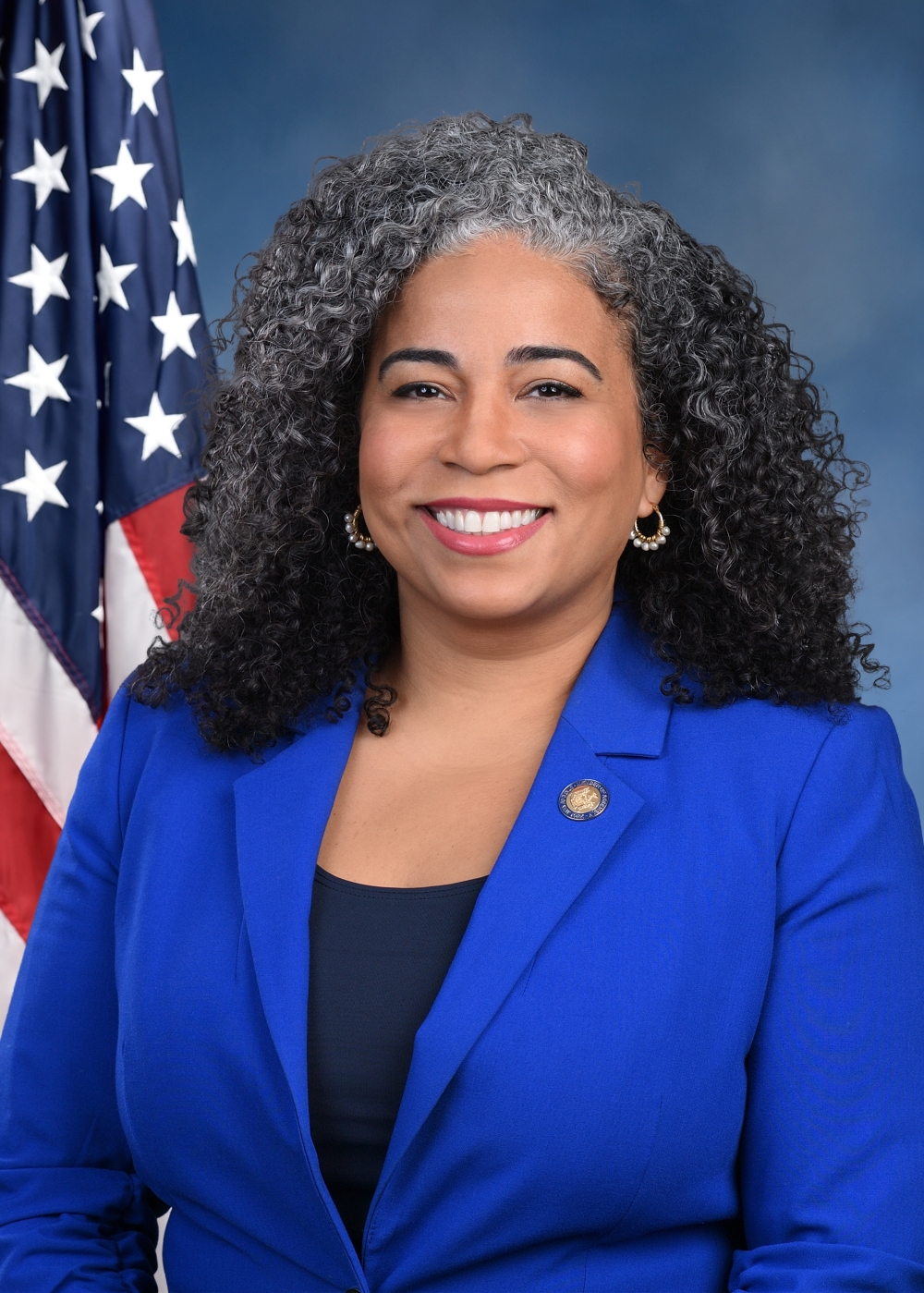
Asm. Karines Reyes
Sponsored bills
Provides that mifepristone or misoprostol may be dispensed without the name and address of the dispenser and patient included on the prescription label.
Prohibits unregulated pregnancy centers from requiring clients, as a condition of service, or making it reasonably appear to be a condition of service, to disclose certain information relating to their medical history, sexual history, relationship to the other parent of the potential baby, or insurance or financial information.
Requires the department of corrections and community supervision to provide body-worn cameras to certain individuals visiting correctional facilities and provide those individuals with the footage from such cameras.
Relates to the reporting requirements of the statewide fiscal intermediary; requires the reporting of utilization data and financial data to protect medical assistance recipients in using the program and ensure the effective use of medical assistance funds; requires the statewide fiscal intermediary to provide consumer directed personal assistant data to ensure the availability of a workforce to meet the needs of consumers utilizing the program; requires the statewide fiscal intermediary to provide data regarding customer service requests, complaints, and accessibility.
Permits the establishment of reserve funds for unanticipated costs relating to special education, provided that the amount in such fund shall not exceed four percent of the district's current school year budget.
Maddy summaryThis bill creates a temporary commission to study music and performing arts education programs in New York state correctional facilities. The commission will consist of eleven members appointed by state officials and must include at least one formerly incarcerated person, and it will examine how to expand these programs for both youth and adult inmates. The commission will submit a report with recommendations to state leaders within one year, and the law will expire two years after it takes effect.
Maddy summaryThis bill establishes minimum cash wage requirements for "miscellaneous industry workers" who receive tips, including car wash attendants, nail salon workers, tow truck drivers, dog groomers, tour guides, valet attendants, and similar roles. It sets specific hourly cash wage floors that must be paid in addition to tips, with rates increasing annually through 2029 (e.g., $12.77/hour in NYC starting 2026, $11.50/hour outside NYC starting 2026). The bill ensures that when tips are added to the cash wage, the total equals the full minimum wage for their region, preventing employers from relying solely on tips to meet wage requirements. It directly affects these tipped workers by guaranteeing a minimum cash payment regardless of tip amounts received.

Establishes a gender-affirming care access program to provide support and increase access to gender-affirming care including certain medical and surgical care.
Maddy summaryThis bill updates how New York State calculates payment rates for federally qualified health centers (FQHCs), which provide primary care in underserved communities. It changes the rate calculation method: through 2025, rates use the Medicare Economic Index, and after 2025, they use a federal cost adjustment formula (FQHC Market Basket inflator) adjusted for service scope. The state health department must analyze actual FQHC costs every three years starting in 2025 to set updated rates, ensuring payments reflect real costs while guaranteeing no facility receives a rate lower than the 2025 level. This directly affects FQHCs by potentially increasing their state-funded payments based on verified operational expenses.