

Removes the lifetime ban on jury duty for convicted felons; provides that if convicted of a felony, such person has completed all sentencing requirements to such conviction, including any required term of imprisonment, probation, or community supervision.
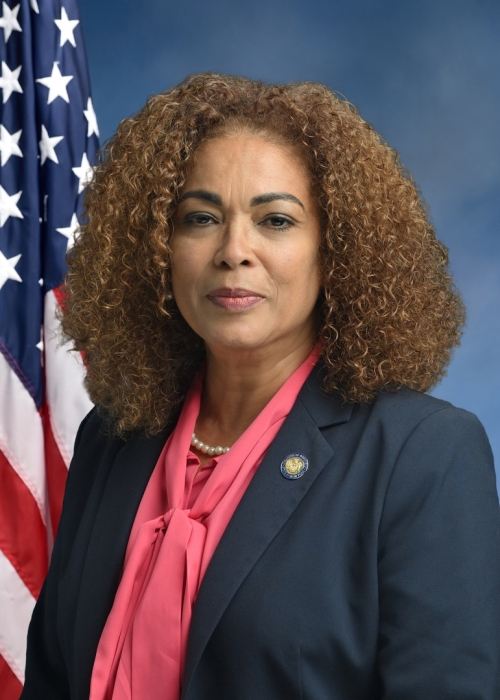
Asm. Yudelka Tapia
Sponsored bills
Allows commuter vans to accept hails from prospective passengers in the street; provides for the repeal of such provisions upon the expiration thereof.
Increases the number of judges in family court to 67; adds twelve additional judges to the civil court of the city of New York; adds additional family court judges to Cayuga, Chenango, Cortland, Erie, Jefferson, Nassau, Rensselaer, Rockland, Suffolk and Westchester counties.
Maddy summaryThis bill expands the New York veterans tuition awards program to include all resident veterans, regardless of whether they served in active combat. Currently, eligibility is limited to those who served in specific conflicts like the Vietnam or Persian Gulf wars and received certain expeditionary medals. The change removes the requirement for combat service, allowing any New York resident who served in the U.S. armed forces under honorable conditions to qualify for tuition assistance. The program provides funding equivalent to up to eight full-time semesters of study at approved colleges or vocational schools, with the award amount based on the lower of state university tuition or the actual cost charged by the institution.
Maddy summaryThis bill expands the State Commission of Correction from three to nine members to include a broader range of perspectives in overseeing the state's correctional system. The new commission will consist of appointees from the governor, the Assembly speaker, the Senate temporary president, and the correctional association, with specific requirements that at least one member be a formerly incarcerated individual, a public health professional, a behavioral health expert, or an attorney specializing in prisoner rights. To ensure stability and balance, members will serve staggered five-year terms with a limit of ten years total, and the appointing authority for each member will have the power to remove them for cause.
Requires the office of parks, recreation and historic preservation to establish design standards for greenway trails and to manage applications for greenway trails.
Requires public notice and public engagement when a general hospital seeks to close entirely or a unit that provides maternity, mental health or substance use care.
Maddy summaryThis bill, known as the Fashion Environmental Accountability Act, requires large fashion retailers to conduct standardized environmental due diligence on their supply chains and creates a remediation fund to address harms. It applies to businesses selling new clothing, shoes, or bags with over $100 million in annual revenue, excluding used clothing sellers and most multi-brand retailers. Companies must map their suppliers across four tiers, from raw material providers to finished goods manufacturers, and report on their efforts to prevent or mitigate environmental damage. The legislation mandates that these reports be independently verified and published using open data principles, while defining a "living wage" as a key standard for worker compensation.
Relates to rechargeable battery recycling; adds a battery used as the principal electric power source for an electric scooter or bicycle with electric assist to the definition of "rechargeable battery"; provides that a battery manufacturer may not sell, offer for sale, or distribute rechargeable batteries in the state unless the battery manufacturer is implementing or participating under an approved plan; allows a city with a population of one million or more to enforce through its own agencies.
Enacts the "packaging reduction and recycling infrastructure act" to require companies selling, offering for sale, or distributing packaging materials and products to register with a packaging reduction organization to develop a packaging reduction and recycling plan.