

Requires a caller making a report of suspected child abuse or maltreatment to the central register to leave their name and contact information; prohibits the office of children and family services from releasing information identifying a person who made such a report.
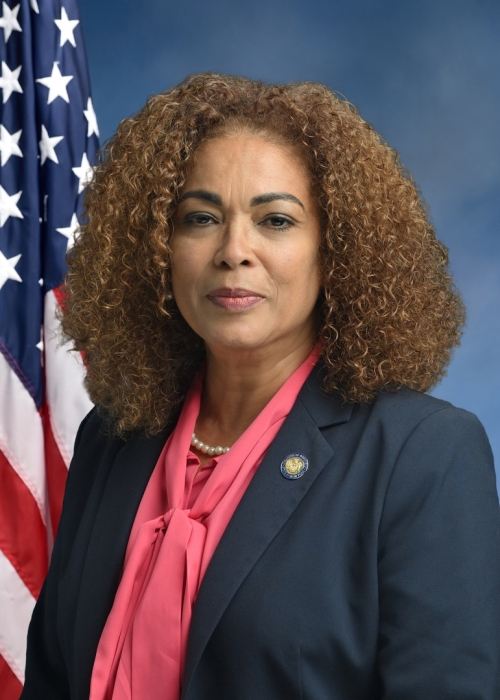
Asm. Yudelka Tapia
Sponsored bills
Maddy summaryThis bill requires most health insurance plans (issued or renewed on or after January 1, 2020) to cover specific contraceptive services provided by pharmacists without cost-sharing. It mandates coverage for all FDA-approved contraceptives (including over-the-counter options), emergency contraception, patient education, follow-up care, and up to a 12-month supply at once. Pharmacists dispensing self-administered hormonal contraceptives must receive reimbursement equivalent to other healthcare providers. The law directly affects insurance companies, pharmacists, and individuals seeking contraceptive care through insurance.
Requires each appropriate institution housing a defendant due to mental disease or defect to assign a critical time intervention care management team to the defendant and make a single point of access referral for the defendant prior to such defendant's discharge.
Relates to rechargeable battery recycling; adds a battery used as the principal electric power source for an electric scooter or bicycle with electric assist to the definition of "rechargeable battery"; provides that a battery manufacturer may not sell, offer for sale, or distribute rechargeable batteries in the state unless the battery manufacturer is implementing or participating under an approved plan; allows a city with a population of one million or more to enforce through its own agencies.
Maddy summaryThis bill amends New York's social services law to ensure school-based health center services remain outside managed care programs for medical assistance recipients (e.g., Medicaid beneficiaries). It specifically prohibits these services from being provided through managed care plans, requiring them to continue being delivered directly outside such programs. The policy change directly affects students receiving medical assistance who use school health centers for care, maintaining their access to these services without managed care restrictions. The bill takes effect April 1, 2025, and amends existing law without creating new programs.
Enacts the "public renewables transparency act"; relates to the New York power authority's conferral process; requires the conferral report be posted on the authority's website; provides that the authority shall provide an option for stakeholders to submit comments remotely as well, and incorporate feedback from such sessions and written comments into the final draft of the strategic plan; makes related provisions.
Maddy summaryThis bill, the "Responsible AI Safety and Education Act" (RAISE Act), regulates large artificial intelligence (AI) developers who train or use "frontier models" - defined as models requiring over $100 million in computing costs or 10^26 computational operations. It directly affects commercial AI companies (excluding academic researchers) by requiring them to implement safety protocols, conduct risk testing, and report incidents like unauthorized model access or misuse. Key provisions mandate documented safety measures to prevent "critical harm" (defined as serious injury to 100+ people or $1 billion+ in property damage), with remedies for violations. The law also creates specific definitions for terms like "frontier model," "safety incident," and "knowledge distillation" (modified AI models), ensuring clarity for compliance.
Permits an eligible retirement system member to receive, in lieu of an ordinary death benefit, a death benefit such member would otherwise be entitled to receive provided such member is a state-paid judge or justice of the unified court system or a housing judge of the civil court of the city of New York.
Maddy summaryThis resolution (Assembly Resolution 738) asks Governor Hochul to officially designate June 10, 2025, as "FSGS Awareness Day" in New York State. It does not create new laws or policies but seeks to raise public awareness about focal segmental glomerulosclerosis (FSGS), a rare kidney disease disproportionately affecting Black Americans due to genetic factors. The resolution highlights FSGS's severe health impacts, high healthcare costs, diagnostic challenges, and racial disparities in care. It directly affects New Yorkers living with FSGS, their families, and healthcare providers working to improve diagnosis and treatment access. The resolution was adopted by the Assembly on June 10, 2025, and now awaits the Governor's proclamation.
Requires public notice and public engagement when a general hospital seeks to close entirely or a unit that provides maternity, mental health or substance use care.