

Maddy summaryThis bill proposes adding a constitutional right to privacy for all residents, stating that "the right of the people to privacy is recognized and shall not be infringed." It would require courts to consider the nature and extent of information obtained and the intrusion when evaluating privacy claims. The amendment must be submitted to voters for ratification after the next general election, as specified in the bill's referral process. This change would directly affect all state residents by establishing a new constitutional standard for privacy protections.
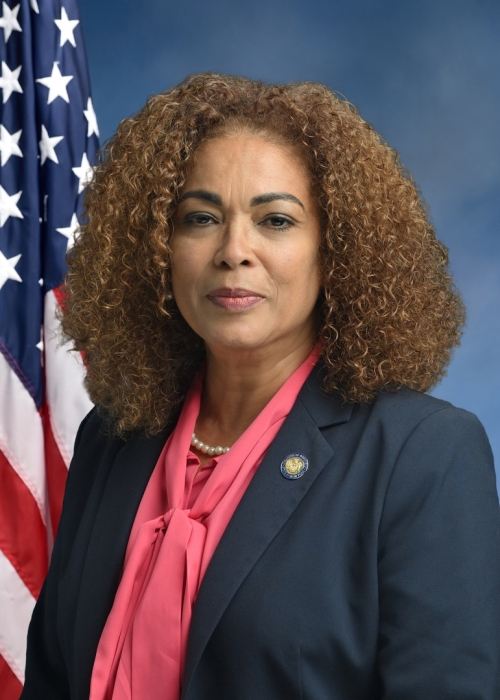
Asm. Yudelka Tapia
Sponsored bills
Maddy summaryThis bill amends the state constitution to allow the legislature to adjust the number of justices on the supreme court in any judicial district. It sets a population-based limit: the number of justices cannot exceed one per 50,000 residents (or any fraction over 30,000) based on the latest census. The legislature may also reduce justices, but not below the current number in any district. The proposed change requires voter approval in the 2026 general election.
Permits the legislature to increase the number of justices of the supreme court in any judicial district up to one justice for every thirty thousand people in the district.
Requires that if a member of the legislature shall move their residence out of the senate or assembly district they were elected to serve during the time for which such member was elected they shall immediately vacate their seat in the legislature.
Relates to the qualification of voters; provides that a citizen who is seventeen years of age at the time of a primary election and who will be eighteen years of age at the time of the general election for which such primary election is held, shall be eligible to vote in such primary election.
Maddy summaryThis bill establishes a 7.8% cost-of-living adjustment (COLA) for specific human services programs effective April 1, 2025, through March 31, 2026. It directly affects providers of mental health, developmental disability, and addiction services (including clinics, residential programs, and outpatient care) by requiring them to use the COLA funds to provide at least a 2.6% targeted salary increase for eligible staff. The COLA applies to programs funded or certified by the Office of Mental Health, Office for People with Developmental Disabilities, and Office of Addiction Services and Supports. This adjustment is inclusive of other inflation factors for the specified period, excluding federal pandemic relief programs.
Enacts the housing development fund company fairness, preservation, and affordability act to clarify certain provisions relating to the dissolution and reincorporation of housing development fund companies; provides for tax exemptions and abatements for housing development fund companies.
Maddy summaryThis bill creates a pilot program requiring New York state health programs to pay no more than the lowest price for certain prescription drugs in Canada. It sets maximum prices based on the most recent drug pricing lists from Ontario, Quebec, British Columbia, and Alberta, starting with the five most expensive drugs. State agencies and health plans must pay these Canadian-based rates for covered drugs, and any savings generated must be passed directly to consumers through reduced costs. The program applies only to state-funded health plans and agencies purchasing drugs for state programs, excluding Medicaid.
Prohibits the sale of foods containing synthetic color additives in schools except under certain circumstances off and away from the premises or on premises at least a half hour after the end of the school day.
Maddy summaryThis bill prohibits "prop bets" in New York's licensed sports wagering, meaning operators cannot offer wagers on specific in-game events like player performance, referee decisions, or timing. It directly affects licensed sports betting platforms, casinos, and mobile wagering apps operating in New York. The key provision bans all proposition bets - defined as wagers on outcomes other than the final score or winner - and restricts betting to only the final result, score, or winner of a sporting event. Violations could result in fines up to $100,000 per incident, license suspension, or voided wagers.