

Authorizes courts to hold evidentiary hearings for a temporary order of protection in certain circumstances; grants superior court judges the authority to issue a temporary order of protection when an action is pending in a local criminal court in certain circumstances.
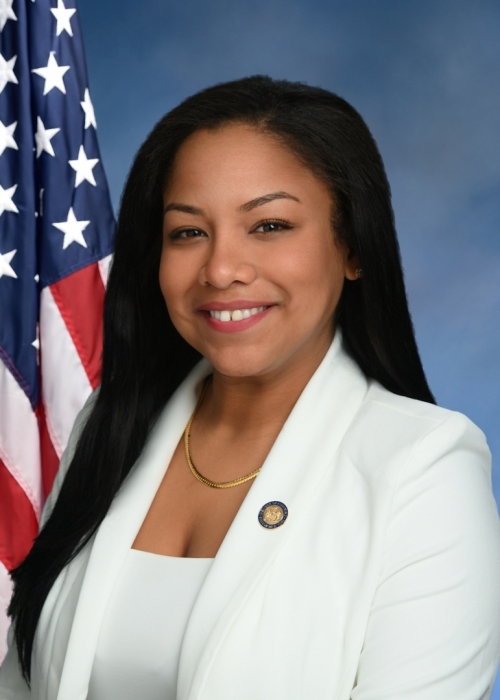
Asm. Amanda Septimo
Sponsored bills
Maddy summaryThis bill (A 3742) requires all high schools to keep opioid antagonists (like naloxone) available for emergency overdose treatment and to have at least one trained employee present during all school hours and after-school activities. The law mandates schools to acquire the medication, designate a staff member who completed approved training in its use, and ensure that employee oversees storage and administration. It directly affects high schools, students, and staff by establishing a concrete protocol for responding to opioid overdoses on school grounds. The bill takes immediate effect upon enactment and does not include exemptions for school activities.
Maddy summaryThis bill establishes a new health coverage option under New York's 1332 state innovation program, allowing the state to create a health plan for specific uninsured New Yorkers who don't qualify for Medicaid or ACA marketplace plans. It directly affects residents under 65 with household incomes between 133% and 250% of the federal poverty line, including some noncitizens ineligible for Medicaid due to immigration status. Key provisions include requiring coverage for essential health services (like cancer care access at Medicaid rates, dental, vision, and chronic illness support), automatic enrollment for children born to eligible parents, and continued coverage during pregnancy for one year postpartum. The program requires federal approval under the ACA's Section 1332 waiver process and operates alongside existing Medicaid and marketplace plans.
Maddy summaryThis bill establishes a new progressive income tax structure for high-income New York taxpayers by creating multiple tax brackets with increasing rates as income rises. It directly affects New York residents earning above certain thresholds, with the highest rates applying to incomes over $5 million (up to 24% for some filing statuses). Key provisions include setting specific tax rates for different income ranges - for example, 10.90% for incomes over $25 million and 24% for incomes over $20 million for certain filers. The bill modifies existing tax law to implement these bracketed rates, replacing previous structures.
Requires bicycle delivery contractors to provide personal injury liability insurance to compensate persons injured by a bicycle delivery worker and to provide notice to delivery workers that the contractor provides personal injury liability insurance; authorizes the superintendent of financial services to promulgate rules and regulations.
Provides for automatic voter registration and pre-registration for persons applying for certain department of motor vehicles documentation, and for persons applying for or re-enrolling in Medicaid; allows individuals to decline such automatic registration and pre-registration.
Relates to protecting the communication rights of individuals with disabilities; provides that each person with a disability has the right to communicate in their preferred manner.
Enacts the "fair pay for home care act" relating to minimum wages applicable to home care aides; provides for a minimum wage of 150% of the applicable statewide or regional minimum wage.
Establishes the "Safe Staffing for Hospital Care Act"; establishes minimum staffing levels for various health care workers in different health care facilities; requires submission of staffing plans; prohibits most mandatory overtime.
Maddy summaryThis bill changes New York's parole process by requiring the state board of parole to consider specific factors before granting release. It mandates evaluation of rehabilitation efforts (like programs, therapy, and work assignments), release plans (including housing, jobs, and support services), and deportation status, while prohibiting decisions based mainly on victim statements or prior criminal records. Parole denials must include detailed written explanations, and the board must report quarterly to lawmakers with demographic data on denied cases (excluding individual identities). These changes aim to standardize parole decisions and increase transparency.