

Maddy summaryThis bill (A 1966) expands New York's animal cruelty law to include wildlife animals - such as deer, birds, or other non-insect species - as protected under the law, alongside companion animals. It directly affects wildlife by adding them to the list of animals covered by cruelty provisions, meaning intentional harm to these animals could now be prosecuted under the law. The key mechanism amends the law to define "wildlife" per environmental conservation law, while explicitly maintaining exemptions for lawful hunting, trapping, fishing, pest control, and other authorized activities. This change does not alter existing legal activities like hunting or pest management but extends cruelty protections to wildlife for the first time under this specific statute.
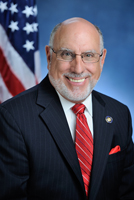
Asm. Michael Benedetto
Sponsored bills
Maddy summaryThis bill changes how parking violation notices are handled in New York. It requires hearing examiners to provide written decisions explaining the legal basis for each ticket's outcome (guilty or not guilty) and gives drivers the option to request a hearing for each individual ticket. The bill also mandates that the state surcharge must be paid unless a hearing officer dismisses the ticket based on specific merits presented by the driver. These changes aim to increase transparency and fairness for drivers contesting parking violations.
Maddy summaryThis bill amends education law to add new requirements for charter school applications in school districts where over 5% of students already attend charter schools. It requires that (1) a proposed charter school must show it will provide significant educational benefit to its students, and (2) the school district or community school district must consent to the application. The law directly affects school districts with high charter school enrollment and charter school applicants seeking approval in those districts. The changes take effect immediately upon enactment.
Establishes a bicycle and electric scooter operator's safety manual; provides for the issuance of a license for residents who successfully read and comprehend the operator's safety manual; requires residents who operate an electric scooter in New York City to have a license to operate such devices; requires instruction in electric scooter safety as part of the drivers pre-licensing course; requires liability insurance for electric scooters in cities having a population of one million or more; prohibits the sale of an electric scooter to a purchaser unless the purchaser has a license to operate the electric scooter and has insurance in a city having a population of one million or more.
Maddy summaryThis bill changes New York's parole process by requiring the state board of parole to consider specific factors before granting release. It mandates evaluation of rehabilitation efforts (like programs, therapy, and work assignments), release plans (including housing, jobs, and support services), and deportation status, while prohibiting decisions based mainly on victim statements or prior criminal records. Parole denials must include detailed written explanations, and the board must report quarterly to lawmakers with demographic data on denied cases (excluding individual identities). These changes aim to standardize parole decisions and increase transparency.
Maddy summaryThis bill gives New York's Board of Regents final authority to approve or reject all new and renewed charter schools, directly affecting charter school applicants and operators. It requires charter entities to revise proposals based on Regents' feedback and resubmit them for final review, with the Regents having 30 days to act on resubmitted applications. If the Regents do not approve within 30 days, the charter is automatically approved. The bill also states that a charter cannot be approved by the applicant if the Regents recommend changes that remain unresolved. This changes the current process by making the Regents' approval the final step, not the applicant's decision.
Maddy summaryThis bill updates New York's animal cruelty laws by clarifying key definitions (like "cruelty," "companion animal," and "farm animal") and repealing outdated sections of the Agriculture and Markets Law. It adds a new requirement that courts can order owners to post security for animal care costs when an animal is seized for cruelty charges. The law directly affects animal cruelty enforcement (including police, humane societies, and shelters), animal owners (especially regarding ear clipping), and courts handling animal-related cases. Key changes include strengthening officer authority to intervene in cruelty cases and specifying how costs for seized animals should be covered.
Maddy summaryThis bill restores a 20-year service requirement for normal retirement benefits for New York City police officers, reversing a 2012 change that raised the requirement to 22 years. It directly affects NYPD police/fire members under the New York City Police Pension Fund, allowing them to qualify for normal retirement benefits after 20 years of service instead of 22. The key mechanism amends three sections of the Retirement and Social Security Law to specify that NYPD officers meet the service threshold at 20 years (for normal retirement), while other groups like correction/sanitation officers remain at 22 years. The bill makes this change effective immediately without altering age requirements or early retirement rules.
Maddy summaryThis bill directs the Division of Housing and Community Renewal to study non-rental fees charged by landlords operating under rent regulations. The study must examine common fees (like application or pet fees), their amounts, how they're determined, and other relevant data. The division must submit a report to the legislature by April 1, 2027. This is a procedural study requiring data collection, not a law changing fees.
Maddy summaryThis bill mandates the Metropolitan Transportation Authority (MTA) to study whether the Triboro rail line can share space for both public transit and freight trains. The study must cover a specific corridor (from the Bronx through Queens) and assess potential benefits like reduced travel times, improved quality of life for outer borough residents, and economic gains. The MTA must report findings within one year, including expected ridership, station locations, phased implementation plans, and costs. This is a feasibility study only - not a law to build or operate the service - so it does not change current transit or freight operations.