

Maddy summaryThis bill (A 6719) modernizes absentee voting procedures in New York by expanding how voters can submit applications and ballots. It allows voters to electronically submit absentee ballot applications via email, fax, or an online portal (with a 10-day deadline before elections), and to return completed ballots electronically using a designated system. The law directly affects all absentee voters, including New York residents living overseas who can now use electronic methods without needing to mail paper copies. Key provisions clarify that electronic submissions are valid "original" applications and require no follow-up paper copies, while maintaining requirements for original mailed or in-person submissions for special federal voters (like military personnel).
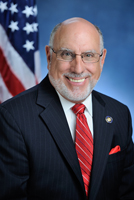
Asm. Michael Benedetto
Sponsored bills
Relates to establishing the online consumer protection act; defines terms; provides that an advertising network shall post clear and conspicuous notice on the home page of its own website about its privacy policy and its data collection and use practices related to its advertising delivery activities; makes related provisions.
Creates a distinctive license plate for veterans honoring Borinqueneers; defines "veteran" as a person who is a resident of this state, who served in the armed forces of the United States, and was honorably discharged from the armed forces, or has a qualifying condition, as defined in section one of the veterans' services law, and has received a discharge other than bad conduct or dishonorable from such service, or is a discharged LGBT veteran, as defined in section one of the veterans' services law, and has received a discharge other than bad conduct or dishonorable from such service.
Maddy summaryThis bill expands the definition of second-degree assault under New York's penal law to specifically include attacks on school bus operators, monitors, or attendants. It directly affects school bus staff by ensuring that intentional physical harm caused to them during their work is classified as a more serious second-degree assault offense. The key provision amends existing law to add a new subsection stating that causing injury to these individuals with intent constitutes second-degree assault. This change creates a clearer legal standard for prosecuting assaults targeting school transportation personnel.
Relates to establishing an abatement and exemption from real property taxes for capital improvements to reduce carbon emissions; establishes an energy efficiency improvement board to approve the abatements and exemptions.
Maddy summaryThis bill grants Richard J. Vogt, III retroactive membership in the New York state and local employees' retirement system as a Tier IV member, effective May 1, 2000. It applies specifically to Vogt, who worked at SUNY Maritime College during that period but was not enrolled in the retirement system due to circumstances beyond his control. To activate this, Vogt must submit a written application to the state comptroller within one year of the bill's effective date, after which he will receive all Tier IV benefits. The SUNY Maritime College bears all associated costs for the retroactive service, with no refund of Vogt's past contributions.
Requires school districts, boards of cooperative educational services, charter schools and nonpublic schools to establish cellphone policies and procedures; requires the establishment of a committee to develop such policies and procedures; requires such policies and procedures to be individually tailored to specific school environments.
Requires fashion sellers to carry out environmental due diligence for the portions of their business related to wearing apparel, footwear or fashion bags, including wearing apparel, footwear or fashion bags produced as a private label; establishes a fashion remediation fund.
Expands protections regarding violations of safety conditions in adult care facilities; provides penalties for safety violations and operating without a valid license; prohibits reductions in fines in certain circumstances where a patient is endangered or harmed.
Maddy summaryThis bill establishes a new licensing system for two types of vision impairment specialists: orientation and mobility specialists (who teach safe movement techniques) and vision rehabilitation therapists (who provide training for independent living). It requires these professionals to obtain state licenses to use their titles and defines their specific scope of practice, including assessments, training, and use of adaptive devices. The bill also creates a State Board for Vision Impairment Specialists to oversee licensing, composed of licensed practitioners, medical professionals, and blind community representatives. This directly affects individuals seeking to work in these specialized fields and ensures they meet defined standards before practicing.