

Provides additional documentation a tenant may provide to demonstrate that such tenant or a member of such tenant's household has been a victim of domestic violence for purposes of permitting the termination of residential lease by victims of domestic violence.
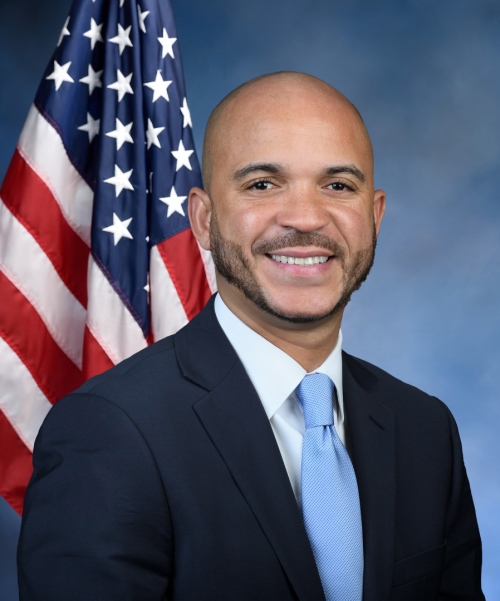
Asm. Manny De Los Santos
Sponsored bills
Enacts the "gender identity respect, dignity and safety act"; relates to the treatment and placement of incarcerated individuals based upon gender identity; requires that incarcerated individuals in state and local correctional facilities who have a gender identity different from their assigned sex at birth be addressed and have access to commissary items, clothing and other materials that are consistent with the person's gender identity; establishes that incarcerated individuals shall be presumptively placed in a correctional facility with persons of the gender that most closely aligns with such person's self-attested gender identity unless the person opts out of such placement.
Maddy summaryThis bill updates the definitions and requirements for organizations that provide fiscal intermediary services within the consumer directed personal assistance program. It establishes a new category of "Fiscal intermediary" alongside the existing "Statewide fiscal intermediary," allowing certain entities, like those with Department of Health contracts or independent living centers, to operate in this role. These new fiscal intermediaries will have the same status as the Statewide fiscal intermediary and can directly contract with managed care plans and other programs. The bill also removes the procurement process requirement for the Statewide fiscal intermediary and streamlines registration rules for these service providers.
Establishes a career and technical education (CTE) diploma; establishes a CTE pathway to a diploma shall be based on a curriculum designed to provide students with technical skills and shall demonstrate that the student is ready for a career as determined by regulations of the commissioner.
Maddy summaryThis bill requires developers seeking permits for major projects near low-income or minority neighborhoods to submit a detailed public engagement plan. The plan must include maps of the community, locations of sensitive sites like schools, a schedule for at least three public meetings, and materials in plain language translated into common community languages. Applicants must also provide quarterly progress reports and ensure community input influences project design. This applies to projects within one mile of designated disadvantaged communities, aiming to improve transparency and community involvement in environmental permitting.
Maddy summaryThis bill requires the MTA to create a half-fare program for eligible New York State veterans using public transportation. It applies specifically to veterans who are New York residents, honorably discharged from U.S. military service, and possess a valid New York veteran ID card. The MTA must establish the program but cannot fund it from its regular operating or capital budgets; instead, it can only implement it using state funds specifically allocated for this purpose. The bill defines "veteran" clearly and mandates that the program be implemented with state appropriations.
Provides that cities having a population in excess of one million shall not supersede state provisions relating to the state law prohibition on individuals standing or parking a vehicle within twenty feet of a cross walk at an intersection.
Provides that the submission of claims for services provided by home care agencies shall be done on forms approved by the centers for Medicare and Medicaid services.
Maddy summaryThis bill updates rules for when construction projects must pay local prevailing wages. It applies to projects using at least 20% public funds (or $3 million/$5 million in public funds) for construction costs. Exemptions include single-family homes, small nonprofits, and certain affordable housing developments meeting specific affordability requirements. This affects contractors and developers working on qualifying projects funded in part by public money.
Maddy summaryThis bill increases the state commission of correction from 3 to 9 members. It specifies that 3 members are appointed by the governor (with Senate confirmation), 2 by the Assembly speaker, 2 by the Senate Temporary President, and 2 by the Correctional Association. The commission must now include at least one person formerly incarcerated in a New York correctional facility, a public health professional, a behavioral healthcare professional, an attorney with criminal defense or prisoner rights expertise, and others deemed beneficial. The bill also sets term lengths and removal procedures for commission members.