

Provides for the creation and maintenance of digital records for each incarcerated individual which includes all medical records, including but not limited to mental health records and results of drug or alcohol tests, work records and evaluations, conduct records and programming records.
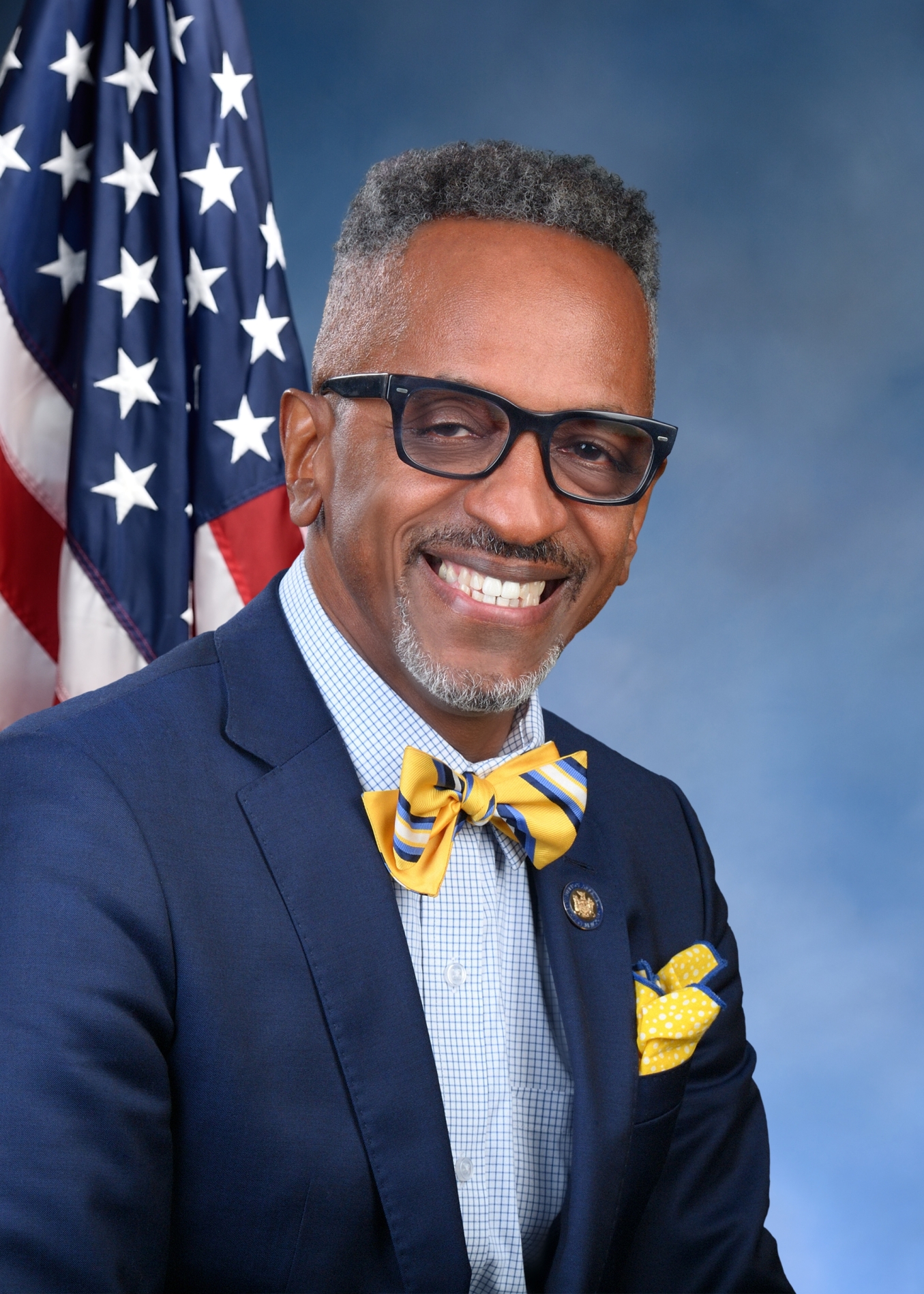
Asm. Al Taylor
Sponsored bills
Maddy summaryThis bill designates five "centers for excellence" and ten outpatient treatment centers across New York State specifically for sickle cell disease care. Centers for excellence (located north of Putnam and Orange counties) receive $500,000 annually for specialized research and treatment, while outpatient centers receive $250,000 annually to manage patient care. It also modifies opioid prescribing rules to exempt sickle cell disease patients from a 3-month prescription limit, ensuring access to necessary pain management. The law directly affects sickle cell patients by expanding access to specialized care centers and clarifying treatment protocols.
Maddy summaryBill A 7308 establishes a tax credit for producers of sustainable aviation fuel (SAF) sold in the state for flights departing within the state. Starting January 1, 2025, producers can claim $1 per gallon, increasing by two cents for each additional one percent reduction in carbon dioxide emissions above 50%, up to a maximum of $2 per gallon. To be eligible, producers must obtain a certificate from the New York State Energy Research and Development Authority (NYSERDA). The bill defines SAF as liquid fuel derived from renewable or waste sources, excluding palm or petroleum, that achieves at least a 50% lifecycle greenhouse gas emission reduction. The total amount of tax credits issued annually is capped at $30 million, and any credit exceeding a taxpayer's liability will be refunded.
Requires town and village justices be admitted to practice law in New York state for at least five years as of the date they commence the duties of office.
Maddy summaryThis bill adds "caste" to New York's existing anti-discrimination protections in employment, housing, and public accommodations. It defines "caste" as a hereditary social hierarchy based on birth that restricts opportunities, and prohibits discrimination against individuals because of their caste in hiring, housing, and public services. The law amends existing sections of the executive law to explicitly include caste alongside other protected characteristics like race, gender, and disability. It directly affects people in New York who experience caste-based discrimination in workplaces, housing, or public spaces. The key mechanism is updating anti-discrimination statutes to include caste as a protected category, making such discrimination unlawful under current enforcement frameworks.
Provides that the existence of an infestation of pests in a premises occupied for dwelling purposes is a breach of the warranty of habitability, and requires a landlord to keep premises occupied for dwelling purposes free from an infestation of pests, prevent the reasonably foreseeable occurrence of such a condition and expeditiously remediate such condition and any underlying defect.
Directs the metropolitan transportation authority and the New York city transit authority to rename the 190th street subway station on the IND Eighth Avenue line to the 190th street - Fort Tryon Park station.
Maddy summaryThis bill requires construction employers to create written heat illness prevention plans for workers exposed to extreme heat. It directly affects construction workers and all employers in the construction industry, including contractors and temporary staffing agencies. Key provisions mandate employers to provide cool water (under 59°F/15°C), paid rest breaks in shaded/cool areas, regular heat monitoring, and annual training on heat risks and emergency response. Plans must be developed with worker input, translated for non-English speakers, and include heat wave alert procedures. Employers must also track heat exposure and maintain records of safety measures.
Maddy summaryThis bill increases the maximum number of academic years students can receive tuition assistance under New York's program from four to six years. It directly affects undergraduate students enrolled in eligible degree programs at New York institutions. Key provisions include raising the limit to six years for standard programs, seven years for programs normally requiring five years, and four years for two-year programs. The change applies to all students receiving aid after the bill's effective date, extending their eligibility period for tuition support.
Provides for the review of policies and practices pertaining to infectious disease outbreaks in correctional facilities, including the treatment and prevention of the disease among incarcerated individuals and staff.