

Maddy summaryThis bill requires developers seeking permits for major projects near low-income or minority neighborhoods to submit a detailed public engagement plan. The plan must include maps of the community, locations of sensitive sites like schools, a schedule for at least three public meetings, and materials in plain language translated into common community languages. Applicants must also provide quarterly progress reports and ensure community input influences project design. This applies to projects within one mile of designated disadvantaged communities, aiming to improve transparency and community involvement in environmental permitting.
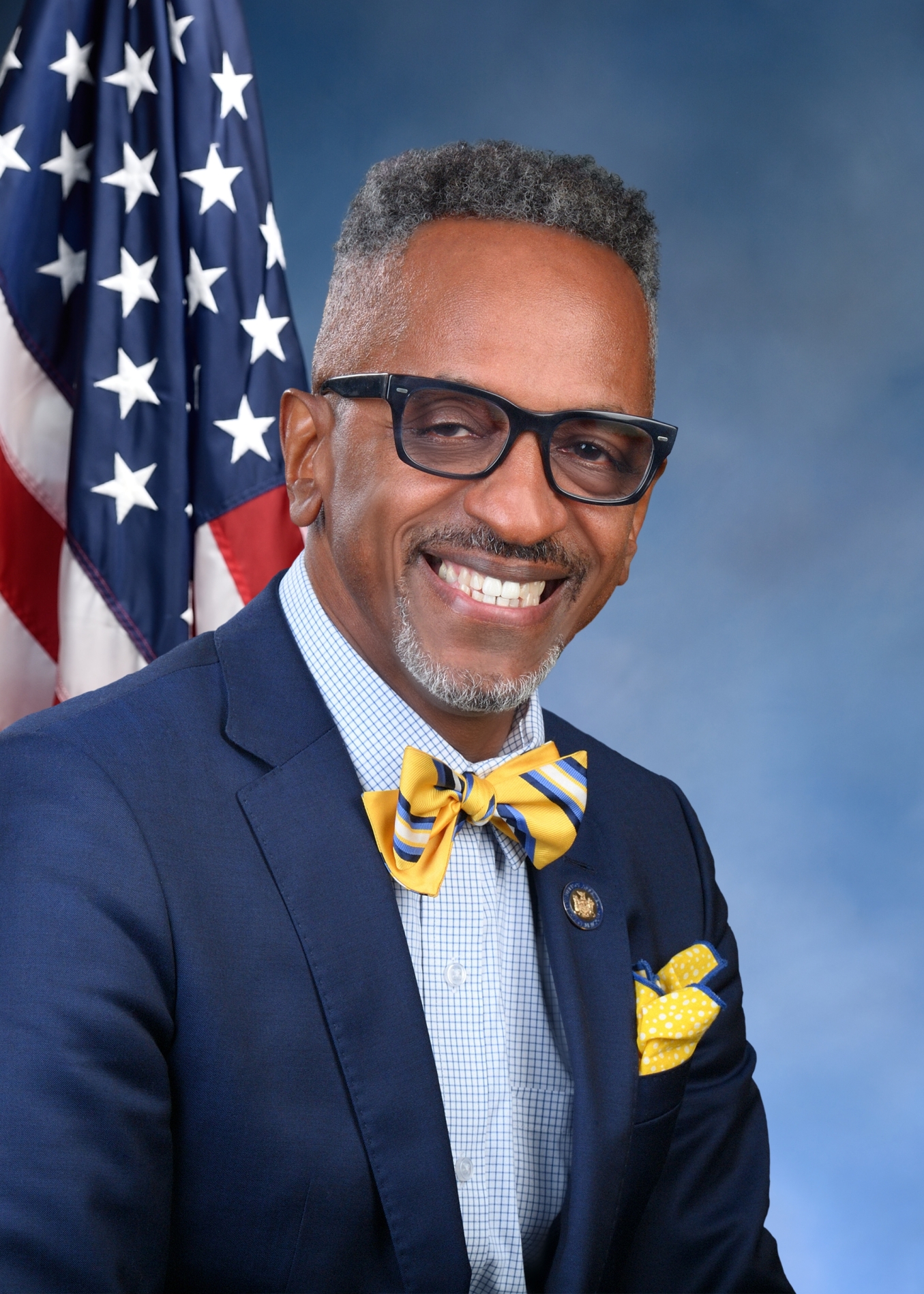
Asm. Al Taylor
Sponsored bills
Maddy summaryThis bill requires the MTA to create a half-fare program for eligible New York State veterans using public transportation. It applies specifically to veterans who are New York residents, honorably discharged from U.S. military service, and possess a valid New York veteran ID card. The MTA must establish the program but cannot fund it from its regular operating or capital budgets; instead, it can only implement it using state funds specifically allocated for this purpose. The bill defines "veteran" clearly and mandates that the program be implemented with state appropriations.
Provides that cities having a population in excess of one million shall not supersede state provisions relating to the state law prohibition on individuals standing or parking a vehicle within twenty feet of a cross walk at an intersection.
Provides that no landlord shall deny access to a licensed professional engineer or licensed registered architect hired by any tenant or tenant association representing tenants of a multiple dwelling of six units or more for the purpose of conducting an inspection of a major capital improvement for which an application for a maximum rent adjustment has been filed by the landlord; provides that such inspection shall be conducted after notice to the landlord and during normal business hours; provides for the filing of such inspection report by such tenants with the New York city rent agency or the state division of housing and community renewal for consideration in such application's determination.
Repeals the Columbia University Education Mixed-Use Development Land Use Improvement and Civic Project Modified General Project Plan adopted by the empire state development corporation on December 18, 2008.
Maddy summaryThis bill allows local governments (counties, cities, towns, villages, or school districts) to create a property tax exemption for licensed child day cares. Specifically, it permits localities to exempt up to 50% of a child care facility's assessed property value from real estate taxes, but only if the locality formally approves the exemption through a law or resolution. The exemption applies only to properties actively used for licensed child care operations, and ends if the property is no longer used for that purpose. Local governments may choose to offer a smaller exemption than 50% if they prefer.
Maddy summaryThis bill updates rules for when construction projects must pay local prevailing wages. It applies to projects using at least 20% public funds (or $3 million/$5 million in public funds) for construction costs. Exemptions include single-family homes, small nonprofits, and certain affordable housing developments meeting specific affordability requirements. This affects contractors and developers working on qualifying projects funded in part by public money.
Maddy summaryThis bill increases the state commission of correction from 3 to 9 members. It specifies that 3 members are appointed by the governor (with Senate confirmation), 2 by the Assembly speaker, 2 by the Senate Temporary President, and 2 by the Correctional Association. The commission must now include at least one person formerly incarcerated in a New York correctional facility, a public health professional, a behavioral healthcare professional, an attorney with criminal defense or prisoner rights expertise, and others deemed beneficial. The bill also sets term lengths and removal procedures for commission members.
Maddy summaryThis bill increases minimum daily pay for New York City election workers. Election inspectors will receive at least $300 per day, and coordinators at least $350 per day. These rates apply specifically to NYC elections and replace prior minimums, with the city, not counties, responsible for funding. The change directly affects election inspectors and coordinators who serve during registration and election days in New York City.
Relates to authorizing voting by incarcerated individuals in correctional facilities; requires the department of corrections and community supervision, in collaboration with the state and county boards of election, to establish a program to facilitate incarcerated individuals voter registration and voting.