

Maddy summaryThis bill increases fines for violating public health laws. It raises penalties for nursing home and hospital operators from $3,000 to $5,000 per violation, with repeat offenses or violations causing harm now carrying up to $10,000 or $20,000 fines. Excess fines collected beyond $2,000 per violation go to a patient safety center, while nursing home fines over $10,000 fund quality improvement programs for nursing homes. The changes apply directly to healthcare facilities and their operators under New York's public health and social services laws.
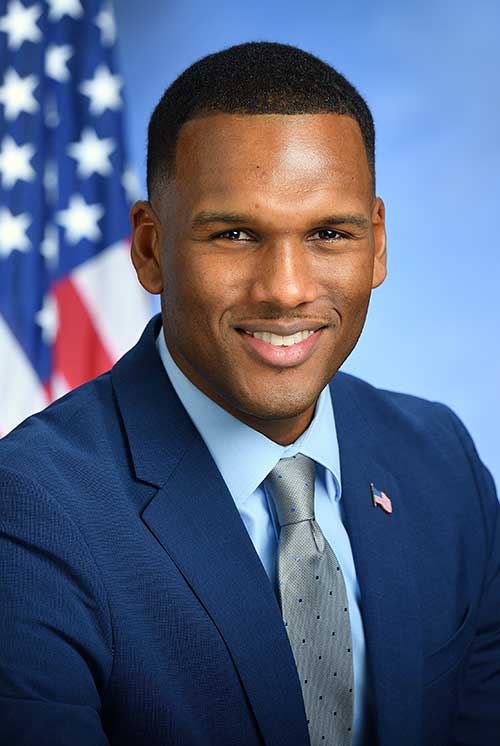
Rep. Charles Fall
Sponsored bills
Maddy summaryThis bill requires restaurants and businesses with on-premises alcohol licenses to provide physical, printed menus upon customer request. It mandates that these menus must be visibly posted (e.g., on walls) and include essential food and beverage information. The law explicitly prohibits relying solely on digital or online menus, ensuring customers always have access to a tangible menu when asked. This applies to all establishments covered under New York's alcoholic beverage control law.
Relates to creating a respiratory therapy demonstration program for residential health care facilities; authorizes the commissioner of health approve up to ten residential health care facilities within the state to operate respiratory therapy units.
Relates to protecting the communication rights of individuals with disabilities; provides that each person with a disability has the right to communicate in their preferred manner.
Requires employers to report certain employees' wages for the purposes of unemployment benefits; relates to the payment of unemployment benefits, and employer penalties for non-compliance.
Provides that a default judgment against a defendant in a foreclosure action does not need to be vacated in order for the defense of lack of standing or expiration of the statute of limitations to be raised by the defendant.
Maddy summaryThis bill prohibits schools from discriminating against students based on religious attire, clothing, or facial hair required by their faith. It applies to all students on school property or at school events, adding these religious expressions to the list of protected characteristics under existing anti-bullying and anti-discrimination laws. The law explicitly prevents harassment or exclusion tied to religious practices while maintaining existing exemptions for gender-based course requirements under Title IX and disability accommodations under Section 504. It amends education law to clarify that schools cannot deny participation or impose penalties for religiously mandated dress or appearance.
Requires coverage for colorectal cancer early detection beginning at age thirty-five; adds coverage for colorectal cancer early detection as a required coverage for individual policies; requires notification of colorectal early detection coverage to be provided to insured individuals beginning at age thirty-five.
Establishes Eid al-Fitr and Eid al-Adha as school holidays, with dates established by religious law and tradition; allows for school districts and municipalities with a population of less than fifty thousand to opt into the recognition of such holidays.
Maddy summaryThis bill changes New York's parole process by requiring the state board of parole to consider specific factors before granting release. It mandates evaluation of rehabilitation efforts (like programs, therapy, and work assignments), release plans (including housing, jobs, and support services), and deportation status, while prohibiting decisions based mainly on victim statements or prior criminal records. Parole denials must include detailed written explanations, and the board must report quarterly to lawmakers with demographic data on denied cases (excluding individual identities). These changes aim to standardize parole decisions and increase transparency.