

Requires a business entity in violation of worker protection or environmental laws and regulations to surrender all previous state subsidies issued to such business entity.
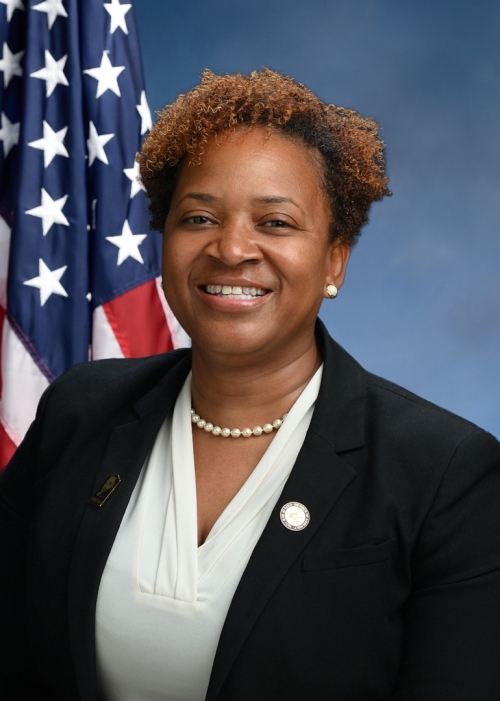
Asm. Nikki Lucas
Sponsored bills
Maddy summaryThis bill (A 3742) requires all high schools to keep opioid antagonists (like naloxone) available for emergency overdose treatment and to have at least one trained employee present during all school hours and after-school activities. The law mandates schools to acquire the medication, designate a staff member who completed approved training in its use, and ensure that employee oversees storage and administration. It directly affects high schools, students, and staff by establishing a concrete protocol for responding to opioid overdoses on school grounds. The bill takes immediate effect upon enactment and does not include exemptions for school activities.
Maddy summaryThis bill establishes a new health coverage option under New York's 1332 state innovation program, allowing the state to create a health plan for specific uninsured New Yorkers who don't qualify for Medicaid or ACA marketplace plans. It directly affects residents under 65 with household incomes between 133% and 250% of the federal poverty line, including some noncitizens ineligible for Medicaid due to immigration status. Key provisions include requiring coverage for essential health services (like cancer care access at Medicaid rates, dental, vision, and chronic illness support), automatic enrollment for children born to eligible parents, and continued coverage during pregnancy for one year postpartum. The program requires federal approval under the ACA's Section 1332 waiver process and operates alongside existing Medicaid and marketplace plans.
Maddy summaryThis bill extends Medicaid eligibility for infants from under age one to under age three, directly benefiting low-income infants and their families. It sets income eligibility at 200% of the federal poverty level (based on household size) and ensures children receiving in-patient medical care at age three remain covered until their treatment ends. The law also automatically extends coverage to infants born to parents already receiving medical assistance. These changes update New York's social services law to align with federal Medicaid rules for infant care.
Establishes a task force to study the creation of a quantum computing project to make recommendations on how to utilize quantum computing for the purposes of developing computers for civilian, business, trade, environmental and security purposes, such as cryptanalysis, in this state.
Establishes Eid al-Fitr and Eid al-Adha as school holidays, with dates established by religious law and tradition; allows for school districts and municipalities with a population of less than fifty thousand to opt into the recognition of such holidays.
Directs the state commission of correction to promulgate rules and regulations for strip searches in correctional facilities which at a minimum include a requirement that no fewer than two staff members shall be present for any strip search.
Establishes the "Safe Staffing for Hospital Care Act"; establishes minimum staffing levels for various health care workers in different health care facilities; requires submission of staffing plans; prohibits most mandatory overtime.
Maddy summaryThis bill changes New York's parole process by requiring the state board of parole to consider specific factors before granting release. It mandates evaluation of rehabilitation efforts (like programs, therapy, and work assignments), release plans (including housing, jobs, and support services), and deportation status, while prohibiting decisions based mainly on victim statements or prior criminal records. Parole denials must include detailed written explanations, and the board must report quarterly to lawmakers with demographic data on denied cases (excluding individual identities). These changes aim to standardize parole decisions and increase transparency.
Requires that all human services contracts between any public entity and a human services provider stipulate that the public entity will pay no less than 150% of the higher of: the otherwise applicable minimum wage in the state or any otherwise applicable wage rule or order and that the necessary amounts have been appropriated to ensure payment of such minimum wage.