

Maddy summaryThis bill requires all New York City district leadership teams to follow the city's open meetings law, which mandates that public meetings be open to residents with advance notice. It directly affects neighborhood-level leadership groups that currently operate without formal transparency rules. The law, incorporated into the city's administrative code, ensures these teams must hold meetings in public, provide meeting agendas ahead of time, and allow resident participation. The requirement takes effect 90 days after the bill becomes law.
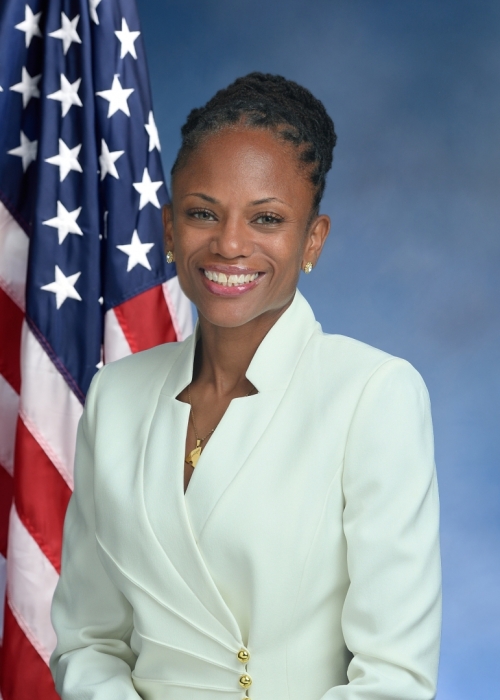
Asm. Monique Chandler-Waterman
Sponsored bills
Maddy summaryThis New York City bill mandates that every district and school leadership team must include at least one student representative. District teams must appoint a high school student chosen by the community superintendent, while school teams appoint a student selected by the team's chairperson. It directly affects all New York City public school leadership structures by requiring student participation in decision-making bodies. The policy change is purely procedural, establishing appointment rules without altering educational programs or funding.
Enacts the "beauty justice act"; provides for the regulation of ingredients in personal care products and cosmetics; prohibits the sale of personal care products and cosmetic products containing certain restricted products.
Maddy summaryThis bill designates the first Sunday in November as "New York City Marathon Day" as an official day of commemoration in New York State. The change is made by adding this designation to the list of recognized commemorative days in the executive law, which currently includes numerous other state-recognized holidays honoring historical figures, veterans, and cultural observances. The bill applies to the state government and does not require changes to how the marathon itself is organized or run. It takes effect immediately upon passage, adding this new designation to the existing list of commemorative days without altering any other provisions.
Maddy summaryThis bill requires landlords to maintain habitable housing conditions before pursuing rent collection or eviction. Specifically, landlords cannot file such cases if there are unresolved violations of housing codes (like lack of heat, water, or rodent infestations) that have existed for five days or more in the apartment or building common areas. If violations exist, landlords must file an affidavit claiming the violations were recorded incorrectly or not addressed by authorities, and courts can dismiss the case if these claims are false or violations are proven. The law directly affects landlords seeking legal action and tenants facing eviction or rent demands.
Limits the experiential qualifications of group teachers for preschool classes and groups teachers for infant or toddler classes to what was required for their educational qualifications or certain college credits in related areas.
Maddy summaryThis bill requires state correctional facilities to provide incarcerated individuals with free voice communication services, including calls made to and from their families or legal representatives. The legislation mandates that these services cannot be replaced by in-person visit programs and prohibits facilities from generating revenue from communication services. It also ensures that existing contracts for communication services must end by March 31, 2026, while new contracts are subject to the free service requirement starting April 1, 2026.
Maddy summaryThis bill extends the time tenants have to respond to landlord applications for rent increases based on major building renovations, from 60 to 90 days. It directly affects tenants in New York City rent-stabilized buildings when landlords file such applications. The change modifies specific sections of the city's administrative code and rent control laws to update the response period. This provides tenants with more time to review proposed rent hikes before they take effect.
Enacts the "Renewable Capitol act"; requires the office of general services, in consultation with the power authority of the state of New York, to ensure that all operations that power, heat or cool the empire state plaza complex shall entirely use renewable energy systems; requires the office of general services to establish an advisory committee to advise the office of general services on the preparation, design and content of a plan for the use of renewable energy systems.
Maddy summaryThis bill allows certain nonprofit organizations operating commuter vans, pre-arranged for-hire vehicles, or accessible vehicles to use risk retention groups for insurance instead of traditional insurers. It applies to vehicles registered in New York or other states that are not used solely for personal purposes by directors, officers, or key personnel and their families. The legislation defines specific terms like "commuter van" and "accessible vehicle" to clarify which vehicles qualify for this insurance option, with accessible vehicles requiring features such as wheelchair lifts, assistive listening systems, and signage for people with disabilities. This change expands insurance options for qualifying nonprofit transportation providers while maintaining restrictions on luxury vehicles and high-volume for-hire services.