

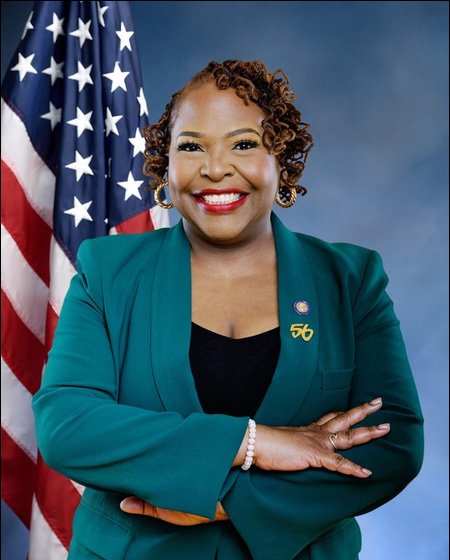
Enacts "Cariol's Law"; provides for a duty to intervene when a police officer or peace officer observes another police officer or peace officer using physical force that such officer reasonably believes to be clearly excessive or beyond that which is objectively reasonable under the circumstances.
Sponsored bills
Maddy summaryThis bill requires New York's Commissioner of Health to establish regional minimum hourly reimbursement rates for home care providers serving Medicaid patients. It directly affects home care agencies and providers who employ home care aides, mandating rates that cover all necessary costs - including base wages, benefits, payroll taxes, operational expenses, and compliance costs. The rates must be set regionally based on actual service costs, adjusted annually to reflect labor law changes, and published publicly. Providers must justify any contract rates below these minimums, and the comptroller can audit contracts to ensure adequacy. The goal is to ensure reimbursement rates support fair wages and operational needs for home care workers under Medicaid.
Establishes the teachers' fossil fuel divestment act; requires the New York state teachers' retirement system to divest the retirement system of any stocks, securities, equities, assets, or other obligations of corporations or companies included on an exclusion list of coal producers and oil and gas producers.
Enacts the "homeowner defense and anti-deed theft act" in relation to establishing a homeowner defense and anti-deed theft program within the department of state for the purpose of defending homeowners against deed theft; establishes the county recording modernization fund and the title defense litigation fund.
Directs the department of civil service to conduct a study on competitive examinations for public employment held by the state department of civil service and by municipal commissions to determine whether the contents of such examinations have a discriminatory effect on minority examinees; requires a report on such findings to be delivered to the governor and legislature.
Relates to women's health in correctional facilities; establishes a women's health education program; requires HIV and STD testing to be offered to incarcerated individuals; provides pregnant incarcerated individuals with access to prenatal vitamins as well as a specialized diet tailored to pregnancy needs; requires a study and report on women's health in prison.
Maddy summaryThis bill establishes a new health coverage option under New York's 1332 state innovation program, allowing the state to create a health plan for specific uninsured New Yorkers who don't qualify for Medicaid or ACA marketplace plans. It directly affects residents under 65 with household incomes between 133% and 250% of the federal poverty line, including some noncitizens ineligible for Medicaid due to immigration status. Key provisions include requiring coverage for essential health services (like cancer care access at Medicaid rates, dental, vision, and chronic illness support), automatic enrollment for children born to eligible parents, and continued coverage during pregnancy for one year postpartum. The program requires federal approval under the ACA's Section 1332 waiver process and operates alongside existing Medicaid and marketplace plans.
Maddy summaryThis bill establishes a new progressive income tax structure for high-income New York taxpayers by creating multiple tax brackets with increasing rates as income rises. It directly affects New York residents earning above certain thresholds, with the highest rates applying to incomes over $5 million (up to 24% for some filing statuses). Key provisions include setting specific tax rates for different income ranges - for example, 10.90% for incomes over $25 million and 24% for incomes over $20 million for certain filers. The bill modifies existing tax law to implement these bracketed rates, replacing previous structures.
Enacts the "Velmanette Montgomery YouthBuild act"; sets program requirements; authorizes grants to eligible YouthBuild participants; establishes application requirements.
Maddy summaryThis bill updates the methodology for calculating education funding by replacing outdated references to the 2000 census with current data sources. It revises definitions of "census count" and "poverty rate" to use the most recent federal decennial census data and a three-year average of small area income estimates, rather than relying solely on a single-year census. School districts, particularly those classified as "high-need" based on student poverty levels, will have their state education funding recalculated using these updated metrics. The change ensures funding formulas reflect more current socioeconomic conditions in communities. The bill takes effect April 1 following enactment.