

Maddy summaryThis bill (A 8408) amends New York's surrogate's court procedure law to expand valid methods for serving legal documents (service of process). It specifically adds electronic means as a permissible service method, defined as transmittal to the recipient's email or electronic address, and updates mailing timelines (e.g., 20 days for service within the U.S., 30 days otherwise). The change directly affects parties in surrogate court cases, including plaintiffs, attorneys, and defendants, by providing more efficient options for delivering court documents. The bill is currently pending in the legislature after being referred to the Rules Committee.
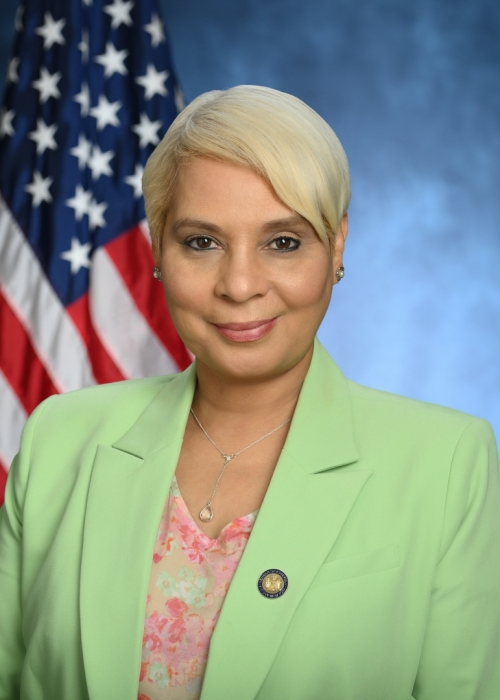
Asm. Maritza Davila
Sponsored bills
Requires the office of parks, recreation and historic preservation to develop and approve operational safety plans prior to the deployment of any employee in hazardous conditions; requires the plan to include a comprehensive risk assessment identifying potential hazards associated with the deployment, mitigation measures to address identified risks, detailed information on team composition, identification of an on-site authorized person responsible for overseeing operations, a clear chain of command, emergency contact information for all team members, and evacuation procedures.
Prohibits motor vehicle manufacturers and dealers from charging a subscription fee for certain functions of a motor vehicle after the vehicle is sold; provides that any manufacturer, dealer, or agent of a manufacturer or dealer that fails to comply with such requirements shall be assessed a civil penalty not to exceed two hundred fifty dollars per point of sale for each violation.
Provides that in the case of any application for gas service to a building which is not supplied with gas, a utility corporation or municipality shall be obligated to provide gas service to such building.
Maddy summaryThis bill expands New York's veterans tuition awards program to allow qualified veterans to transfer unused benefits to their spouse, child, or eligible survivor. It defines key terms like "qualified veteran" (a veteran who would qualify for the award) and "eligible immediate family" (spouse, child, or survivor meeting specific marriage or family conditions). Veterans can transfer all or part of their unused award to family members, with children needing to be under 26 and the veteran having served at least 10 years (with exceptions for certain separations or deaths). The bill also limits transfers to 100 per year and takes effect July 1, 2026.
Maddy summaryThis bill requires most health insurance plans (issued or renewed on or after January 1, 2020) to cover specific contraceptive services provided by pharmacists without cost-sharing. It mandates coverage for all FDA-approved contraceptives (including over-the-counter options), emergency contraception, patient education, follow-up care, and up to a 12-month supply at once. Pharmacists dispensing self-administered hormonal contraceptives must receive reimbursement equivalent to other healthcare providers. The law directly affects insurance companies, pharmacists, and individuals seeking contraceptive care through insurance.
Relates to prevailing wage requirements applicable to brownfield remediation work performed under private contract as it relates to certain remediation activities, for sites that are seeking or have received a determination that the site is eligible for the tangible property credit component of the brownfield redevelopment tax credit, and the work is paid for in whole or in part by public funds.
Requires each appropriate institution housing a defendant due to mental disease or defect to assign a critical time intervention care management team to the defendant and make a single point of access referral for the defendant prior to such defendant's discharge.
Relates to the right to counsel in certain family court proceedings regarding violations of orders of child support and to establish paternity or parentage in the family court.
Maddy summaryThis bill requires utility companies and contractors to provide detailed electronic records identifying pole attachments, including equipment owners, contractors, work dates, and safety compliance details. It creates an online public complaint system for reporting unsafe attachments, equipment hazards, or violations of safety standards like the National Electrical Safety Code. The commission must investigate complaints within two weeks and can issue fines up to $20,000 for first violations, $50,000 for second violations, or stop-work orders for third violations. The law directly affects utility providers, telecom companies, and contractors working on utility poles, aiming to improve public safety and accountability through standardized reporting and enforcement.